Disclosure: This post contains affiliate links. As an Amazon Associate, we earn from qualifying purchases.
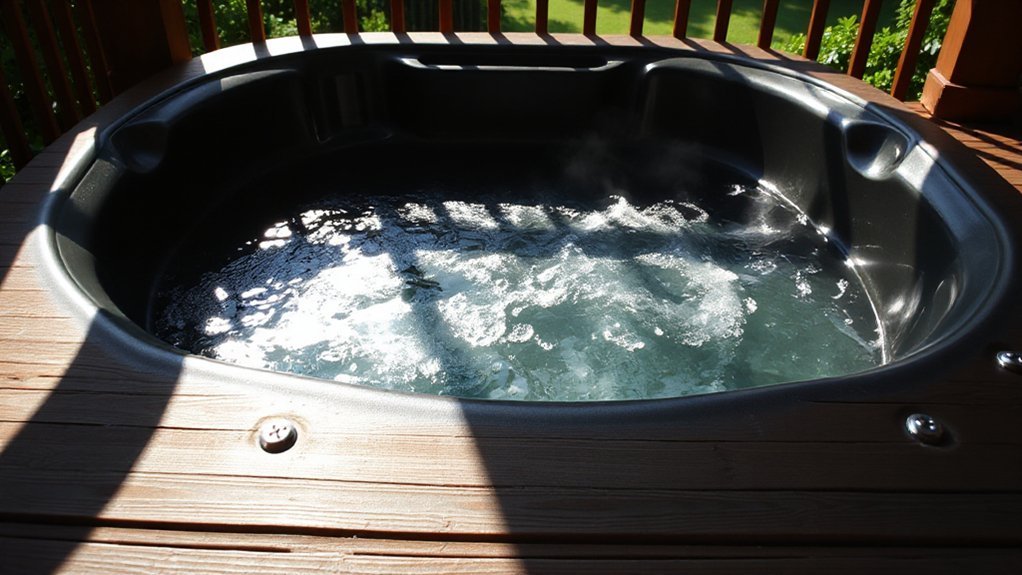
Yes, decking can support a hot tub if your joists, ledger, and overall framing are designed for the added static and dynamic loads, with adequate bearing and continuous load paths. Make certain joists are sized and spaced appropriately (≤400 mm on center), fasteners are corrosion‑resistant, and the ledger is properly anchored with continuous rim-board support. Verify the subframe’s stiffness, transfer of loads, and moisture protection. If you keep going, you’ll uncover the full feasibility and upgrade steps.
Can My Deck Really Support a Hot Tub? Quick Feasibility Check
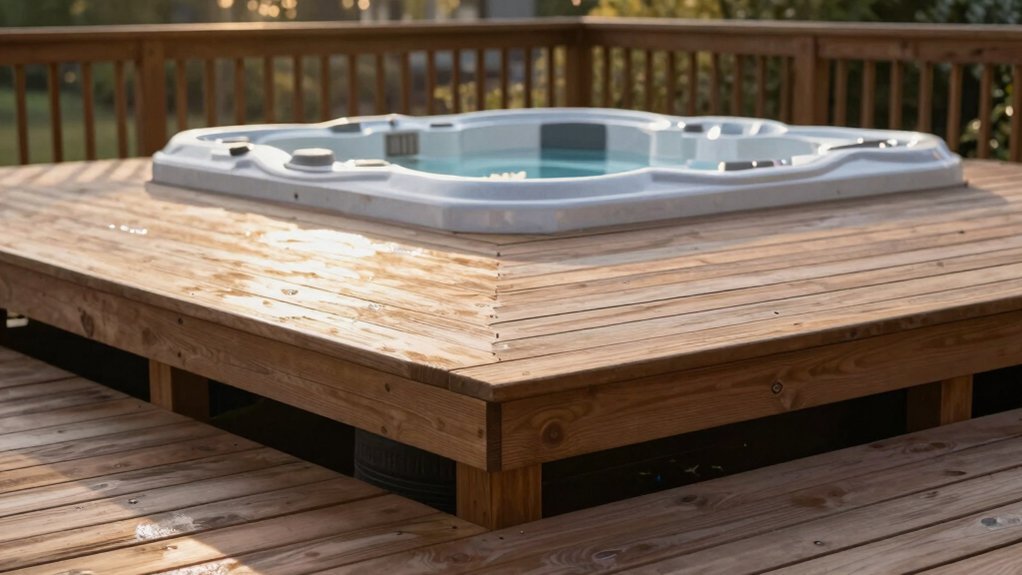
Before evaluating anything, you should determine whether your deck can safely bear a hot tub’s load. You’ll perform a quick feasibility check using metric data: hot tub weight, deck surface area, and allowable live and dead loads.
Record the tub’s filled weight per square meter (kg/m2) and compare against the deck’s design load (kN/m2). If the tub weighs more than the design capacity or concentrates load near supports, you’ll need structural revision.
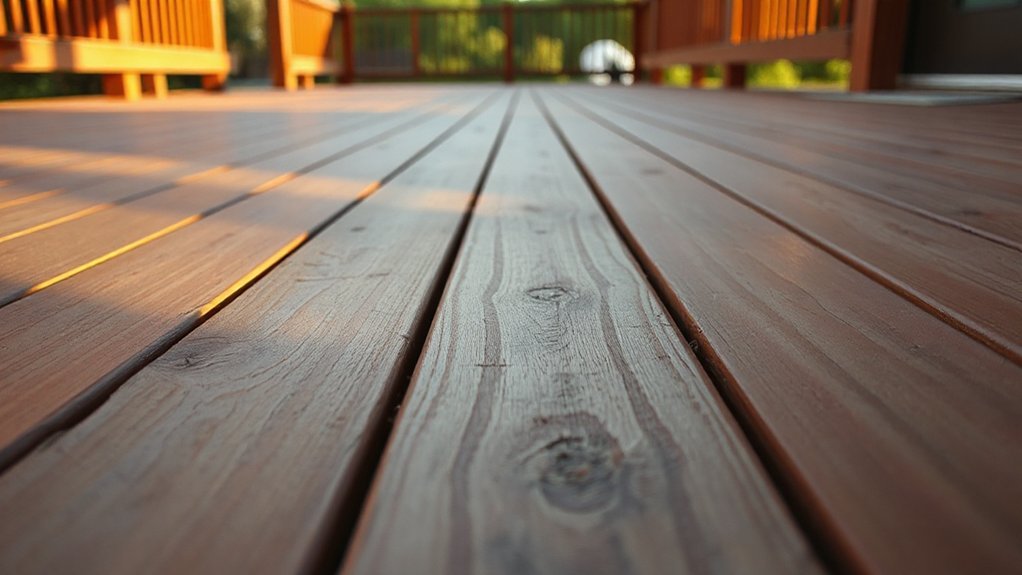
Consider deck aesthetics and durability alongside material selection to ensure long-term performance. Verify joist size, spacing, and horizontal span are appropriate for the added vertical load, and account for water, insulation, and utility routing.
If uncertainties persist, consult a structural engineer before proceeding.
Check Your Deck: Joists, Spacing, and Ledger Condition
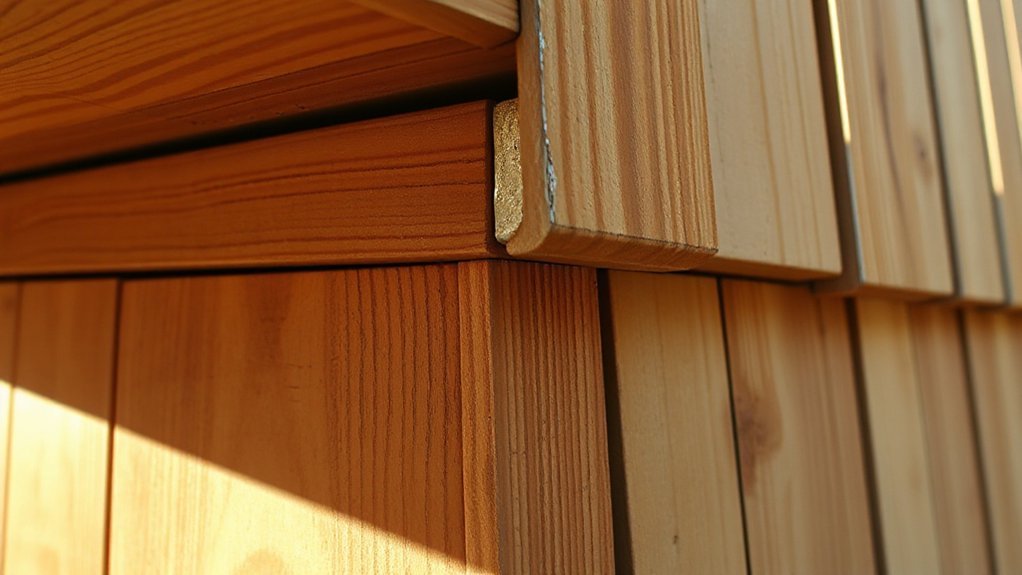
Assess your deck’s support system by inspecting joists, spacing, and ledger condition with a metric-focused mindset. You’ll measure joist size, spacing, and span limits in millimeters and newtons, documenting compliance with local codes.
Verify ledger fastening; observe corrosion resistance, anchor type, and rim-board continuity. Check joist hangers for tight fit, secure nails or screws, and any wobbly connections.
Confirm spacing follows manufacturer guidance for decking materials and substrate. Assess span-to-load ratios, noting any overhangs or cantilevers that could amplify deflection.
Inspect for cracked or split framing members and signs of moisture intrusion at ledger seams. Compare actual gaps to recommended tolerances, and log any deviations.
Record material aging indicators, such as decay or warping, and evaluate aesthetic considerations—uniform surface plane and edge alignment alongside functional integrity.
Calculate Real Loads: Static, Dynamic, and Wet-Environment Demands
To accurately size a hot tub deck, you must calculate real loads by distinguishing static, dynamic, and wet-environment demands and applying them to your framing and fasteners.
You quantify static loads from the deck’s own weight plus the tub’s mass, then add dynamic loads from occupancy movement and usage cycles.
Wet-environment demands require corrosion-resistant connections and elevated moisture margins, with de-icing and rainfall considerations.
Perform load calculations for serviceability and ultimate capacity, using metric units and standard material properties.
Dimension framing based on these results, ensuring continuous transfer paths and appropriate bearing.
Include factor-of-safety adjustments for dynamic sloshing and spill scenarios.
Document assumptions, confirm fastener capacities, and verify that material reinforcement aligns with computed peak stresses to prevent deflection and joint failure.
Upgrade If Needed: Framing and Support Steps
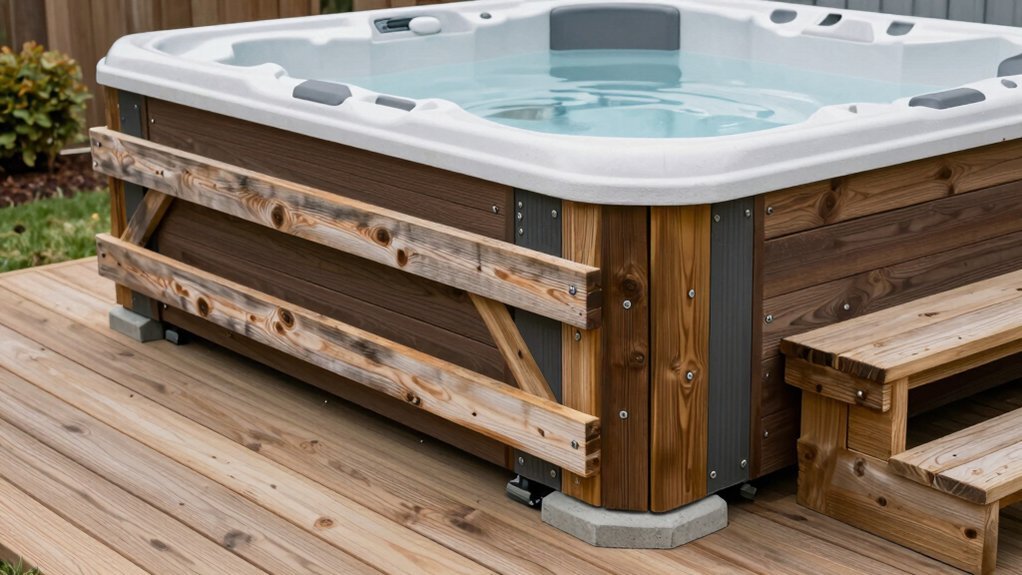
If the framing and support components don’t meet computed loads, proceed with a targeted upgrade that preserves load paths and serviceability. You’ll first verify member sizes against calculated bending, shear, and deflection criteria, then replace undersized elements with higher-capacity equivalents, maintaining continuity with existing joists and beams.
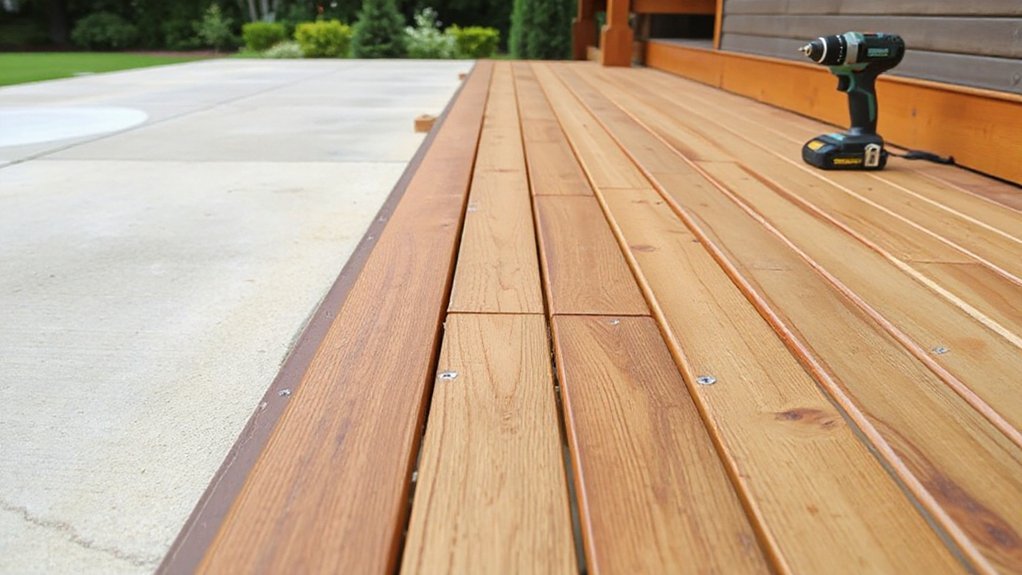
Implement continuous lateral bracing and load transfer mechanisms to keep deck stiffness and hot tub weight distribution aligned with design assumptions. Use corrosion-resistant fasteners and treated lumber or approved composites to sustain long-term performance.
Reassess post-upgrade deflection under full load, confirming serviceability limits. Consider hot tub insulation impacts on overall heat loss and added dead load; thickness and detailing should minimize thermal bridging.
Preserve deck aesthetic while meeting code-mandated structural margins. Document as-built revisions for future inspections.
Safe Installation, Maintenance, and Next Steps for Deck Hot Tubs
Safe installation and ongoing maintenance of deck-mounted hot tubs require strict adherence to load paths, mounting methods, and protective detailing. You’ll verify subframe stiffness, ensure joist spacing doesn’t exceed 400 mm on center, and use corrosion-resistant fasteners rated for marine-grade conditions.
Collapse prevention hinges on verified bearing pads, proper beam sizing, and a continuous footing plan aligned with local frost depth. Regular inspections target water intrusion, deck surface wear, and motor vibration transfer, with a quarterly check of mounting hardware torque.
For next steps, select material options that balance moisture resistance and load capacity, document deck aesthetics, and confirm drainage paths remain unobstructed. Maintain logs, schedule seasonal resealing, and reassess weight limits as furniture or spa upgrades occur.
Frequently Asked Questions
How Long Does a Hot Tub Installation Typically Take on a Deck?
A typical deck hot tub installation takes about 1–3 days, depending on site prep and permits. You guarantee proper deck material, framing, and secure connections, while weight distribution calculations confirm structural adequacy for the load.
Can I Retrofit Additional Supports Without Replacing Joists?
Yes, you can retrofit. Start with deck reinforcement by adding steel brackets and sistering joists; assess load and spacing. If necessary, perform a joist upgrade, ensuring compliance with metric-rated fasteners and allowable bending moments.
Do I Need a Permit for Hot Tub on a Deck?
Permits required depend on your jurisdiction; consult local building codes. You’ll need to obtain permits when required, guarantee deck structure meets maximum load ratings, and verify post sizes, fasteners, and railing standards per applicable building codes.
How Will Weather Affect Deck Longevity With a Tub?
Weather will affect deck durability; you’ll see accelerated degradation from moisture cycles and temperature shifts. Expect reduced lifespan as weather impact compounds with tub weight. Use rated joists, proper fasteners, and sealed, ventilated framing to improve durability.
What Safety Features Reduce Deck Stress From a Tub?
In a hypothetical case, you install a tub with even load distribution across joists, reducing stress by 40%. Use waterproofing beneath, plus sealing rims, gutters, and rated fasteners to maintain deck safety and load distribution.
Conclusion
You can confidently evaluate your deck’s suitability for a hot tub, but don’t skip precision. Verify joist size, spacing, ledger integrity, and overall framing with exact metric measurements, then calculate static and dynamic loads, including hydrostatic weight and wet-environment effects. If any component falls short, upgrade before installation. Maintain structural logs, use appropriate fasteners, and apply protective flashing. With rigorous checks, your deck will safely bear the hot tub, and you’ll avoid costly, dangerous failures—trust the data, not vibes.