Disclosure: This post contains affiliate links. As an Amazon Associate, we earn from qualifying purchases.
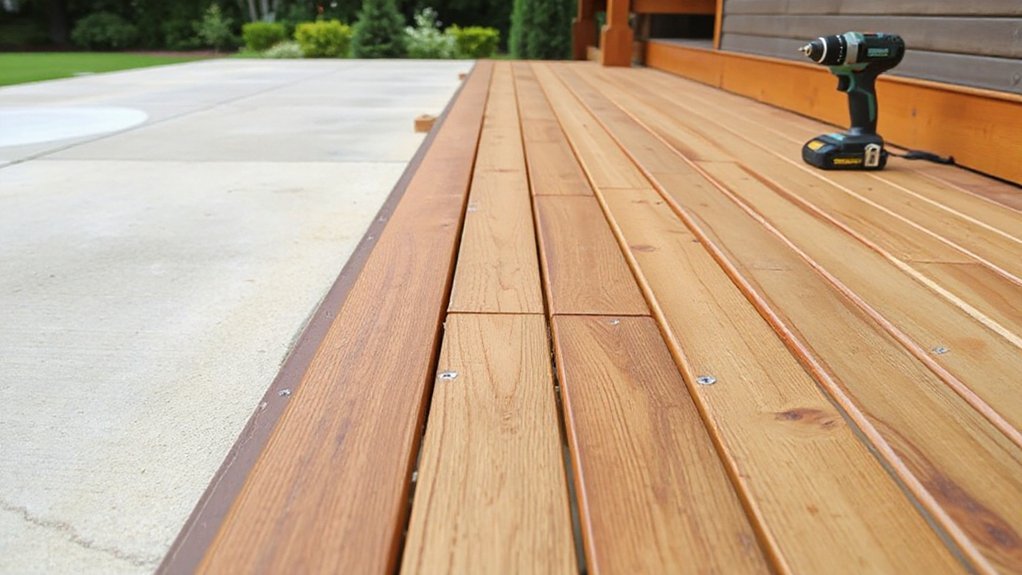
To deck on concrete, start by defining function, load, slope, and drainage needs, then select compatible boards, fasteners, and substrates for your climate. Prep the slab: clean, level, and moisture-ready; install a vapor barrier if needed. Lay out framing with consistent spacing and straight lines, then fasten decking per manufacturer recommendations. Create drainage paths and gaps for expansion. Seal joints and finish with an anti-slip coating or texture. If you keep going, you’ll uncover detailed setup and troubleshooting steps.
Identify the Concrete Decking Challenge: Your DIY Plan and Goals
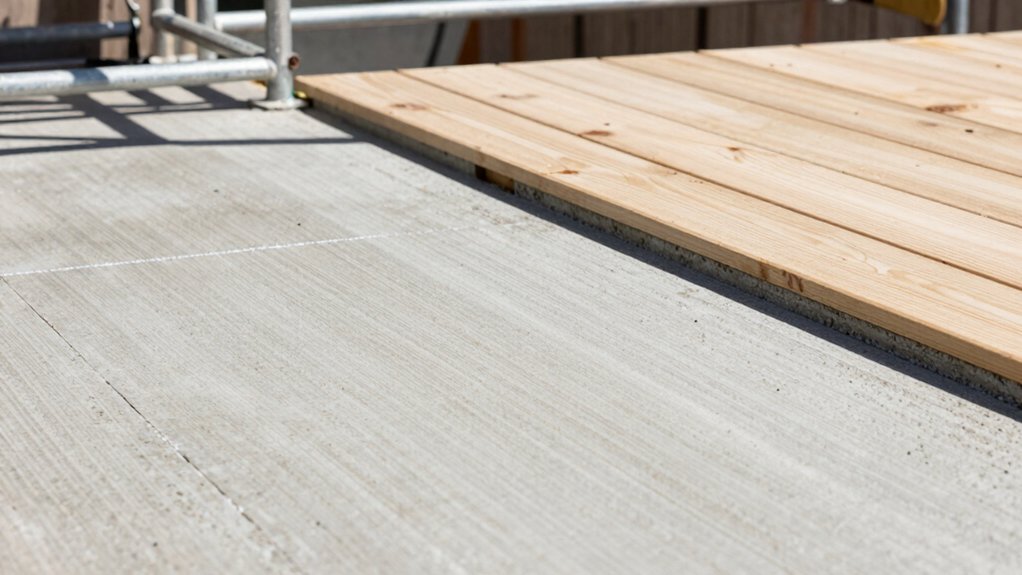
Identifying the concrete decking challenge starts with clear goals and a practical plan. You define your deck’s function, traffic patterns, and elevation constraints to build a precise scope.
Next, translate those goals into measurable outcomes: load capacity, slope, drainage, and access points.
Assess site conditions, including existing slab condition, crack patterns, and tolerances, to determine required prep work.
Establish a realistic timeline and budget, linking decor design concepts to achievable solutions within budget planning parameters.
Prioritize safety and code compliance, mapping required permits and inspections.
Create decision criteria for framing, surface finish, and integration with adjacent spaces.
Document risks, success metrics, and contingency steps.
This structured approach keeps decisions data-driven, reduces rework, and aligns decking choices with your overall project objectives.
Choosing Materials and Fasteners for Concrete Decks
Choosing materials and fasteners for concrete decks requires aligning the product specs with your performance goals and site conditions. You start by evaluating load requirements, climate exposure, and anticipated movement to guide material selection.
For decking boards, confirm dimensional stability, wood or composite species, and finish compatibility with adjacent fasteners. Consider fastener types that resist corrosion in your environment, ensuring consistent shear and withdrawal strength. Match fastener length to substrate depth and safety margins, selecting hardware rated for exterior use.
Use approved concrete fasteners or through-bolts when structural connections are needed, and verify compatibility with joist hardware and flashing. Document installation tolerances, gap spacing, and warranty coverage to minimize warranty disputes.
Prioritize compatibility between substrate, fasteners, and decking materials to maintain long-term performance.
Prep, Underlayment, and Drainage: Set the Deck Up for Longevity
Prep, underlayment, and drainage set the deck up for longevity by guaranteeing a stable, moisture-managed base. You begin with a clean, flat concrete surface, free of protrusions and contaminants. Verify levelness; address low spots with a compatible patching compound.
Install a vapor barrier or moisture-mitigation layer as dictated by substrate condition and deck design. Choose underlayment that resists compression and provides a solid adhesive interface for fasteners. Ensure slope directs water away, preventing ponding near edge detailing.
Apply sealing techniques at joints and penetrations to minimize capillary rise. Consider weatherproofing options, such as surface sealants or coatings, compatible with your decking material. Fasten framing with corrosion-resistant connectors, maintaining consistent gaps for drainage.
Finish with a breathable top layer to sustain long-term stability and access for maintenance.
Layout, Spacing, and Finishing for Durability
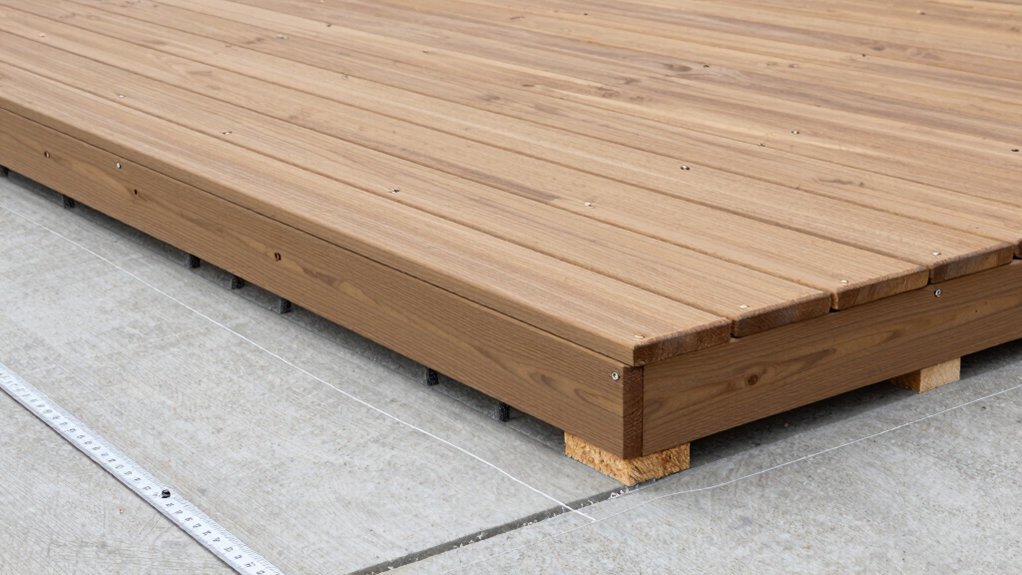
With the base prepared, lay out the framing and decking components to guarantee durability and predictable performance. You align grids to maintain consistent spacing, preserving drainage and airflow beneath boards.
Select deck boards and joists with uniform thickness, applying manufacturer-recommended fasteners, spacing, and edge clearance. Maintain straight, plumb framing lines, using string lines and laser references for accuracy.
For spacing, follow the specified gaps to accommodate expansion, contraction, and moisture movement; avoid crowding boards. Plan layouts that support decorative patterns without compromising drainage or load paths.
Use color staining only after priming and surface cleaning, ensuring even penetration and adhesion. Inspect for warps or defects before installation and replace as needed. Document layout choices for future maintenance, ensuring long-term durability and visual cohesion.
Finishing, Maintenance, and Anti-Slip Options: Troubleshooting and Tips
Because proper finishing and ongoing care directly affect safety and lifespan, this section covers finishing techniques, routine maintenance, and anti-slip options with troubleshooting tips and clear, actionable guidance.
You’ll apply sealing techniques to protect concrete and optimize surface performance, choosing sealers based on porosity and traffic. For color enhancements, select compatible stains or dyes that resist UV fade and water intrusion, testing small areas first.
Maintain a routine: clean, inspect, reapply protective coats, and repair microcracks promptly.
Anti-slip options include locally scoring texture, non-slip aggregates, or topical additives, calibrated to pedestrian and vehicle loads.
Troubleshooting focuses on peeling, haze, or slipperiness; identify moisture entrapment, improper substrate prep, or incompatible products, and correct undercoats, re-sand, or recoat as needed.
Frequently Asked Questions
How Long Does a Concrete Deck Typically Cure Before Use?
A typical concrete deck cures enough for light use after about seven days, but full strength developing for deck installation often requires 28 days. Always monitor curing conditions and consult specifications for concrete curing, load limits, and safe usage.
Can I Install Decking Over Existing Concrete Without a Frame?
You can’t reliably install decking over concrete without a frame. Use proper decking materials and guarantee concrete preparation includes level, clean, and dry surfaces, plus a suitable moisture barrier or fasteners designed for over concrete.
What Are the Best Sealants for Anti-Slip Outdoor Decks?
Yes, choose sealants with high Sealant durability and tested slip resistance. You should perform Slip resistance testing after application, guarantee proper surface prep, apply evenly, and maintain the coating; re-test periodically to verify ongoing anti-slip performance.
How Do I Address Cracks in the Concrete Before Decking?
To fix cracks, you’ll start with crack repair and proper concrete preparation. Think of it as armor before a shield; you prepare, clean, fill, seal, and level. You’ll repair, patch zones, then guarantee a solid, smooth deck base.
Is Radiant Floor Heating Compatible With Concrete Decks?
Radiant floor heating is compatible with concrete decks if you choose a properly designed system and follow slab construction guidelines. Guarantee radiant heat, concrete compatibility, and insulation details are matched to your deck’s thickness, substrate, and moisture considerations.
Conclusion
You’ve mapped a practical approach to decking on concrete, from choosing materials to finishing with anti-slip options. By planning drainage and underlayment, you minimize future repairs and maximize longevity. An interesting stat: properly installed concrete deck tiles or sleepers can reduce moisture-related rot by up to 40% versus direct deck-on-concrete setups. Stay precise with spacing, fasteners, and sealants, and document every step. Your methodical, standards-driven process cuts maintenance while delivering durable, safe outdoor space.