Disclosure: This post contains affiliate links. As an Amazon Associate, we earn from qualifying purchases.
Yes—you should generally keep decking separate from siding and guarantee moisture, ventilation, and flashing are all properly managed. Allow a deliberate air gap, install continuous moisture barriers, and direct water outward with flashing that won’t pinch barriers. Use corrosion-resistant fasteners, pre-drill where needed, and maintain consistent gaps for drainage and airflow. Inspect and reseal regularly to prevent rot and mold. If you want detailed steps and a decision framework, you’ll find it worthwhile to continue.
Why Decking Next to Siding Needs Careful Moisture and Venting
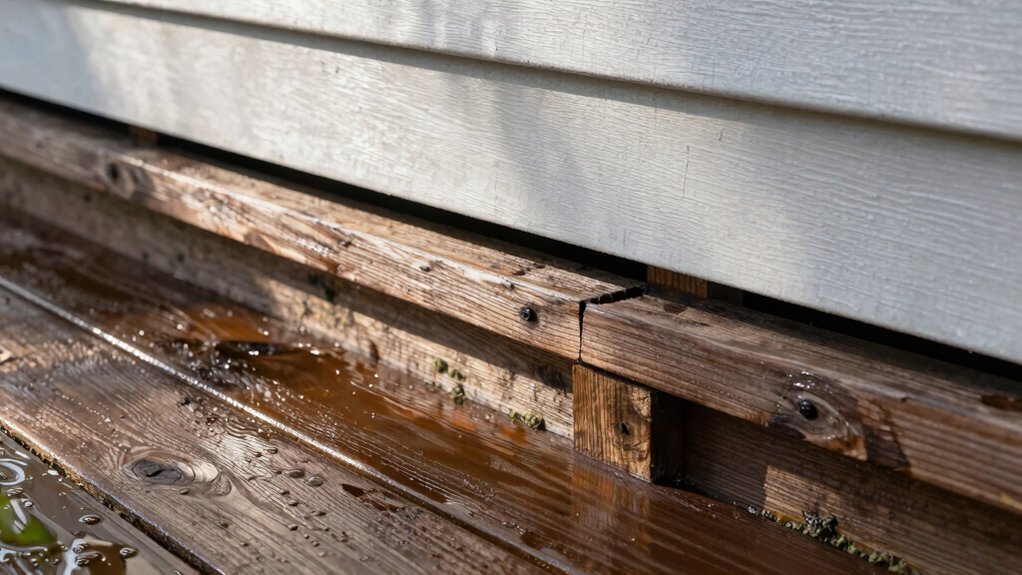
Water and vapor from decking next to siding can trap moisture against the siding if you don’t vent and drain properly. To prevent damage, install continuous moisture barriers beneath the deck and along the siding surface, ensuring a clear drainage path away from the wall.
Maintain proper gaps between boards and siding to promote air circulation, and keep debris out of vents and channels. Verify that flashing directs water outward, not inward, and that fasteners don’t pinch the barrier.
Regularly inspect for signs of warping, staining, or mold, and address failures immediately.
Siding support must be anchored to solid framing with appropriate brackets and level alignment to avoid concentrated loads that can crack or buckle the siding.
Follow these steps to reduce moisture risks and preserve structural integrity.
Under-Siding vs. Above-Siding: Which Placement Fits Your Home?
Under-siding and above-siding each have benefits and trade-offs, so choosing the right placement hinges on your climate, maintenance goals, and the wall assembly you’ve got. You should prioritize where moisture will travel and how you’ll access the structure for repairs.
Above-siding keeps deck framing visible for inspection and can simplify ventilation, but may expose fasteners and edges to weathering if not properly finished.
Under-siding conceals the deck’s edge and can streamline aesthetics, yet it complicates inspection and increases potential moisture retention behind siding.
Your decision should align with your house’s orientation, insulation strategy, and maintenance regime. Consider decorative accents and the overall aesthetic appeal you want, because the chosen placement shapes curb appeal and how easily you’ll preserve siding integrity over time.
The Three Criteria That Drive the Decision: Moisture, Ventilation, Flashing
You’ll evaluate Moisture Management Impacts, so you know how water moves and where it can collect under siding.
Consider Ventilation Implications Considerations to guarantee airflow supports dry, rot-free assemblies.
Then, assess Flashing and Sealant Factors to protect seams, joints, and shifts from leaks.
Moisture Management Impacts
So, what determines the success of moisture management when adding deck structure beneath siding? You must control where water can travel, how it dries, and what stops transfer between components.
Prioritize robust moisture barriers at all contact planes to prevent intrusion from precipitation, splash, and roof runoff. Guarantee deck boards and framing shed water toward exterior, not into wall assemblies, and verify flashing ties these paths to the drainage plane.
Siding ventilation remains essential; maintain openings that promote air movement behind the cladding to reduce humidity buildup. Use weather-appropriate detailing around penetrations and joints to avoid capillary wicking.
Finally, inspect transitions between deck fascia, flashing, and siding to ensure continuity, preventing hidden pockets where moisture can linger and cause decay.
Ventilation Implications Considerations
Ventilation decisions hinge on three drivers: moisture, airflow, and flashing control. You must evaluate how decking placement affects air movement beneath siding, ensuring a continuous, unobstructed path for drying and intake. Prioritize deliberate spacing to avoid trapped damp pockets; improper ventilation gaps invite rot and mold.
You’ll verify that moisture barriers align with deck framing, preventing moisture transfer into sheathing and studs while preserving a breathable junction at the wall plane. Don’t rely on decorative gaps alone—they must meet functional ventilation requirements without compromising rain exclusion.
Document clear airflow routes from soffit to ground, and exclude rigid barriers that block circulation. When in doubt, instrument readings and visual checks should confirm that the ventilation strategy supports long-term siding integrity and framing health.
Flashing and Sealant Factors
Flashing and sealant choices hinge on three interdependent criteria—moisture control, ventilation, and flashing integrity. You must prioritize flashing details that direct water away from structure, using continuous, corrosion‑resistant metal or high‑quality peel‑and‑stick membranes where appropriate.
Inspect transitions between decking, siding, and framing for gaps, ensuring slope and drip edges are correct. Sealant application should be focused, using compatible, exterior‑grade caulk that stays flexible, adheres to both wood and siding, and resists UV degradation.
Apply sealant in clean joints, tooling for a tight, feathered finish, and reapply per manufacturer guidance after movement or seasonal shifts. Never rely on one component alone; flashing details must align with ventilation needs to prevent trapped moisture and wood rot.
This approach yields durable, water‑tight siding interactions.
Climate and Siding Material: How They Change Your Install
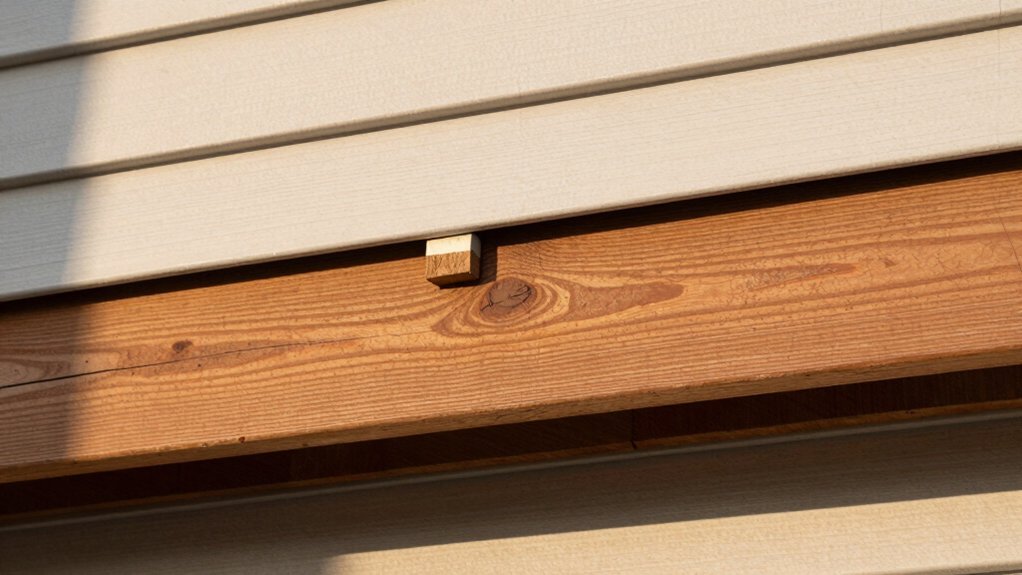
Climate and siding material directly affect your install, from how climate loads stress fasteners to which materials tolerate humidity and temperature swings. You’ll assess climate impact on siding, verify material compatibility, and adjust install methods accordingly to prevent movement, cracking, or moisture issues.
Start with these factors—climate patterns, material properties, and requisite install techniques—and tailor each step to guarantee a durable, code-compliant deck under your siding.
Climate Impact on Siding
How does climate shape your siding choice and installation? Climate dictates material performance, fastener behavior, and framing loads, so you select products to resist humidity, heat, and freeze-thaw cycles.
In hot, sunny regions, choose UV-stable finishes and lighter colors to minimize heat uptake, and account for expansion.
In damp climates, prioritize rot resistance, moisture barriers, and proper drainage to prevent mold.
Cold areas demand materials with low thermal contraction and reliable sealing to reduce gaps at edges.
You must plan for seasonal moisture swings and wind-driven rain, ensuring credible drainage and ventilation.
Address weather patterns and insulation requirements in early design decisions, so siding remains stable and energy efficient.
Finalise details with precise clearances, flashing, and airtight assemblies to reduce drafts and deterioration.
Material Compatibility Factors
Material compatibility is the bedrock of a lasting siding install. You must evaluate climate effects and material pairings before proceeding. Consider how temperature swings influence expansion and contraction, and choose substrates that resist warping or cracking.
Material bonding matters: confirm the chosen siding and decking materials form a durable bond under your local humidity and precipitation patterns. Ambient moisture levels can degrade adhesives or fasteners, so select systems rated for your climate.
Color matching isn’t cosmetic alone; it signals long‑term performance, especially when UV exposure differs between deck and siding. Align substrate coatings with the siding’s finish to prevent moisture traps and premature failure.
Document compatibility tests, review manufacturer guidelines, and prioritize materials designed to perform together for the life of the installation.
Install Method Variations
To install bridges between siding and deck correctly, you must select methods that account for climate and material differences from the start. Install method variations hinge on moisture levels, temperature swings, and siding type, not a one-size-fits-all approach.
For vinyl and fiber-cement sidings, use corrosion-resistant fasteners and pre-drilled holes to prevent cracking, with flashing that sheds water away from the deck plate.
In wood-clad assemblies, pair treated lumber with corrosion-resistant connectors and a breathable drainage gap to avoid rot.
Consider decking insulation where frost movement is a concern, and guarantee fasteners penetrate framing only to secure stiffness without compromising heat transfer.
Aim for aesthetic appeal by aligning joist spacing, cap flashing, and seam progression to the siding profile, delivering durable, low-maintenance results.
Practical Guidelines: Clearances, Gaps, and Bug-Proofing
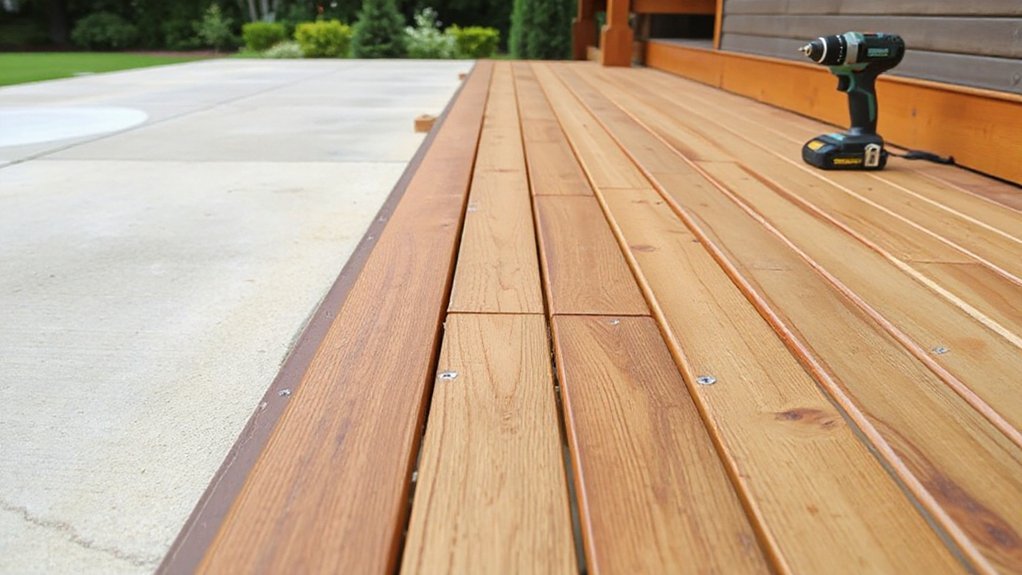
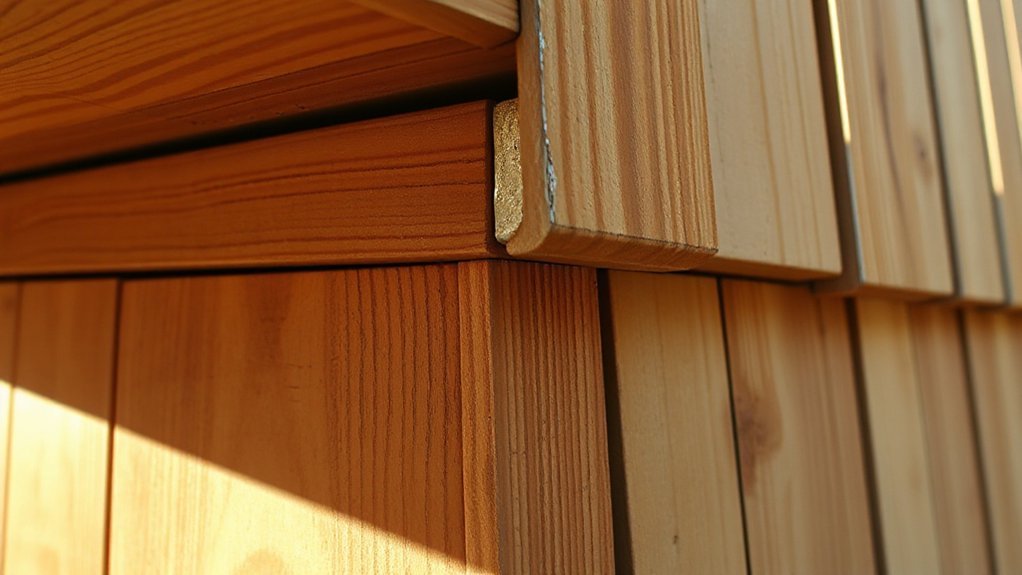
Clearances, gaps, and bug-proofing are non-negotiable for durable, rot-resistant decking under siding. You must uphold precise clearances between the deck and siding to prevent moisture wicking, decay, and insect ingress. Establish a consistent decking clearance of at least the minimum code/manufacturer spec, and verify it at every joint. Use a rigid spacer during installation to lock in spacing as you fasten boards.
Gap maintenance matters for drainage and air flow; ensure uniform gaps to avoid pockets where moisture can stagnate. Seal edges and fastener heads to deter water intrusion, but don’t obscure drainage paths. Inspect seasonally, tightening fasteners and rechecking gaps after settling.
Document specs for future repairs, and replace any warped boards promptly to sustain long-term stability.
Quick Decision Framework: Pick the Best Approach for Your Project
Great; with clearances, gaps, and bug-proofing in place, you’re ready to choose a path quickly and confidently. Start by defining your primary goal: seamless aesthetic integration or maximum utility, then map constraints like structure, ventilation, and maintenance.
Use a decision ladder: assess environmental exposure, budget ceilings, and available materials; if aesthetics trump cost, prioritize low-slip surfaces and color-matched finishes. If budget drives choice, select durable options with simpler detailing to reduce labor.
Favor approaches that minimize future remediation, ensuring access for inspections. Compare three concrete options: full siding-face deck, stepped siding with hidden fasteners, or a flush-inset deck that preserves lines. Weigh cost considerations against lifecycle durability, then select the method that delivers reliability, minimal upkeep, and cohesive design.
Frequently Asked Questions
Can Decking Be Installed Directly Against Siding Gutter-Free?
Yes, you can install decking directly against siding, but maintain clearance and drainage. Regular decking maintenance matters, and choose compatible siding materials to prevent moisture issues. guarantee proper flashing and gaps to avoid trapped moisture and siding rot.
What Seasonal Moisture Patterns Affect Decking-Siding Contact?
Seasonal moisture patterns drive moisture migration between decking and siding, causing gaps or binding. You must account for seasonal expansion, guarantee ventilation, and maintain clearance to accommodate movement, preventing rot and warping while preserving siding integrity and structural performance.
How Do Insect Barriers Influence Deck-To-Siding Gaps?
Insect barriers influence deck-to-siding gaps by reducing pest-driven movement and moisture intrusion; you should install precise gap prevention measures, maintain ventilation, and carefully detail flashing. You’ll guarantee durable siding protection and minimize costly future repairs.
Are There Code Rules for Deck Ledger Attachments Near Siding?
Yes, follow code requirements: verify deck ledger attachments meet prescribed clearances, flashing, and fastener spacing near siding; guarantee proper deck expansion gaps and siding maintenance, using appropriate corrosion-resistant hardware, continuous protection, and regular inspections to prevent water intrusion.
Should Flashing Be Continuous Behind Siding Near a Deck?
Yes, flashing should be continuous behind siding near a deck. You must install waterproof membranes and maintain siding ventilation to prevent moisture buildup and rot, ensuring a watertight shift and proper airflow throughout the junction.
Conclusion
Conclusion:
You should choose decking placement that preserves moisture control, ventilation, and proper flashing. If siding moisture risk is high, or you’ve got limited venting, install decking under the siding to keep gaps clear and flashing continuous. For newer homes with solid moisture management, above-siding can work—but never skip gaps or bug-proofing. Follow the three criteria and climate factors, then apply the practical guidelines. Do it right, or you’ll regret it—think of it as a Tudor-era blueprint, but with modern code.