Disclosure: This post contains affiliate links. As an Amazon Associate, we earn from qualifying purchases.
A well-built deck starts with a clear plan, durable materials, precise layout, and careful installation. Choose decking that matches your climate and budget, whether composite for low maintenance or wood for warmth, and factor in warranty and finish options. Plan footings below frost line, keep posts plumb, and space joists and rails to code. Use corrosion-resistant fasteners, align boards with a straightedge, and finish edges neatly. With good upkeep, your deck stays safe and inviting—and you’ll gain more outdoor living potential as you proceed.
Decking 101: What Decking Is and Why It Matters
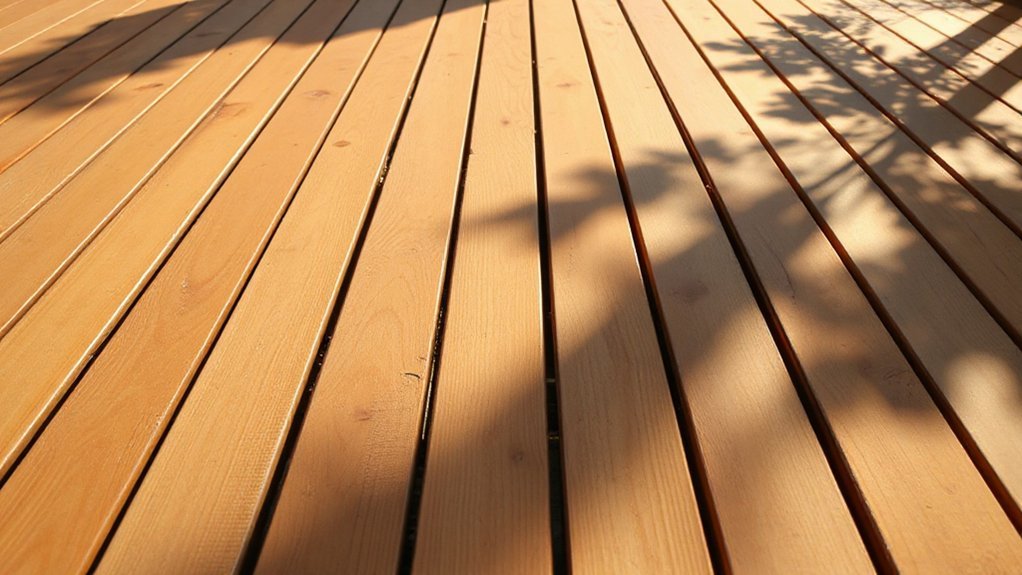
Decking is the raised surface you walk on outside your home, and it matters because a well-chosen, properly installed deck adds usable outdoor space, boosts value, and lasts for years. You use it to expand living area, host gatherings, and enjoy fresh air with minimal maintenance.
Decking 101 defines it as a construction element that connects indoors to outdoors, supports safe traffic, and sets a foundation for landscaping. You should understand that design decisions affect longevity, safety, and curb appeal.
Environmental impact matters; choose materials and finishes that minimize waste, emissions, and end-of-life disposal. Stay aware of design trends that emphasize low-maintenance products, water-smart finishes, and accessible layouts.
With clear goals, you select a deck that fits your climate, budget, and lifestyle.
Decking Materials: Choose Durability and Style
Choosing the right decking material is about balancing durability with style so your outdoor space stays low-maintenance and inviting for years. You’ll evaluate options based on longevity, cost, and upkeep, then pick a solution that fits your climate and usage.
Composite options offer low maintenance and resistance to stains, fading, and moisture, though they can feel less natural than wood.
Wood versus vinyl presents a clear trade-off: wood offers authentic warmth but requires regular sealing and more upkeep, while vinyl is highly durable and maintenance-light but may show color fading or a less premium look over time.
Consider warranty terms, installation ease, and available finishes. Your decision should align with how you host, entertain, and enjoy outdoor time.
Layout and Safety for a Solid Frame: Codes, Footings, and Spacing
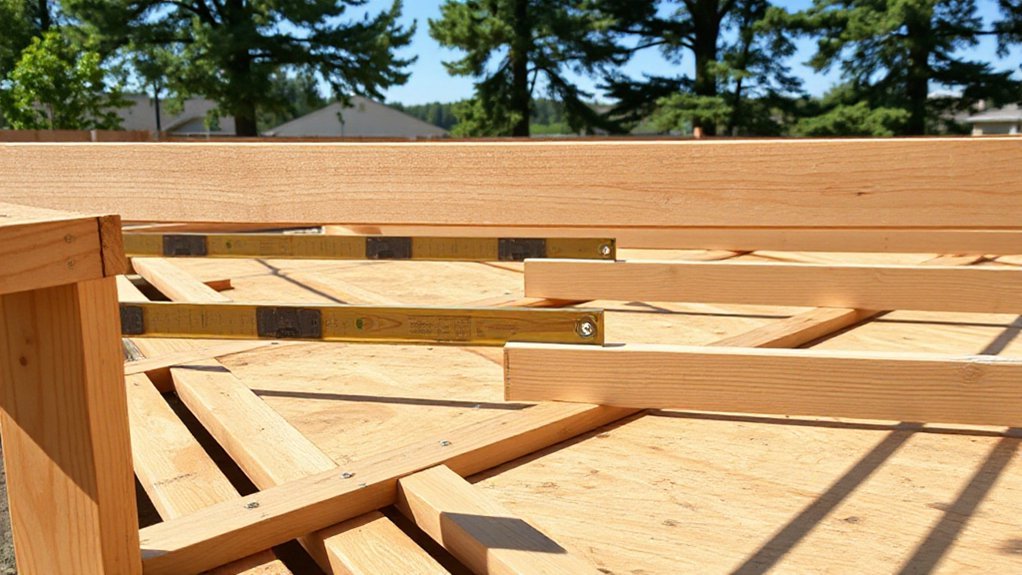
Before you lay out any boards, get the framing right by tightening codes, footings, and spacing to create a solid, safe deck. You verify that footings extend below frost line where needed and that posts are plumb. Check beam and joist layout against the code-specified spacing, then confirm fastener types and corrosion resistance.
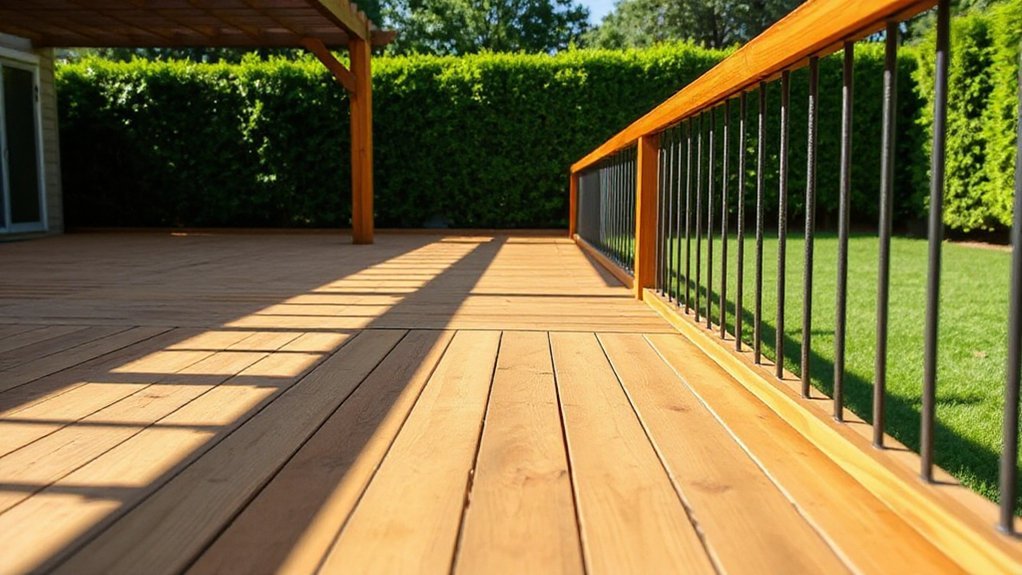
Set railing height to meet local standards while still allowing safe handholds, and ensure guards are continuous and securely anchored.
Plan for load capacity by accounting for expected use—people, furniture, and equipment—then design framed sections to distribute weight evenly.
Double-check intersection points, including post-to-beam connections, for tight, square joints.
Document dimensions and inspections for future maintenance, and keep clear access for emergency egress and routine verification.
Install Decking Boards: Fasteners, Alignment, and Finishing
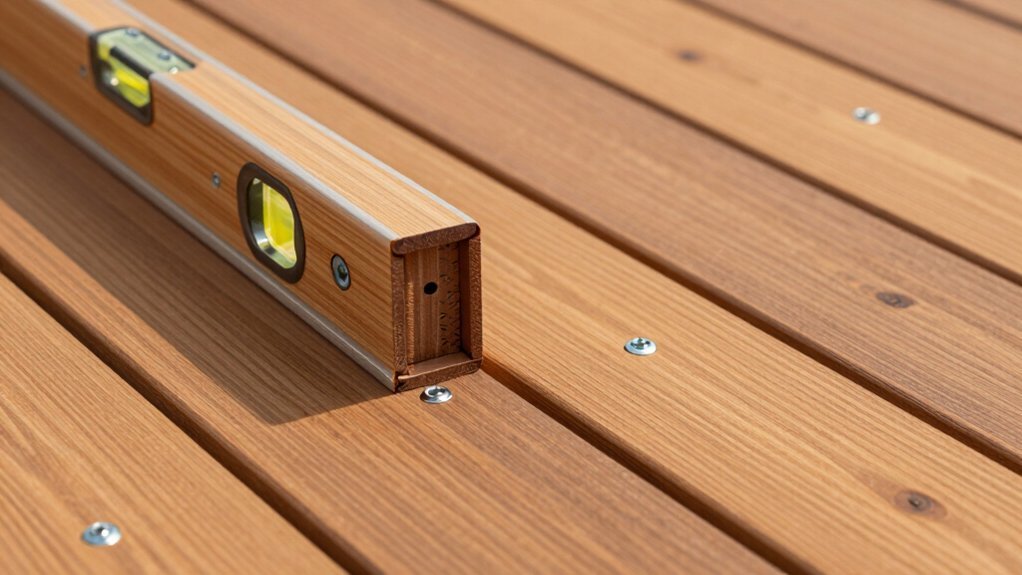
To start installing decking boards, you’ll secure a straight, gap-free surface by choosing the right fasteners, aligning boards consistently, and finishing with clean edges.
Use proper fastener types for your deck material and substructure—metal screws for treated lumber, hidden fasteners for a smooth surface, and corrosion-resistant options for moisture-prone zones.
Plan spacing with a consistent gap to allow drainage and thermal expansion.
Apply alignment techniques: set boards with a straightedge, check plumb and level across joists, and butt joints tightly but not forced.
Pre-drill where needed to prevent splitting, then drive fasteners flush or slightly below the face.
Finish edges with trim or fascia for a tidy look.
Inspect daily for misaligned boards and reseat promptly to maintain a uniform, durable deck surface.
Deck Maintenance and Cost: Care, Troubleshooting, and Budgeting
Deck maintenance keeps your deck safe and looking good, while smart budgeting helps you plan repairs and replacements without surprise costs. You’ll set a routine for inspection, cleaning, and timely fixes, so small issues don’t become major problems.
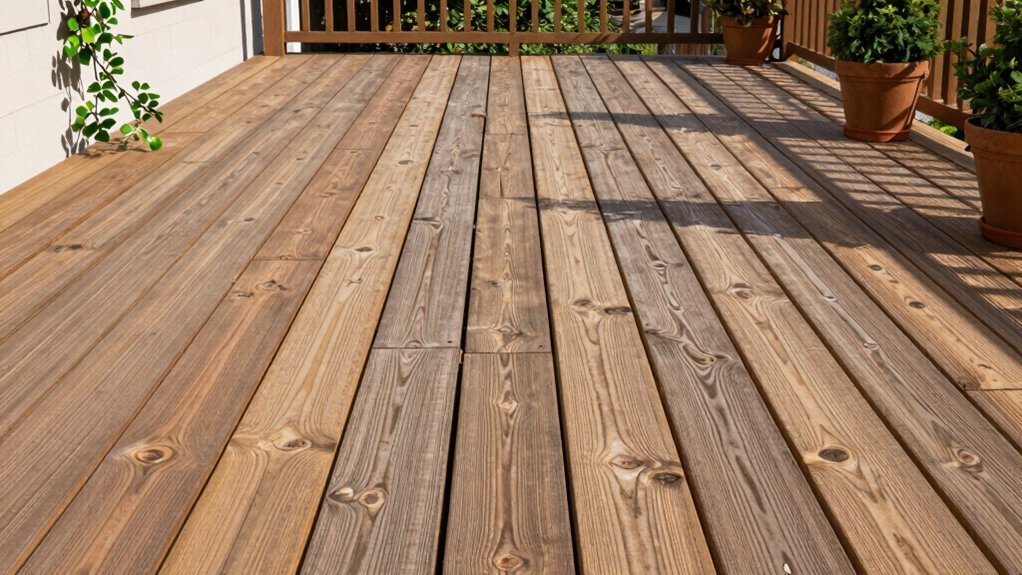
Prioritize deck cleaning to remove dirt, mold, and algae, using a stiff brush and appropriate cleaner, then rinse fully to avoid residue. Check fasteners, rails, and joists for looseness or rot, and address damage promptly with weatherproofing or replacement as needed.
Implement preventive steps like sealing or staining on schedule to extend life and preserve appearance. When budgeting, estimate annual upkeep, seasonal repairs, and interval refinishing, reserving funds for unexpected issues.
Maintain documentation of treatments and warranties to support future decisions and costs.
Frequently Asked Questions
How Long Does a Typical Decking Project Take From Start to Finish?
A typical decking project takes about 1 to 2 weeks, depending on size and conditions. You’ll streamline with clear deck planning and informed material selection, then schedule permits, framing, decking, railing, and final inspections efficiently. Stay organized, finish soon.
Can I Install Decking Boards Over Concrete or Only Over Framing?
Yes, you can’t deck over bare concrete without framing for decking. Start with a proper sleeper or joist framework, then install decking over concrete-backed framing for a stable, lasting surface. Use moisture barriers, fasteners, and drainage.
Which Stain or Sealant Best Protects Against Weathering?
A deck stain plus a weatherproof sealant protects against weathering best. You should choose a high-quality exterior deck stain and apply a weatherproof sealant to lock color, resist moisture, and extend durability between cleanings and recoats.
How Do I Prevent Splinters and Improve Overall Deck Comfort?
Smooth your approach—you’ll prevent splinters by sanding, sealing, and maintaining boards regularly. For safe footing, choose non-slip coatings and keep surfaces clean. Deck maintenance requires inspecting fasteners; replace damaged boards promptly to preserve comfort and longevity.
What Permits or Approvals Are Usually Required for Decking Projects?
You’ll typically need permits from your local building department, and possible approvals from homeowner associations, depending on your area’s building codes and HOA rules. Check building codes, HOA requirements, setback rules, and inspection triggers before starting decking.
Conclusion
You’ve got a solid grasp now: choose the right materials, frame securely, lay boards true, and seal and inspect regularly. Stick to codes, spacing, and fasteners, then finish with neat edges for a clean, lasting deck. Maintenance pays off with fewer surprises and longer life. If you start with a clear plan, your savings will feel like magic—because a well-built deck lasts, while some decks vanish into the weather. Build smart, enjoy every step, and watch your outdoor space shine.