Disclosure: This post contains affiliate links. As an Amazon Associate, we earn from qualifying purchases.
Decking materials include natural wood, composites, PVC, aluminum, and eco-friendly options. Natural wood offers warmth and customization but requires maintenance. Composite boards blend plastic and wood fibers for durability with less warping and rot, though they need periodic cleaning. PVC and aluminum resist moisture, UV, and temperature changes but can be pricier or have different strength profiles. Eco-friendly choices emphasize recycled content and low VOCs, balancing longevity and environmental impact. If you want more, you’ll see how these choices fit your climate, budget, and plan.
Decking Materials: A Quick Guide to Your Options
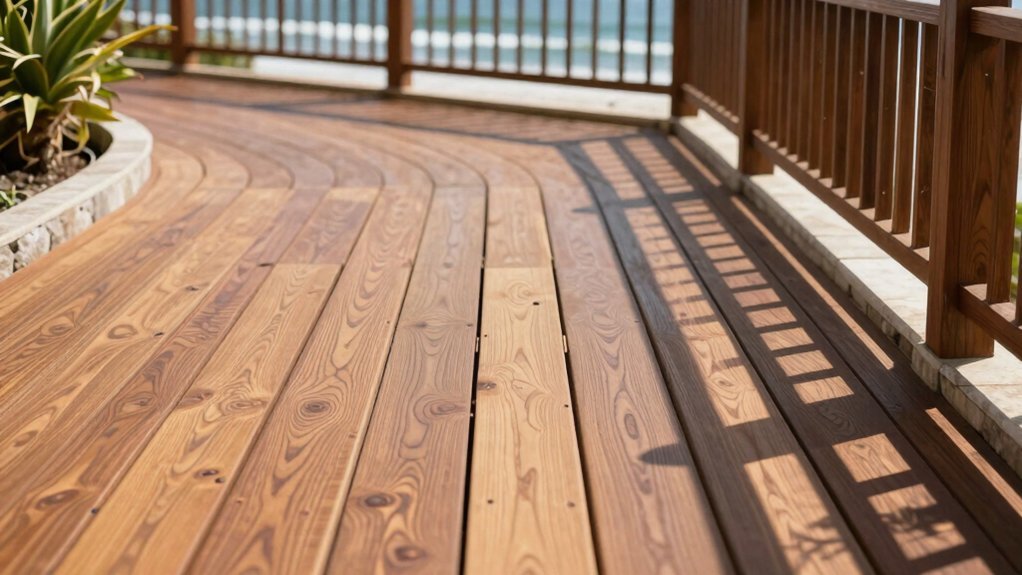
Choosing decking materials hinges on durability, maintenance, cost, and aesthetics. You’ll evaluate options by performance under use, climate, and exposure, then map these to your project constraints.
Composite boards deliver consistent density, low splinter risk, and stable color, but require specific fasteners and regular cleaning to prevent mold.
PVC options resist swelling and decay, yet come at a premium and can flex under heavy loads.
Aluminum decking provides extreme longevity and minimal maintenance, with higher installation costs and heat retention considerations.
Natural wood varies widely in hardness and rot resistance, demanding ongoing treatment.
Budget options balance upfront price with long-term upkeep, while maintenance tips emphasize prompt debris removal, periodic sealing, and correct screw alignment to preserve surface integrity.
Choose materials aligned with support structure, climate, and anticipated use.
Natural Wood Decking: Pros, Cons, and Best Uses
Natural wood decking offers noticeable durability and longevity when properly selected and maintained, but performance hinges on species, treatment, and environmental exposure.
You’ll evaluate aesthetic and finish options—grain, color stability, and surface texture—to match design intent with maintenance demands.
Balancing durability with finish choices helps you forecast lifecycle costs and performance under typical use.
Durability And Longevity
Natural wood decks vary in durability depending on species, treatment, and maintenance, but properly chosen and cared-for boards can last many decades with minimal structural decline.
In this section, you assess performance under load, weather cycles, and moisture management. Species influence decay resistance, dimensional stability, and hardness, which affect fastener withdrawal and surface wear.
Treated lumber reduces decay risk, yet chemical migration and coating compatibility matter for long-term protection. Maintenance frequency, cleaning method, and stain or seal choices determine abrasion resistance and moisture ingress.
Tightly sealed joints and proper ventilation minimize rot pathways, while surface planing mitigates splinter development.
Consider how outdoor furniture and privacy screens interact with deck surfaces, influencing load distribution and edge wear.
Aesthetic And Finish Options
Even though wood decks offer authentic warmth and texture, the aesthetic and finish options you choose shape both appearance and long-term performance. Natural wood presents distinct color options and texture variations that influence glare, fade resistance, and surface feel underfoot.
You’ll assess finish systems by durability, maintenance, and compatibility with substrate moisture. Clear finishes preserve natural grain, while tinted stains alter hue and UV protection. For even aging, consider UV inhibitors and water-repellent formulations that balance color stability with breathing capacity.
Board profile and joinery interact with finish absorption, affecting slip resistance and maintenance intervals. You’ll prefer minimal system layers to reduce maintenance, yet opt for enhanced protection in high-traffic zones or harsh climates.
Composite Decking: Durability, Maintenance, and Cost
Composite decking blends plastic and wood fibers to deliver a durable, low-maintenance alternative to traditional timber.
You evaluate durability by examining resistance to moisture, UV exposure, and temperature fluctuations; composites typically resist warping, cracking, and rot better than untreated lumber, though color fade and surface wear remain considerations.
Maintenance is simplified to periodic cleaning and occasional re-sealing only if the product specification calls for it; most options require minimal upkeep, helping you budget over the life cycle.
Costs are upfront higher than timber but often offset by longer service life and reduced maintenance.
Sustainability hinges on material composition and recycling programs; you should seek sustainable options and manufacturers offering take-back schemes.
Innovative designs enable longer spans and varied profiles without sacrificing performance or stability.
Alternative Materials: PVC, WPC, and Aluminum – Pros, Cons, and Uses
PVC, WPC, and aluminum decking offer distinct performance profiles that complement or challenge wood-based and composite options. You’ll compare durability, maintenance, and aesthetic compatibility to decide fit for your project.
PVC excels in moisture resistance and uniform color but can suffer from lower impact strength and thermal expansion concerns; installation challenges may include specialized fasteners and hidden-clip systems.
WPC blends plastic with wood fibers, delivering good dimensional stability and ease of installation, yet can experience staining, fading, or surface checking in high-UV environments.
Aluminum provides high rigidity, corrosion resistance, and longevity with low maintenance, though higher initial costs and heat transfer considerations can arise.
Consider material sustainability, lifecycle costs, and compatibility with your climate, load demands, and railing integration.
Eco-Friendly Decking: Recycled Content, VOCs, and Lifetime Impact
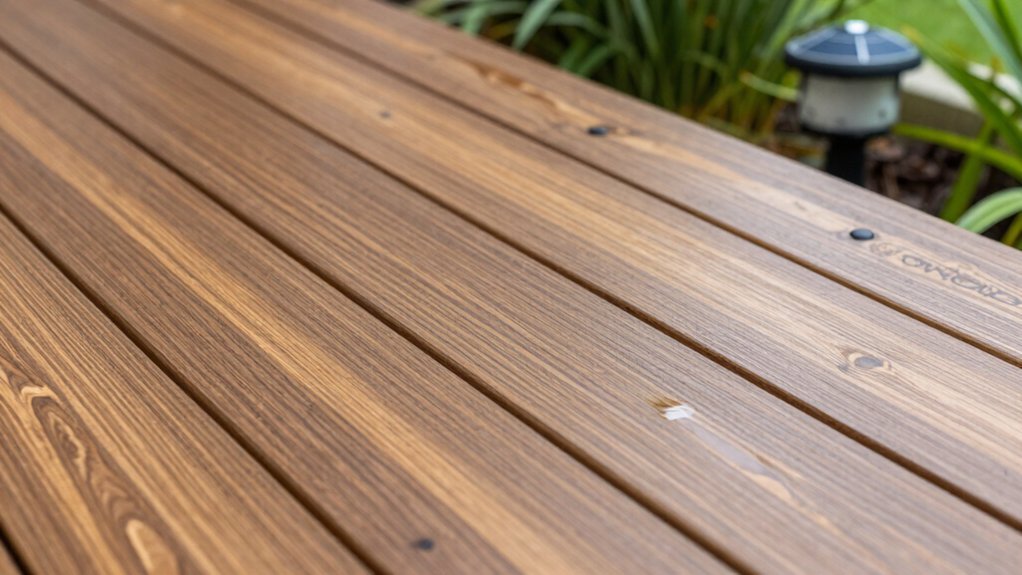
Eco-friendly decking centers on recycled content, low-VOC formulations, and a clear view of lifetime impact. You evaluate materials by cradle-to-grave metrics, focusing on post-consumer and post-industrial streams, supply chain transparency, and end-of-life recyclability.
Recycled content gauges how much recovered material integrates into boards, sleepers, or fasteners, reducing virgin resource draw and landfill burden.
VOCs, or volatile organic compounds, measure indoor-air quality risk during installation and use; selecting low-VOC formulations minimizes emissions without compromising performance.
Lifetime impact combines durability, maintenance needs, and replacement cycles, translating into total environmental cost.
Rigorous testing covers weather resistance, color stability, and structural integrity under load.
You should compare certifications, third-party audits, and material warranties to make an evidence-based choice aligned with sustainability goals and building codes.
How to Choose: Cost, Longevity, Climate, and Installation Fit
When choosing decking, weigh cost against longevity, climate suitability, and installation requirements to optimize total value. You should quantify upfront: material price, maintenance cadence, and expected replacement cycle. Compare life-cycle costs across options, factoring labor, fasteners, and coatings.
Assess climate exposure—sun, humidity, freeze-thaw—and select species or composites with proven performance in those conditions. Consider slip resistance under wet use; choose textures or coatings that maintain grip without compromising aesthetics.
Evaluate garden privacy implications: solid panels or dense lattices may improve screening and resale value, while open profiles enhance airflow. Verify installation compatibility with your substructure and existing guardrails.
Finally, confirm warranty terms, service availability, and supplier reliability to minimize long-term risk and optimize durability, safety, and overall return on investment.
Plan and Install: Size, Substructure, Permits, and Maintenance Tips
Plan the deck layout and support system by establishing precise size and spacing, then outline the substructure and permit requirements before any framing begins. You’ll define overall geometry, beam and joist spans, and railing clearances, then translate these into a structural layout.
Determine footing locations, frost line considerations, and load path continuity to avoid future sagging or movement. Deck planning includes selecting materials that meet deflection limits and moisture exposure, plus confirming code references for fasteners and connectors.
Consult local permit requirements early, and prepare drawings showing elevations, setbacks, and compliance with zoning. Maintain a maintenance plan from the outset: waterproof sealants, periodic hardware checks, and seasonal inspections. Document maintenance intervals and access issues to preserve long-term performance and safety.
Frequently Asked Questions
What Is the Best Decking Material for High Moisture Areas?
Composite decking performs best in high moisture areas, resisting warp and decay better than traditional woods; hardwood options can work but require maintenance. You should consider moisture resistance, warranty, and long-term stability when choosing composite decking.
How Long Do Deck Coatings or Sealants Last?
Coatings and sealants typically last 1–5 years, depending on foot traffic and exposure. You’ll boost deck durability by proper sealing techniques, selecting UV-stable products, and maintaining a clean, dry surface between applications. Regular inspections extend coating life.
Can I Install Decking Over Concrete or Gravel?
Yes, you can, but you’ll need a stable substrate, drainage, and proper moisture barriers. Plan decking installation carefully, ensuring compatibility with concrete or gravel. This impacts decking durability, fixes, fasteners, and leveling, reducing movement and post-install maintenance.
Are Anti-Slip Options Available for Wet Decks?
Yes, you can improve slip resistance on wet decks with non slip coatings. They provide enhanced traction, reducing slips; choose products specified for outdoor, UV-stable use. Verify compatibility, surface prep, and maintenance to maintain long-term slip resistance.
Do All Deckings Require Annual Maintenance?
Yes, not all deckings require annual maintenance, but you should schedule upkeep. Juxtapose durability with neglect: decking durability suffers, maintenance frequency rises. You’ll extend lifespans by inspecting, cleaning, and treating materials, depending on species and finish.
Conclusion
You’ve reviewed decking options, balancing pros, cons, and costs to fit your climate and project goals. Natural wood offers warmth but higher maintenance; composites cut upkeep with steady durability; PVC, WPC, and aluminum grant alternatives with specific tradeoffs. Eco-friendly choices add sustainability without sacrificing performance. Plan, compare warranties, and match your substructure to material. Decide on budget, longevity, and installation fit. Anachronistically, imagine a carpenter with a laser-level, precision steady as a crossbow. Final choice: informed, optimized, and future-proof.