Disclosure: This post contains affiliate links. As an Amazon Associate, we earn from qualifying purchases.
Yes—paint deck joists if you want added durability and a cleaner look, but do it right. Start with clean, dry wood free of rot or loose fibers, then use a stain-blocking primer followed by a high-quality exterior acrylic or latex topcoat. Apply thin, even coats and let each layer cure fully. Be mindful of moisture, drainage, and proper venting; thick coats can trap moisture. If you keep at it, you’ll uncover more tips soon.
Should You Paint Deck Joists? Key Considerations and Outcomes
Should you paint deck joists? Yes, but with purpose. You weigh durability, aesthetics, and maintenance.
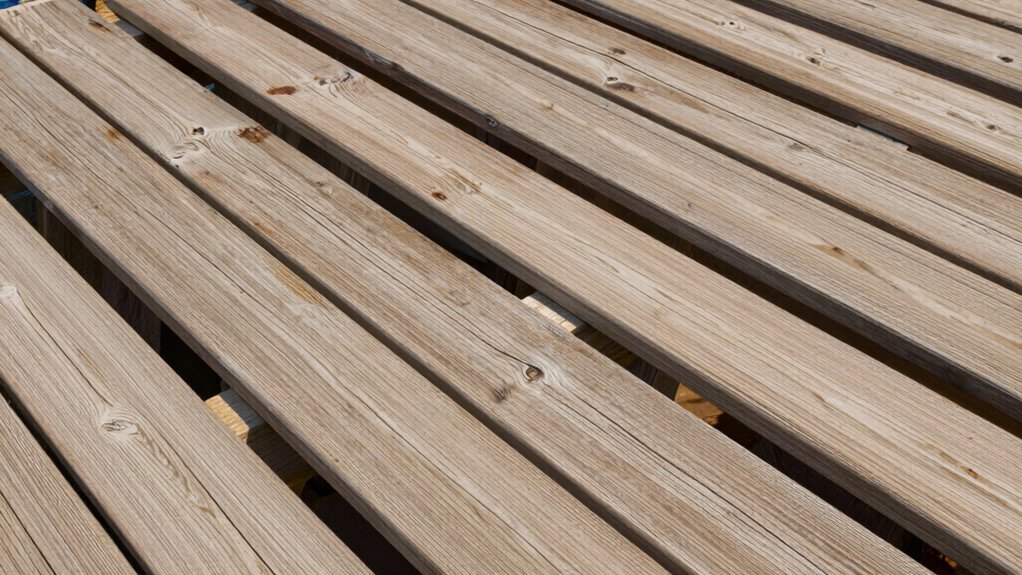
Start by evaluating wood condition: clean, dry, and free of rot. If you spot loose fibers, repair or replace before painting.
Next, consider wood treatment and pore openness. Fresh, properly prepared wood accepts paint better, while aged or weathered surfaces may require a conditioner to improve paint adhesion.
Sand lightly to smooth rough spots and remove mill glaze; wipe away dust.
Prime with a high-quality 100% acrylic exterior primer designed for bare wood, ensuring even coverage.
Choose a breathable topcoat to resist fading and moisture. Allow full cure between coats.
Remember: good wood treatment and solid paint adhesion extend life, reduce peeling, and simplify future maintenance.
Paint vs. Stain vs. Sealer: Which Choice Is Best for Painted Joists?
Choosing the right finish for painted joists hinges on balancing appearance, protection, and maintenance. You’ll weigh paint, stain, or sealer by how they affect wood grain visibility, color options, and long-term upkeep.
If you want a bold, uniform look, paint offers solid color and better hiding of imperfections, but it can crack with movement and require periodic touch-ups.
Stain preserves more of the wood’s natural texture, highlights grain, and accepts a range of light-to-dark hues, yet it offers less protection against moisture and wear.
Sealer provides a minimalist option to lock in moisture resistance and sheen without changing color drastically, but it won’t rejuvenate faded wood.
Choose based on desired appearance, maintenance tolerance, and deck exposure. Consider layering clear sealer over a tinted stain for balanced performance and visual depth.
When Painting Makes Sense: Climate, Deck Use, and Joist Type
Climate, deck use, and joist type all drive whether painting makes sense. You weigh climate to avoid trapped moisture and UV damage, and you consider deck use to determine wear patterns.
If you live where summers are hot and winters damp, painting can help seal joints and slow weather impact, especially on exposed or high-traffic boards.
For non-structural joists, painting may extend life when wood treatment isn’t consistent or where knots and grain trap moisture.
In covered or shaded areas, painting is less essential but still useful for uniform appearance.
Choose a breathable coating if you want seasonal flexibility.
How Painting Affects Moisture, Rot, and Warranties
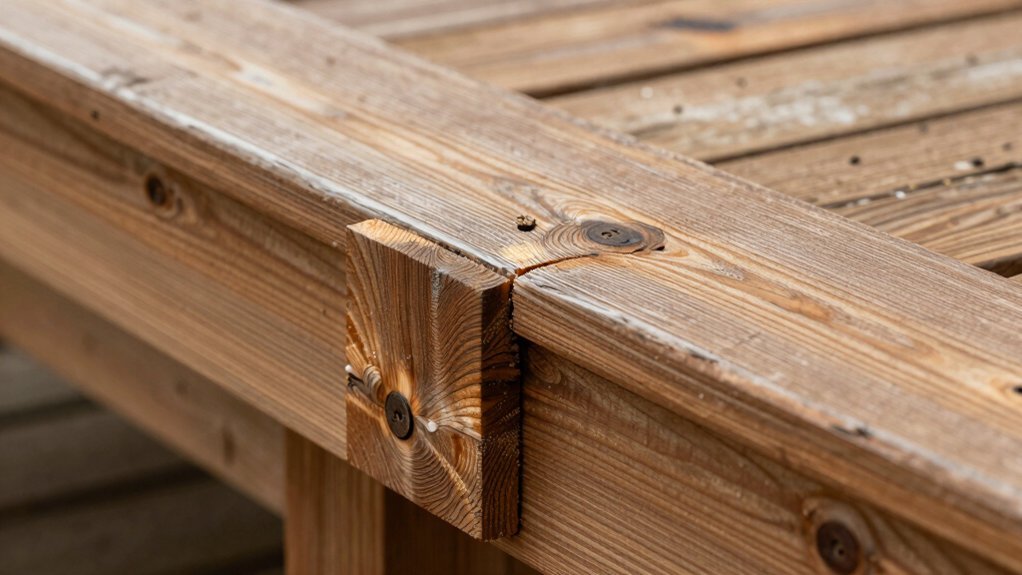
Painting creates a moisture barrier that helps keep joists dry, but you still need proper venting and drainage to prevent trapped moisture.
While coatings can limit rot risk, they don’t remove it; you should follow manufacturer guidance and recoat on schedule to maintain protection.
Be aware that some warranties require specific primers or systems, so check terms before and after painting.
Moisture Barrier Effects
Moisture barriers matter because paint, stain, and sealants don’t just add color—they form a protective layer that blocks water from soaking into the wood. When you apply a proper moisture barrier, you slow surface absorption and reduce seasonal swelling, which helps joists stay straight and stable longer.
Choose a product suited for exterior wood and ventilation, then apply per label directions, ensuring complete coverage on all faces, ends, and seams. Consistency matters: thin, even coats seal better than heavy, uneven ones.
Remember that wood treatment compatibility affects performance; if you switch products, test adhesion first. The goal is reliable protection without trapping moisture behind the finish.
Consider the paint color and its effect on heat absorption, which can influence drying times and long-term durability.
Rot Prevention Limits
Even with a proper moisture barrier, improper painting can still invite rot, so set practical limits on application to protect joists over time. You’ll reduce wood decay risk by avoiding excessive coats and thick layers that trap moisture.
Use thin, even brushes or rollers to promote true surface drying between coats, and allow full cure times before any exposure to rain or damp air. Choose breathable primers and paints that resist water intrusion but don’t seal the wood airtight, which can trap moisture inside.
Inspect treated joists regularly for peeling, cracking, or blistering, and address issues promptly. Maintain surface cleanliness before repainting, and don’t neglect areas near fasteners where corrosion could start.
Note how paint adhesion can decline if surfaces stay damp.
Warranty Implications
Warranty considerations come into play when painting deck joists because proper coating can influence moisture management and rot risk, which in turn affects manufacturer guarantees. If you paint, you must follow product directions and ensure the coating reaches all exposed wood without trapping moisture.
A low- or mid-sheen paint can look better and resist dirt, but you should avoid high-gloss finishes that can trap heat and moisture in seams. Check that the wood grain remains visible enough for inspection; overly thick coats can hide problems.
Some warranties require breathable coatings and periodic reapplication, so track maintenance intervals. Document product name, batch, and dates to avoid disputes. Remember, failing to meet maintenance terms may void coverage, so choose a compatible paint sheen and apply evenly.
Prep Steps to Maximize Paint Longevity on Joists
To prep deck joists for lasting paint, start by removing all dust, dirt, and loose fibers with a stiff brush or blown air. Then wipe surfaces with a damp cloth to pick up remaining grime.
Scrub any lingering grime with a scrubbie, focusing on grooves and nail holes. After cleaning, let surfaces dry completely to avoid trapping moisture.
Lightly scuff glossy areas with fine sandpaper so the new finish adheres well. Vacuum dust before painting to minimize particles.
When you inspect, look for wood grain texture that could trap moisture and plan to seal accordingly.
Choose a primer that blocks stains and supports even color matching, and apply a thin, uniform coat. This prep improves moisture resistance and helps color consistency across joists.
Picking the Right Paint and Primers for Exterior Joists
Choosing the right primers that pair well with exterior paints is key for long-lasting joists.
Consider primer compatibility, exterior paint durability, and moisture sealing techniques to prevent peeling and rot.
Use products labeled for deck use, and follow manufacturer instructions for surface prep and application.
Primer Compatibility For Joists
So, what primer should you use on exterior deck joists? Start with compatibility checks: the primer must bond well with both the joist material (wood, pressure-treated lumber, or composite) and the topcoat you plan to apply. Read labels for substrate compatibility and climate tolerance.
If you’re painting untreated wood, choose a stain-blocking, oil- or water-based primer designed for exterior use.
For pressure-treated wood, use a primer labeled for PT lumber to prevent alkali bleed and ensure paint adhesion.
If you’re applying latex or acrylic topcoats, pair them with a compatible latex primer for better flexibility.
Always test a small area, wait for full cure, and re-evaluate primer compatibility before the full coat.
Exterior Paint Durability
Ever wonder why some paints hold up on exterior joists while others peel in a season? Durability starts with choosing the right paint and primer combo. Look for a high-quality acrylic or acrylic/oil hybrid exterior paint formulated for wood, plus a compatible primer that blocks stains and seals the surface.
Apply a thorough coat of primer before color, letting it cure fully. For best longevity, pick products labeled for siding or decks, with UV resistance and mildew resistance. Prepare the surface properly—clean, dry, and lightly abraded—to improve adhesion.
Consider deck stain as an option for a more natural look, but ensure it’s compatible with the joist material and finish. Prioritize wood preservation by avoiding thin, mismatched layers and recoat as needed.
Moisture Sealing Techniques
When sealing moisture on exterior joists, start with the right paint and primer combination. You’ll want a high-build, exterior-grade acrylic or epoxy paint paired with a compatible primer designed for wood. Choose a product labeled for moisture resistance and outdoor exposure.
Primer helps paint adhesion and blocks tannins that can bleed through the finish. Apply a thin, even coat to seal rough surfaces, then let it dry fully before topcoating.
Consider a polyurethane or elastomeric topcoat for added protection in damp climates. Be mindful of wood expansion; pick flexible coatings that tolerate movement without cracking.
If you notice peeling or soft spots, address moisture sources first. Proper sealing reduces rot risk and supports long-lasting paint adhesion.
Step-by-Step Painting Method for Deck Joists
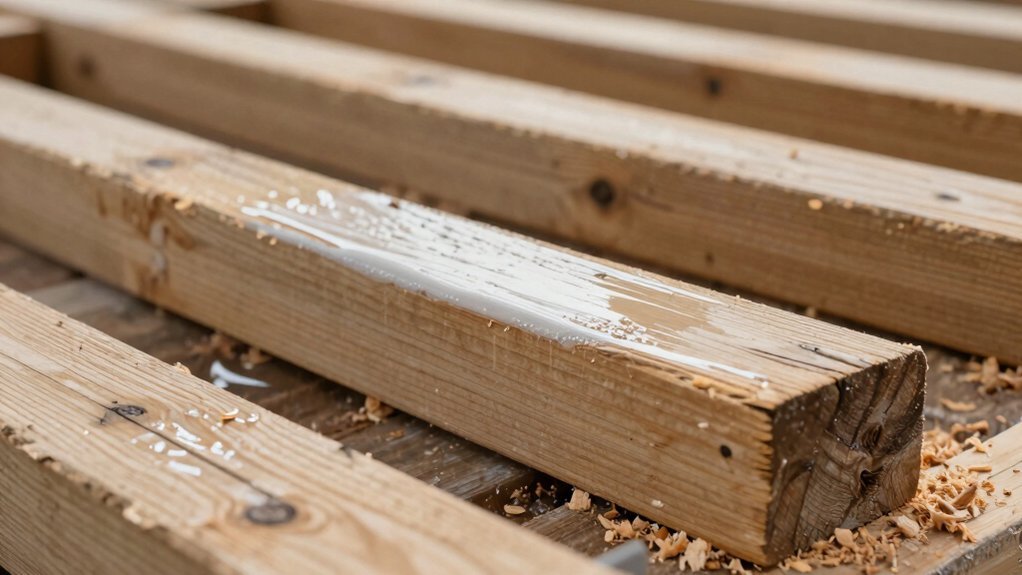
To start painting deck joists, prepare the surface by removing dirt, mildew, and old paint or stain. Next, repair any loose boards and sand rough areas until smooth.
Choose a high-quality exterior paint or solid stain, and evaluate color selection that complements your deck and home. Protect adjacent surfaces with drop cloths and painter’s tape, and mask fasteners if needed.
Apply a primer unless the product is a guaranteed, stain-on-top coating; let it dry fully before moving to color. For paint application, use a compatible exterior brush or roller, applying thin, even coats with long, straight strokes along the grain.
Allow each coat to dry completely and inspect for missed spots, re-coating as necessary to achieve uniform coverage and durability.
Maintenance and Troubleshooting for Painted Joists
Maintaining painted joists starts with regular inspection to catch peeling, cracking, or blistering early, so address these issues before they worsen. If you spot peeling paint, scrape loose areas and recoat with matching exterior grade paint to halt moisture intrusion.
Cracks or blistering signal trapped moisture or UV damage; dry the surface, fill gaps with a compatible filler, and reapply a sealant. For persistent peeling, consider light sanding to promote adhesion, then reapply a primer and top coat.
In maintenance cycles, plan periodic deck staining to refresh color and protection, reducing wood exposure. Use appropriate wood treatment between projects to deter decay and insects.
Monitor drainage runoff and clean gutters to prevent water pooling near joists. Document schedules to stay on track with future care.
Frequently Asked Questions
Do Painted Joists Require Special Fasteners or Primers Differently?
Yes, painted joists don’t need special fasteners, but you should check fastener compatibility with the paint and deck material, and verify primer requirements are met before painting. Use compatible corrosion-resistant screws and follow primer directions carefully.
How Often Should Painted Deck Joists Be Re-Coated?
“Wallpapered sails” sails? No—painted deck joists need re-coating every 2–4 years, depending on wear. Establish a maintenance schedule, clean first, inspect for peeling, then touch up. Consider paint durability and weather exposure for best longevity.
Can Painting Joists Void Deck Warranties or Permits?
Painting can affect warranty implications and permit requirements, so you should check your manufacturer and local codes first. You’ll need clear records, proper coatings, and possible approvals to avoid jeopardizing warranties or missing permits on your deck.
Is Paint Breathable Enough for Hidden Joists Under Decking?
Breathing space matters: yes, paint can be breathable enough for hidden joists if you choose a breathable primer and finish. You’ll want ventilation concerns addressed, and expect limited paint durability without proper moisture management and coating selection.
Do Painted Joists Affect Insect or Wood-Decay Treatments?
Painted joists can slightly reduce insect resistance and complicate wood preservation if coatings trap moisture; guarantee breathable, properly applied finishes and maintain ventilation to protect against decay and pests. Inspect, recoat, and monitor for signs of damage.
Conclusion
You can repaint deck joists, but do it with purpose. Choose exterior-grade, breathable paints or solid stains that resist moisture and UV, and pair them with a compatible primer. Expect more maintenance than untreated wood, and verify your warranty requirements. An eye-opening stat: untreated decks can swell 1–3% after rain, leading to costly repairs. If you’re careful with prep and climate fit, painted joists can look great and hold up—just stay on top of inspections and recoat timelines.