Disclosure: This post contains affiliate links. As an Amazon Associate, we earn from qualifying purchases.
A deck should be level for stability, safety, and drainage. A true, consistent plane prevents movement, gaps, and soft spots, while guiding water away to avoid rot and soak-through. You’ll gain predictable placement for furniture and railings, plus easier maintenance. Tilt can be used for drainage, but it risks uneven edges and aesthetics if not balanced with structural integrity. To guarantee long-term performance, aim for a precise level baseline and verify across the entire surface—more detail awaits.
What Makes a Deck Truly Level: Why It Matters for Stability and Drainage
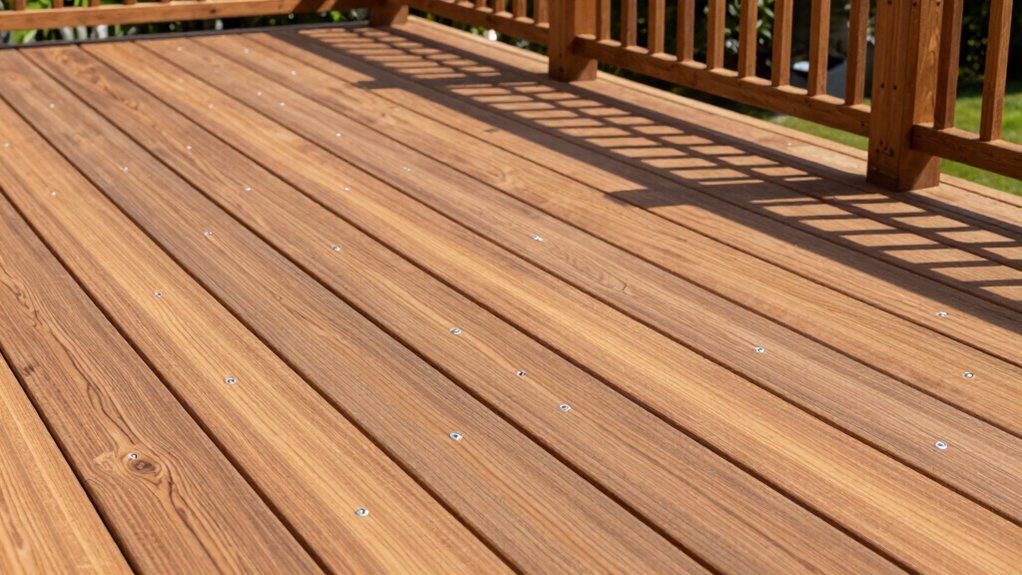
A deck isn’t truly level simply because it looks flat; precision matters because even slight elevation changes can compromise stability and drainage. You measure across multiple points, confirm plumb with a level, and account for load distribution.
A level deck maintains consistent supports, uniform joist spacing, and stable fasteners, preventing soft spots and movement under load. Stability hinges on aligning substructure and surface plane, not just visual cues.
Decking aesthetics benefit when the surface remains true, avoiding gaps or trips that disrupt flow and perception. Weather resistance matters too: consistent plane reduces water pooling, directs runoff, and minimizes soak-through.
You’ll achieve durability by documenting tolerances, testing for sag, and correcting deviations early, ensuring long-term performance and safer, more reliable use.
Should You Build Level or Tilt for Drainage? A Practical Decision Guide
You’ll weigh drainage needs against levelness, balancing tilt with the deck’s load paths and water flow. Consider how even a slight slope changes runoff, stability, and future maintenance.
Think about where level remains critical for safety and furniture layout. This guide frames the tradeoffs—drainage tilt necessity versus levelness impact—so you can make a precise, informed choice.
Drainage Tilt Necessity
To guarantee proper drainage, you should decide early whether decking will be level or pitched, since tilt directly affects water runoff and long-term stability. When you assess drainage tilt, prioritize function over form, but don’t ignore the impact on rainwater runoff pathways and substrate load.
A deliberate tilt directs water away from joists, ledger attachments, and interior thresholds, reducing standing moisture and rot risk. It also shifts load toward ground drainage, but increases uphill edge exposure to debris and ice buildup if miscalculated.
Your decision should balance mechanical drainage efficiency with acceptable deck aesthetics, ensuring joist spacing and fastener choices accommodate the slope. In short, tilt is practical only if it yields dependable, predictable runoff while maintaining structural integrity and durable surface performance.
Levelness Impact Choices
Whether you should build level or tilt for drainage hinges on how water, load, and movement interact with your site, joist design, and finished surface. In this decision, evaluate the tradeoffs between keeping a uniform plane and enabling drainage flow.
A level deck enhances predictability in traffic paths and aligns with standard platforms, but may require additional drainage detailing to prevent pooling.
Tilt offers a proactive slope that guides water away, reducing surface moisture and potential rot, yet can compromise perceived symmetry and complicate railing alignment.
Your choice should balance deck aesthetics with practical performance, ensuring structural integrity and ease of maintenance.
Prioritize material selection that tolerates moisture exposure and select fasteners that resist corrosion.
This disciplined approach sharpens outcomes and supports durable, attractive decking.
How to Measure Your Deck Level Accurately (With Tools and Steps)
Accurately measuring deck level starts with establishing a consistent reference plane, typically the top of the ledger board or a known straight edge. Then, verify that the deck surface sits within allowable tolerances across its length and width.
You’ll use a spirit level, laser level, or digitally connected ruler to check multiple points along the perimeter and interior. Record each reading, note deviations, and compare against your design spec.
Confirm tool calibration before use by verifying bubble accuracy, plumb, and line alignment on each device. Move systematically from one corner to the opposite, then cross-check midpoints for consistency.
Maintain perpendicular reference lines to the ledger and posts. Favor redundancy with two independent measurements or a secondary device to confirm measuring accuracy and minimize errors.
Fixes for Uneven Boards and Posts: Quick Wins and Lasting Solutions
Uneven boards and posts undermine deck stability, so tackle both symptoms and root causes with targeted fixes. You start by inspecting fasteners and joists for looseness, then tighten or replace hardware to stop movement.
For quick wins, reseat a high or low board with shims or micro-adjustment shims under the decking edge, ensuring a snug fit without creating gaps that trap moisture.
When posts wobble, perform post adjustment by checking plumb with a level and shimming or sistering corrected sections to restore vertical alignment. If a post is compromised, consider anchoring with a new post base or replacing the segment entirely.
Document changes, recheck levelness across the frame, and verify guest-safety clearance. Use deck repair methods that preserve structural integrity and durability.
Materials, Slopes, and Code Requirements for Residential Decks
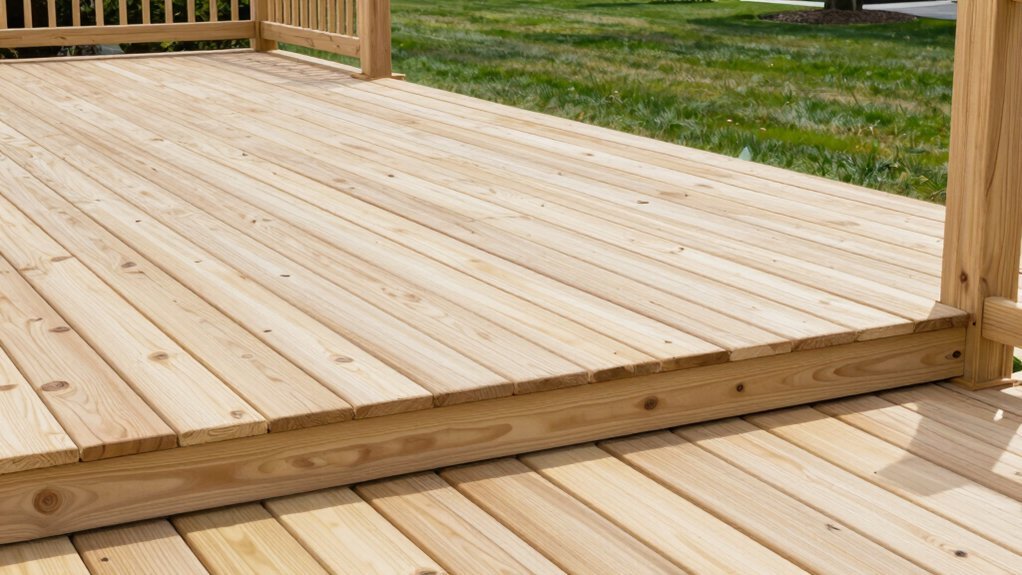
Selecting the right materials and understanding slopes and code requirements are the next steps after fixing uneven boards and posts. You’ll choose decking materials based on durability, moisture resistance, and how they respond to temperature changes, ensuring long-term stability.
Evaluate slope recommendations to ensure proper drainage and prevent standing water that can compromise framing.
Building codes specify span tables, fastener types, joist sizes, and guard requirements; you must match these to your deck design and local amendments.
Material selection also affects load ratings and maintenance needs, so balance cost with performance.
Pay attention to warranty terms and supplier certifications, because you’ll rely on these components for safety and compliance.
Maintenance Habits to Keep Your Deck Level Year After Year
Maintenance habits are essential to keep your deck level and safe year after year, starting with a disciplined inspection routine that catches sagging joists, loose fasteners, and drainage issues before they escalate.
You should schedule quarterly checks for warping, fastener pullout, and ledger tightness, recording findings to guide timely fixes. Use a moisture meter to verify wood condition and confirm that elevation remains uniform across spans, correcting high- or low-point deviations promptly.
Implement clean, deliberate maintenance cycles: reseal or stain as needed, seal joints to deter water intrusion, and replace damaged boards to protect structural integrity.
Consider decking aesthetics when selecting finishes that resist wear, and perform seasonal adjustments to compensate for expansion and contraction, ensuring consistent alignment and safer use year round.
Frequently Asked Questions
How Does Seasonal Soil Expansion Affect Deck Level Over Time?
Seasonal soil expansion gradually lifts and shifts your deck, causing unevenness over time. You’ll see gaps and warped boards as foundation shifting alters support. Monitor for sloping, tighten fasteners, and consider accepting minor movement to prevent stress.
Can Tree Roots Cause Deck Leveling Issues and How to Mitigate?
Tree roots can cause deck settling; mitigation requires root barriers and proper drainage. In a hypothetical suburb study, a mature maple shifted joists due to soil expansion, then stabilized after trenching, aeration, and underpinning under critical posts.
Do Deck Owners Need Permits for Leveling Adjustments in My Area?
Yes, you generally need a permit for deck repair involving leveling adjustments in many areas; verify permit requirements with your local building department, as codes vary. Without permits, inspections or penalties could complicate future resale.
What Are Cost Differences Between Leveling Versus Rebuilding a Deck Frame?
Hovering like a cliffhanger, a cost difference favors leveling if structural integrity remains sound; a rebuild is pricier. You’ll compare material, labor, and risk, noting cost comparison hinges on frame condition and long-term stability.
How Do Weather Patterns Influence Long-Term Deck Slope Stability?
Weather patterns influence long-term deck slope stability via soil erosion and drainage issues; heavier rains can erode footing bases and shift soil, while drought-expand-contracted soils alter elevations, causing progressive slope changes and increased maintenance needs.
Conclusion
You’ll love the idea of a perfectly level deck—until you realize “level” isn’t a magic fix, it’s a measured responsibility. Don’t pretend drainage isn’t real, or that a slight slope ruins your layout. You’ll measure, plan, and test, then fix what actually holds up, not what looks right. Keep your posts solid, boards true, and your railing tight. Ironically, the most level deck is the one you rigorously maintain, not the one you dream about.