Disclosure: This post contains affiliate links. As an Amazon Associate, we earn from qualifying purchases.
Choosing between deck stain and oil boils down to appearance, protection, and maintenance. Stains shield with UV protection and a film that resists moisture and mildew, preserving color longer. Oils penetrate for deeper moisture resistance and a natural look, requiring more frequent reapplication but preserving grain texture. A hybrid can offer color plus protection if compatible with your wood. Consider climate, wood type, and maintenance you’re willing to perform. If you want specifics, you’ll find practical guidance ahead.
Decide First: Stain, Oil, or Both for Your Deck
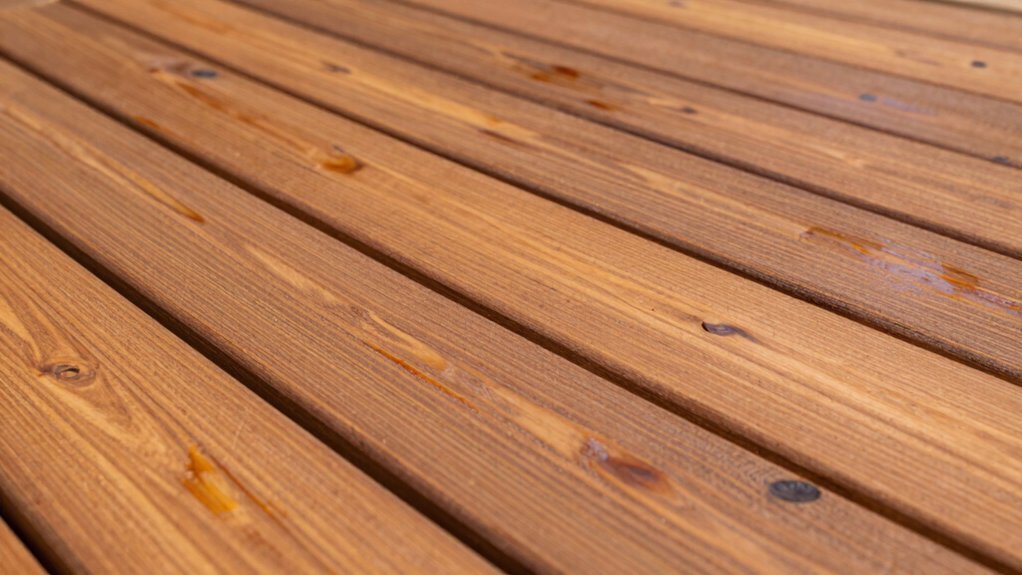
Your choice should hinge on desired finish, maintenance tolerance, and environmental exposure.
For a single-step option, stain provides color options and UV protection, with easier maintenance if you value surface cleanliness.
If you prefer a natural wood look and enhanced water repellence, oil offers deeper penetration, richer grain, and longer reapplication intervals.
Consider a hybrid approach if you want both color and subtle sheen plus enhanced sealing, but verify compatibility with your wood species.
Application techniques matter: stain typically requires a chalk-free surface, even layering, and consistent brushing or rolling to avoid lap marks.
Oils demand thorough cleaning, thin coats, and complete cure between applications.
Evaluate color options, sheen levels, and recoat timelines to match climate, usage, and project goals.
How Stain Shields Against UV, Moisture, and Mildew
Stains guard wood by forming a protective film and penetrative layer that blocks UV rays, reduces moisture ingress, and inhibits mildew growth. When properly applied, this combination minimizes color fading and surface aging.
You achieve UV protection through pigment and resin chemistry that reflect or absorb damaging rays, while the film-forming binder seals capillaries to slow water uptake.
Mildew resistance comes from biocides or inhibitors integrated into the formula, plus a dry film that dries to a smooth, continuous barrier.
If surface prep is solid, the stain’s crosslinking maintains color and gloss stability.
You should recoat on schedule, verify film integrity, and clean surfaces between applications.
Regular maintenance preserves deck aesthetics and structural longevity, ensuring long-term protection against sunlight, moisture, and mildew.
How Oil Penetrates to Guard Moisture and Preserve Grain
Oil penetrates the wood to create a continuous barrier that blocks moisture ingress while allowing the surface to breathe.
You’ll see penetration depth depend on species, grain structure, and application rate, which together determine moisture guard mechanisms.
This approach also preserves grain by reducing water-related swelling and helping maintain color clarity and texture.
Oil Penetration Depth
Oil penetrates wood by moving from the surface into the pores and capillaries, driven by capillary action and diffusion.
You observe that penetration depth depends on oil viscosity, substrate density, and time of exposure. Lower-viscosity formulations infiltrate more deeply, while higher-viscosity blends form a surface film with thinner subsurface diffusion.
You should expect a gradient: a saturated zone near the surface and progressively less oil deeper in the grain. The depth is limited by wood anatomy, where cell walls and lumen dimensions dictate how far molecules travel.
Practical implications include achieving even color, reducing grain raise, and enhancing finish durability.
You assess penetration by testing wipe-off and inspecting for uniform saturation across wood grain without over-application.
Moisture Guarding Mechanisms
Moisture guardings start at the surface and extend into the grain as the oil forms a protective barrier that slows water ingress. You rely on controlled penetration to create a continuous film that minimizes capillary uptake without sealing pores completely.
The mechanism hinges on molecular compatibility with wood moisture content, enabling long-chain hydrocarbons to align along cell walls and fill microcrevices. This partial saturation reduces susceptibility to swelling, cupping, and microcracking from seasonal moisture shifts.
You’ll observe improved exterior durability as oil equilibrates with ambient humidity, while surface tension remains high enough to shed droplets during moderate rainfall.
Aesthetics benefit through consistent sheen and color retention, contributing to aesthetic enhancement. Proper maintenance ensures the barrier remains intact, preserving grain texture and deck usability over time.
Grain Preservation Benefits
Grain preservation benefits arise when the penetrating oil establishes a continuous, breathable film that fills microcrevices without clogging cell pores. You gain moisture resistance as the film blocks water ingress while allowing vapor release, reducing swelling and checking.
Oil penetration into wood grain stabilizes fibers, preserving natural color and preventing rapid grain raise after exposure. By forming a uniform barrier beneath the surface, finish texture remains consistent across sunlit and shaded areas, minimizing contrast shifts over time.
The mechanism relies on capillary action to reach deep cell walls without creating a surface film that masks grain detail. When you apply evenly, you maintain a true wood grain appearance and predictable sheen.
Routine reapplication restores preserved texture without compromising structural breathability or long-term durability.
Pros, Cons, and Maintenance by Finish
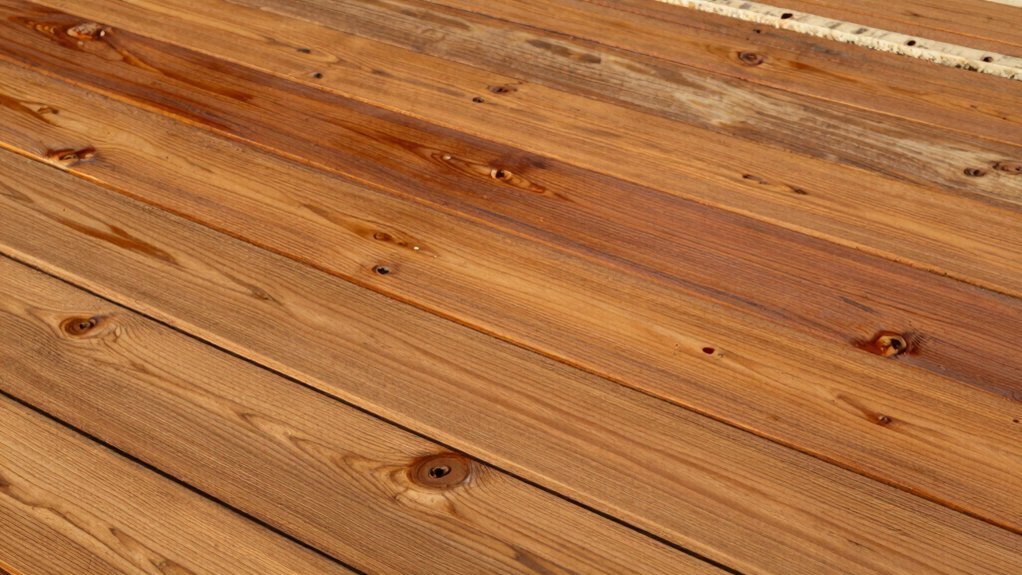
You’ll weigh the pros and cons, then align choice with your deck’s conditions and maintenance goals. Consider how each finish affects protection, upkeep frequency, and long-term performance.
Think about how that translates to cost and effort. We’ll compare finish longevity, maintenance requirements, and how practical durability guides your selection.
Pros And Cons
When choosing between deck stain and deck oil, understanding their pros, cons, and maintenance can guide you to a durable finish. Deck stain provides longer color retention and UV protection, reducing graying, while deck oil enhances grain depth and flexibility, allowing easier repair and maintenance.
Stains tend to form a film that resists water but may require reapplication with time, whereas oils penetrate and rejuvenate timber but can require more frequent upkeep in harsh sun.
Application techniques differ: stains often demand surface cleaning and even brushing or rolling; oils benefit from thin, uniform coats and thorough wiping.
Color options vary with stain more than oil, offering broader shade control.
Choose based on desired appearance, exposure, and maintenance tolerance to optimize performance.
Maintenance Requirements
Maintenance requirements for deck finishes vary by product type. You’ll follow manufacturer guidelines for recoat intervals, cleaning methods, and environmental limits before applying any layer.
For oil-based finishes, expect more frequent maintenance due to penetration dynamics and UV exposure, typically annual inspections and cleanings to prevent color fading and surface peeling.
For film-forming coatings, schedule reapplications based on wear, staining, and moisture resistance, often every 2–4 years, with careful surface preparation to ensure adhesion.
Observe surface cues: faded color, loss of sheen, or micro-scratches indicate refresh needs.
Use compatible cleaners that avoid alkaline damage, and test small areas first.
Document maintenance cycles to track performance, and avoid over-application, which can trap moisture and accelerate deterioration.
Finish Longevity Compared
Deck finishes vary in longevity due to how they wear and how well they protect the substrate. You evaluate options by how long protection lasts, not just initial appearance.
Oil-based products tend to deepen color and offer strong shoreline resistance but may require more maintenance, re-coating, and solvent handling.
Waterborne finishes usually cure faster, emit fewer odors, and provide easier cleanups, yet can wear quicker in heavy traffic areas.
A finish with good color enhancement preserves aesthetic for years if applied correctly, while poor adhesion or moisture entrapment shortens service life.
Consider UV blockers, film integrity, and substrate compatibility when predicting longevity.
Ease of application matters: simpler recoats reduce downtime and error rates, improving long-term performance.
Choose a finish that balances color retention, durability, and maintenance needs.
Climate and Wood Type: A Practical Guide
Climate and wood type dictate coating performance more than you might expect: the climate governs moisture exposure while wood species sets porosity and grain structure, so compatibility and prep steps must align with both factors.
You’ll evaluate regional humidity, temperature swings, and UV exposure duration to select appropriate stain chemistry and film thickness. For hardwoods, expect tighter grain and lower porosity, demanding higher solids or penetrating oils to achieve even color and weather resistance.
Softwoods require balanced penetration to prevent surface filmy coatings. Consider wood grain orientation to avoid blotching on end grains and plan for edge protection during staining cycles.
Match substrate moisture content to product specs, then perform targeted prep, sanding, and sealer steps to optimize adhesion, durability, and long-term weather resistance.
Quick Start: Choosing and Applying the Right Finish
Choosing and applying the right finish starts with a clear plan based on your deck’s exposure and wood type. You’ll select a finish type (stain, oil, or sealant) that matches sun, moisture, and foot traffic, then evaluate color options for UV resistance and uniform appearance.
Next, determine prep steps: clean, scrub, and dry thoroughly; repair boards as needed; remove old coatings if peels show.
For application, use appropriate tools—narrow brushes for rails, rollers for surfaces, and a sprayer only if you can back‑brush to avoid lap marks.
Apply thin, even coats across all surfaces, following grain direction, and observe recoat times precisely.
Monitor weather windows; avoid rain for at least 24 hours.
Tools and color options ensure durable, consistent results.
Frequently Asked Questions
Can You Mix Stain and Oil for Optimal Results?
No, you shouldn’t mix stain and oil. It muddies color compatibility and slows drying times; instead, pick a compatible product, apply evenly, and follow label directions for predictable color and ideal drying times.
How Long Does Each Finish Last in High Humidity?
In high humidity, finishes typically last shorter: stain about 1–3 years, oil 2–4 years, depending on prep. Wood grain reveals wear; choose Color options that resist moisture for longer protection and easier maintenance.
Is Prep_Required Before Applying Stain or Oil?
Prep is required before applying stain or oil. You must perform surface cleaning to remove dirt, mildew, and debris, then guarantee a dry, prepared surface. Consider Weather considerations, but proceed only when conditions are ideal, dry, and above freezing.
Are There Safety Concerns With Sanding and VOCS?
Sanding safety is essential; treat VOC exposure like wildfire smoke you must minimize. You should wear a respirator, goggles, and gloves, ventilate well, and keep dust down. This reduces health risks during sanding.
Can Finishes Be Reapplied Without Stripping the Old Coating?
Yes, you can recoat without stripping if the old coating is sound. Lightly clean and scuff. Color matching and consistent application techniques guarantee uniform finish and longevity. Monitor film build, avoid over-application, and allow proper cure between coats.
Conclusion
In choosing a finish, you weigh protection, maintenance, and wood behavior. Stain shields UV and mildew, while oil penetrates for moisture control and grain visibility; you may even combine for balanced results. For a cedar deck, a UV-blocking stain with a penetrating oil topcoat can maximize longevity. Case in point: after two seasons, you notice less surface cracking and retained color. If you prefer fewer reapplications, opt for stain; for deeper grain highlight, choose oil.