Disclosure: This post contains affiliate links. As an Amazon Associate, we earn from qualifying purchases.
Yes. Your decking should have a deliberate, gradual slope to shed water, protect joists and fasteners, and prevent standing water that accelerates decay and movement. Aim for a practical ramp of about 1/8 inch per foot (1%) to 3/16 inch per foot (2.5%), with a consistent gradient across the deck. Climate, substrate, and material choice influence the exact target. If you continue, you’ll learn how to set and verify the slope at each structural junction.
Decide If Your Deck Needs a Slope: Criteria for Water Management
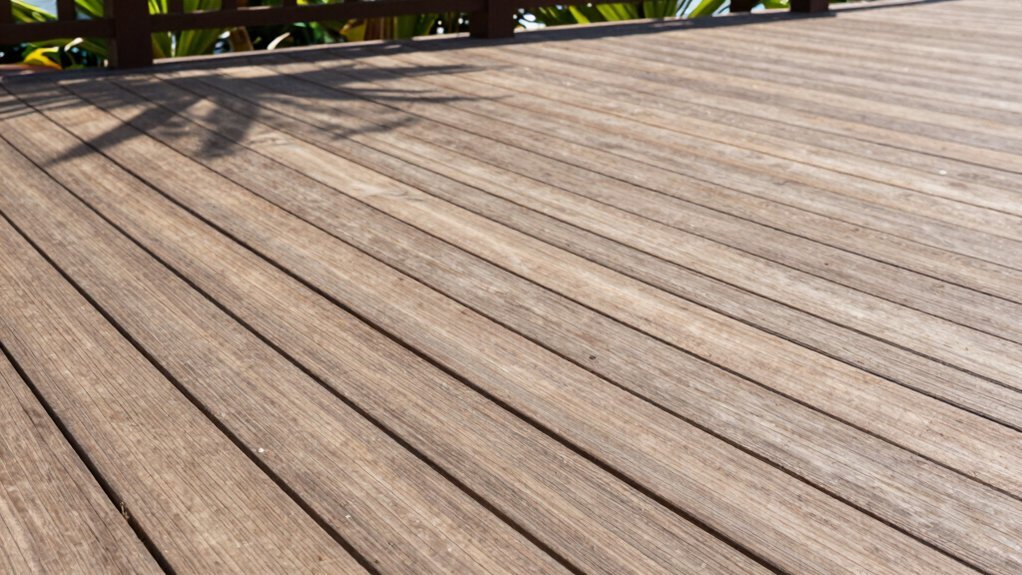
To guarantee proper drainage, determine whether your deck requires a slope based on expected water exposure and deck height. You assess watershed flow, surface run-off, and elevation differences relative to adjacent structures.
If your site experiences frequent rainfall or irrigation spray, a minor incline supports rapid shedding without water pooling. For high decks, ensure slope directs water away from joists and fixings to minimize saturation risk.
Consider deck aesthetics during planning to preserve visual balance; subtle slope can be concealed by grading or trim. Material selection influences drainage behavior: choose boards with low water absorption, gap spacing that accommodates expansion, and compatible fasteners to avoid swelling.
Precision in layout and drainage calculations reduces maintenance and preserves long-term deck integrity.
Recommended Slopes for Deck Drainage (Practical Ranges)
Even with modest exposure, aim for a deck slope that reliably directs water away from framing: a practical range is 1/8 inch per foot (1% grade) to 3/16 inch per foot (2.5% grade). Steeper grades are reserved for high-water zones or areas prone to heavy rainfall.
You should select slopes that satisfy drainage requirements without creating trip hazards or structural pooling, while also preserving accessibility and comfort. For deck height differences, apply a consistent gradient across the deck plane to ensure uniform runoff toward permitted discharge points.
Material selection influences drainage performance, so choose deck boards and substructure materials that tolerate continuous moisture and maintain dimensional stability under slope conditions. Verify fastener compatibility and drainage gaps to prevent capillary movement and ensure long-term reliability.
Slope by Climate and Substrate: What to Consider
Weather and substrate conditions directly influence the ideal deck slope. Climate dictates water load, freeze–thaw risk, and drainage expectations, so you adjust slope to minimize standing moisture and ice accumulation.
In humid or coastal environments, a steeper incline may be beneficial to promote rapid runoff, whereas arid regions with intermittent rain can tolerate a gentler grade if surfaces dry quickly.
Substrate parameters matter too: soil bearing, drainage layer integrity, and underlying compaction influence allowable slope without deformation.
Your deck material choice interacts with slope requirements; some materials tolerate low temperatures or moisture better than others and may require different subgrade treatments.
Aesthetic considerations also matter: steeper slopes can alter sightlines and perception of space.
Balance functional drainage with design intent to maintain performance and visual harmony.
Step-by-Step: Installing a Sloped Deck (From Substructure to Surface)
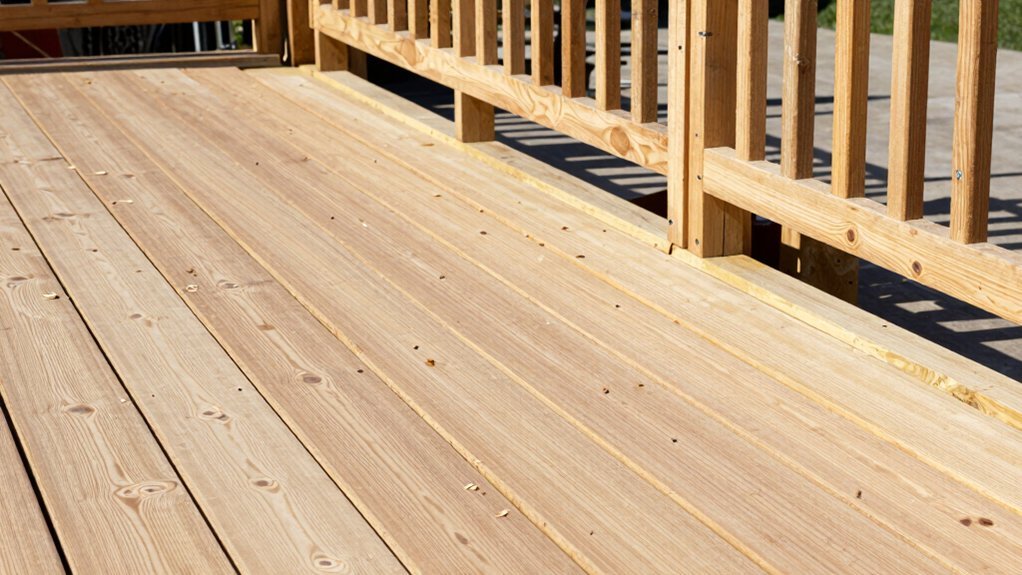
Proper sloping begins at the substructure: establish a precise grade and verify that the framing, joists, and beams align to the intended fall before adding any decking. You methodically confirm slope at every structural junction, then install the ledger and support posts plumb.
Next, lay out beams and joists with consistent elevation targets, ensuring fasteners are corrosion-resistant and rated for exterior use. Align deck materials to the slope, keeping drainage clear of connections and avoiding sharp shifts.
Install blocking as required to prevent lateral movement, then attach decking boards with proper spacing to accommodate thermal movement. Maintain accuracy during surface finishing, trimming edge boards for a flush perimeter.
Consider aesthetic considerations early, selecting decking materials that complement the exterior and provide a uniform, durable finish.
Diagnose and Fix Common Slope Problems on Decks
You’ll identify slope issues by inspecting drainage paths, joist alignment, and surface settling.
When you detect misalignment or standing water, you can apply targeted fixes such as shimming, releveling, or adjusting fasteners to restore proper runoff.
This discussion centers on diagnosing slope problems and implementing practical, proven corrections.
Diagnose Slope Issues
Diagnosing slope issues on a deck starts with confirming the surface isn’t draining properly or sagging under load. You’ll assess drainage paths, verify footer integrity, and inspect joist alignment with a level, noting any deflection.
Measure crown and run, documenting deviations from design slope using a laser or water level. Check fastener security, post base anchors, and beam connections, as loosening concentrates loads and alters grade.
Examine decking boards for cupping or warping that mimics slope, distinguishing substrate settlement from surface irregularities. Consider soil bearing, root intrusion, and seasonal moisture cycles that affect support.
Record findings methodically, correlating soil moisture, runoff, and structural loads. For practical outcomes, relate results to garden design and aesthetic appeal while planning targeted corrections.
Maintain safety, precision, and repeatability throughout the diagnostic process.
Fix Common Problems
When slope issues are confirmed, address the root causes with a practical, stepwise approach. You begin by verifying drainage patterns around the deck and identifying high-traffic zones that concentrate runoff.
Next, assess support posts, footings, and ledger connections for settlement or failure; replace or reinforce as needed. Inspect joists for warping, rot, or moisture intrusion, and correct framing angles to restore level alignments.
Calibrate fasteners and railing posts to prevent movement, then recheck height differentials across stringers. Implement corrective shims where permitted and ensure proper backfill drainage behind ledger boards.
Document every adjustment for deck maintenance records. Finally, consider aesthetic considerations, selecting finishes that resist water and UV exposure while preserving slope effectiveness.
Maintain a schedule to monitor performance and avert future drift.
Drainage-First Alternatives to Slope: Grading, Gutters, and Surface Solutions
Drainage-first approaches to decking prioritize controlling water near the structure without relying on a slope alone. You assess grading, gutters, and surface treatments as an integrated system, not separate fixes.
Grading should direct runoff away from the ledger line with consistent cross-slope and positive discharge paths, avoiding ponding at joints.
Gutters capture incidental roof drainage and channel it to appropriate outlets, reducing overspread onto the deck surface.
Surface solutions include permeable pavements, anti-slip finishes, and isolated drainage channels that intercept water mid-surface.
Consider deck aesthetics when selecting surface profiles and edge details, ensuring the finish aligns with surrounding architecture.
Material color can influence perceived drainage performance and fade resistance, guiding long-term maintenance.
Implementing these elements yields predictable moisture control and preserves structural integrity without sole reliance on slope.
Frequently Asked Questions
Can a Slope Be Added After Decking Is Installed?
Yes, you can add a slope after decking is installed. When you adjust decking materials, guarantee proper drainage and spacing. Consider structural implications, and align with your aesthetic design goals for consistent, functional, long-lasting decking.
What Is the Minimum Slope Quality Threshold for Water Runoff?
Bottom line: aim for at least a 1% grade to promote deck drainage and minimize soil erosion. You should maintain precise slope consistency, monitor runoff, and make sure drainage gaps stay clear to prevent water damage and structural issues.
Do I Need Permits for Sloped Decking in My Area?
Permits depend on your location, so check with local authorities. You’ll need to verify zoning, building codes, and setbacks for sloped decking. When selecting decking materials, prioritize durability and proper drainage to maintain outdoor aesthetics.
How Does Slope Affect Deck Railing Height Requirements?
Slope affects deck railing height by requiring adjustments to meet safety regulations; you’ll set railing at standard height, but variations in deck height and grade may demand extra height or posts to maintain compliance and fall protection.
Can Slope Be Achieved With Adjustable Deck Supports?
Yes, you can achieve slope with adjustable deck supports. For decking aesthetics and material selection, guarantee precise height adjustments, verify load ratings, and use compatible fasteners; align railing setbacks accordingly to maintain code-compliant, visually pleasing gradients.
Conclusion
A sloped deck channels rain away, yet a level surface feels safer and easier to maintain. Juxtapose drainage with design: function over form, but form can’t ignore flow. You’ll trade a tiny slope for puddling, or trade rigidity for rot risk. Precision matters: the right slope accommodates climate, substrate, and loads, while gutters, flashing, and proper drainage reduce failures. In balance, plan for water management first, then surface aesthetics—ensuring longevity without compromising accessibility or usability.