Disclosure: This post contains affiliate links. As an Amazon Associate, we earn from qualifying purchases.
Yes, you can spray decking oil, but only after thorough prep and proper technique to guarantee even coverage and durability. Start with a clean, dry surface, mask nearby areas, and test spray on a hidden spot. Use a suitable spray system, keep a consistent distance, and apply thin coats in uniform passes. Watch for drying between coats, avoid overspray, and protect from humidity or rain. If you keep going, you’ll uncover more tips and tricks.
Should I Spray Decking Oil? A Quick Decision Guide
Spraying decking oil can be a viable option, but it depends on your deck’s condition and the product you’re using. If you’re weighing spray application, evaluate surface integrity first: cracking, splinters, or flaking finish mean risks for uneven absorption and missed spots.
For sound surfaces, spray can speed coverage and reduce hand fatigue, yet it requires proper technique and the right equipment. Choose a decking oil with workable viscosity and UV protection, and confirm compatibility with your deck material.
Maintain steady, even passes and overlap slightly to avoid streaks. Consider wind and overspray control to protect adjacent surfaces. Always calibrate the spray pattern on a test area.
If defects exist, alternative methods may yield longer-lasting results.
Prep Your Deck for Spraying: Clean, Dry, Mask, Test
To prep your deck for spraying, start with a thorough clean to remove dirt, mold, and old oil residues that could clog the nozzle or cause uneven absorption. You’ll then dry the surface completely, since moisture compromises adhesion and spray patterns.
Mask nearby surfaces, railings, and gaps to prevent overspray and staining of non-target areas. Perform a quick test spray on a small, unobtrusive board to confirm even coverage and let it dry fully before proceeding.
Check current weather conditions and avoid spraying in high humidity or when rain is forecast, as moisture alters drying times. Choose a decking stain with uniform tint and consistent viscosity for predictable results.
Dryness, cleanliness, and controlled conditions are essential for a uniform, professional finish.
Tools and Setup for Spraying Decking Oil
You’ll start with the right spraying equipment, choosing tools that suit your deck and oil type.
Next, follow surface preparation steps to guarantee even delivery and ideal finish.
Then, apply precise techniques to control spray pattern, overlap, and speed.
We’ll cover how these elements come together to deliver consistent results.
Spraying Equipment Essentials
When spraying decking oil, you’ll want the right setup to deliver even coverage and minimize waste. Choose a spray system with a suitable nozzle size and pattern for your deck’s boards, avoiding excessive fan angles that create runs.
Use a compliant, low-overspray gun and a steady air supply to maintain consistent pressure. Keep your hose length modest to prevent pressure drop, and mount a reliable filter regulator to protect the sprayer.
Select compatible PPE, including a respirator and eye protection, to guard against vapors. Calibrate any measurement gauges before you start, documenting flow rates for repeatability.
Maintain a clean, organized workspace to protect decking aesthetics and minimize environmental impact. This setup favors precision, control, and efficient material use.
Surface Preparation Steps
Proper surface prep guarantees the spray coating cures evenly and lasts. Before you spray, inspect the deck for rough spots, splinters, and loose boards. Remove debris with a stiff broom, then sweep and vacuum to eliminate dust that can mar the finish.
Lightly sand glossy areas to create a tooth for adhesion, then wipe with a damp cloth to remove dust. Repair any cracks with exterior filler and let it cure fully.
Mask edges, fasteners, and adjacent surfaces to prevent overspray. Clean the surface with a deck-safe detergent and rinse completely; allow it to dry completely.
Check ambient conditions; avoid spraying in excess humidity or extreme temperatures. Proper surface prep boosts decking durability and weather resistance, ensuring a consistent, high-quality coating.
Application Techniques Tips
To spray decking oil effectively, set up your work area with the right tools and a stable workflow. First, choose a spray system suited to your deck’s grain and open time, such as an HVLP gun with a 1.0–1.4 mm nozzle.
Prepare a filtration plan, spill trays, and drop cloths to minimize mess. Calibrate pressure to maintain even atomization and a consistent pattern, avoiding runs.
Color matching matters: test a sample on scrap wood to ensure the finish aligns with existing tones before full application.
Prep environment for environmental impact: use low-VOC oils, enclosure fans for fumes, and proper ventilation.
Maintain a steady pass length and overlap, then back-brush if needed to even out sheen and penetration.
Clean equipment promptly to prevent curing buildup.
Spray vs Brush: Pros, Cons for Decking Oil
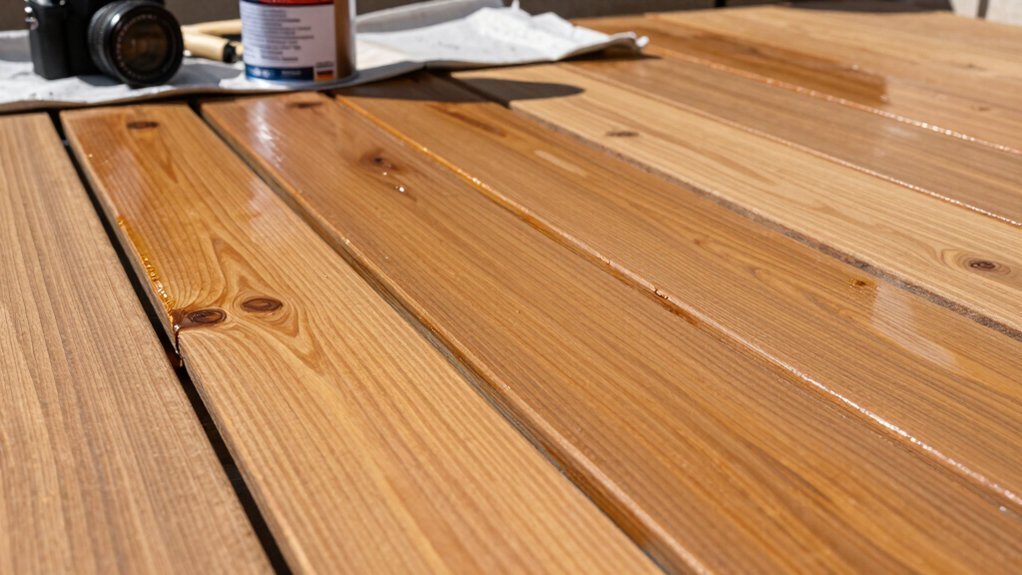
Spray delivers faster coverage and consistent results, which boosts efficiency for larger decks.
Brush application gives you more control over edges and detailed areas, reducing overspray and waste.
Weighing these pros and cons helps you decide whether speed or precision fits your project goals.
Spray Efficiency Pros
Decking oil sprayed with a quality HVLP setup can cover larger areas faster than brushing, while delivering a more consistent, cap-to-cap finish with fewer visible roller marks. You’ll notice spray efficiency translates to time savings and less fatigue, especially on large decks.
With precise spray patterns, you maintain uniform film thickness and color even across intricate railings. The approach preserves surface texture better than rolling, reducing over-application and mess.
Your workflow benefits from improved spray precision, enabling you to target gaps and avoid sags when you adjust distance and overlap. Equipment durability matters here: a robust turbine or turbine-driven sprayer resists heat buildup and wear, ensuring consistent output over long sessions.
Brush Control Cons
Even with a high-quality brush, control can falter when working decking oil, leaving gaps, brush marks, and uneven coating if technique isn’t steady. Brush control cons are clear: you risk visible brush strokes where the grain dominates, and you can create drip marks if you overapply in one pass.
Brushing demands constant, deliberate motion; pauses invite streaking and lap lines that undermine uniform saturation. Unlike spraying, touch-up opportunities are limited after the finish sets, so precision matters at every stroke. Temperature and surface porosity amplify issues, so assess conditions before you begin.
If you must stop, back-buff or feather edges to prevent hard edges. For consistent results, maintain a steady pace, keep a dampened brush edge, and monitor work often to avoid overloading the bristles.
How to Apply: Techniques for Even Coverage
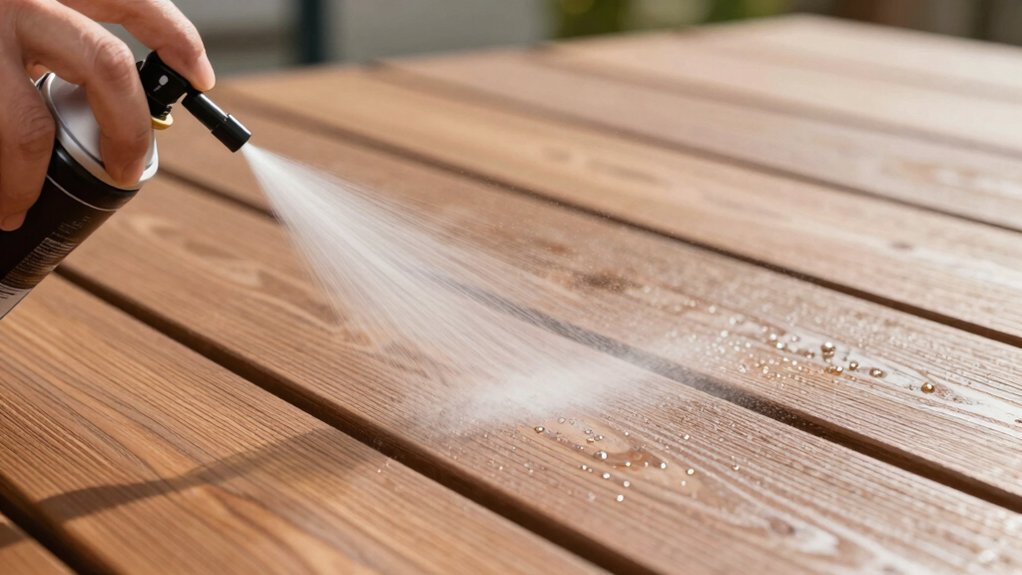
Applying decking oil evenly requires a steady hand and a deliberate technique. Begin by preparing the surface: sweep, wash, and dry completely to avoid trapped moisture.
Use a high-quality, low-pressure sprayer if spraying, or a long-nap roller for large areas, and maintain a consistent distance from the wood. Work in uniform passes, overlapping slightly to prevent streaks, and keep strokes parallel to the grain to promote wood grain visibility.
Apply thin coats rather than a single heavy layer to prevent pooling, and feather edges to blend seams. Allow each coat to dry fully before applying the next, checking for finish consistency with a light touch.
Finish with a final pass along boards’ length to even tone and protect exposed ends.
Common Spraying Mistakes and How to Fix Them, Plus Safety and Maintenance
Mistakes during spraying often stem from rushing or neglecting preparation, but they’re preventable with deliberate steps. You’ll avoid runs and uneven coverage by validating surface dryness, temperature, and humidity before you start. Use a suitable sprayer, keep a steady pace, and overlap passes to prevent lap marks.
If you see blotching, back off pressure and adjust fan width; don’t force more product onto dry boards. Protect surrounding surfaces and wear eye protection, respirator, and gloves to maintain safety.
For decking stain, apply in thin, even coats and box in the finish with a light final pass. Weather considerations matter: spray during mild, dry conditions, and allow adequate cure time.
Maintain equipment, clean nozzle tips promptly, and schedule inspections for splinters, tenderness, and peeling.
Frequently Asked Questions
Can Oil Spray Void Deck Warranty or Insurance Coverage?
Oil spray can affect warranty and insurance if not approved, so you should check your manufacturer’s terms and your insurer’s requirements. You may face warranty concerns and limited Insurance coverage if improper application is detected.
Will Spraying Oil Affect Color or Sheen Over Time?
Spraying oil can cause uneven color and sheen, so yes, it may affect color change and sheen durability over time. You’ll likely see faster wear in sprayed areas unless you maintain even coats and recoat as needed.
How Long to Wait Between Coats When Spraying?
Like a careful clockmaker, you wait between coats: apply evenly, then wait the recommended application timing before the next pass; drying duration varies, so monitor until tack-free. You’ll spray confidently, avoiding runs and guaranteeing durable protection.
Can Spray Oil Be Used on Oily/Sealed or Composite Decks?
Yes, you can spray oil on oily, sealed, or composite decks using a spray application, but prep meticulously. This safeguards deck longevity and ensures even penetration, avoiding puddling and ensuring a durable, uniform finish.
Is There Environmental Impact From Spraying Versus Brushing?
Spraying can raise environmental concerns due to drift and overspray; brushing minimizes waste. You’ll improve application efficiency with controlled, targeted coating, reducing emissions and runoff while preserving ambient air and water quality.
Conclusion
Spraying decking oil is practical, efficient, and effective when you prep, mask, and test. Prep right, spray evenly, and maintain caution. Choose the right nozzle, minimize overspray, and work with weather windows. Use a test panel, adjust technique, and recoat when needed. Clean up promptly, store materials safely, and heed safety guidelines. Finish with even coverage, weather protection, and long-term durability. Follow these steps, and you’ll protect decks, enhance appearance, and extend lifespan.