Disclosure: This post contains affiliate links. As an Amazon Associate, we earn from qualifying purchases.
Yes. Most decking boards are treated with preservatives or finishes to resist decay, moisture, and pests, extending their life outdoors. Treatments vary—pressure-treated cores, surface-applied finishes, stain or sealants, and oils—so you get different balances of durability, color, and maintenance. Climate and exposure steer your choice toward higher decay resistance, moisture control, or UV stability. Proper installation and ongoing sealing influence performance and longevity. If you want to understand the options in depth, you’ll gain more practical guidance here.
What Treated Decking Is and Why It Matters
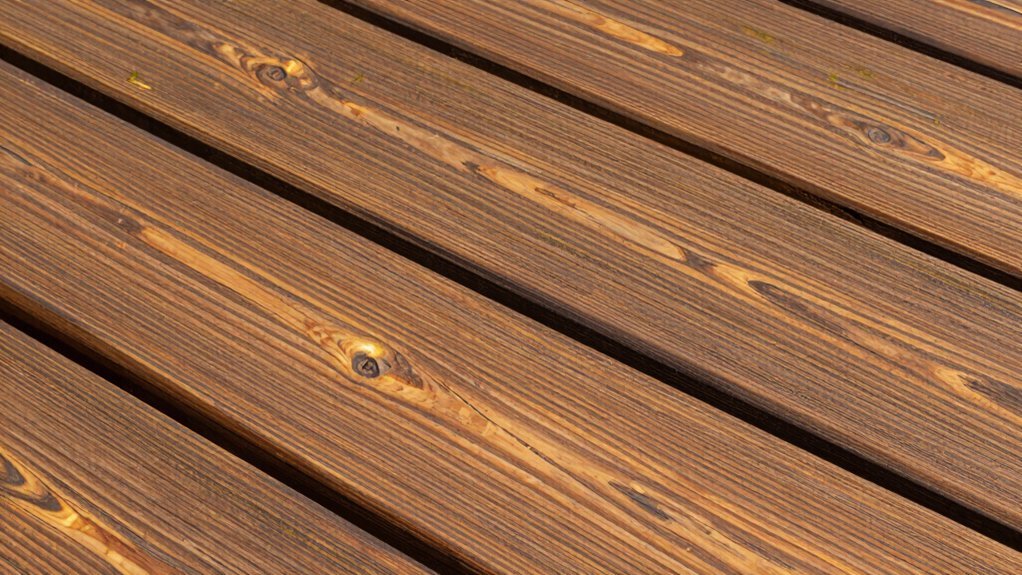
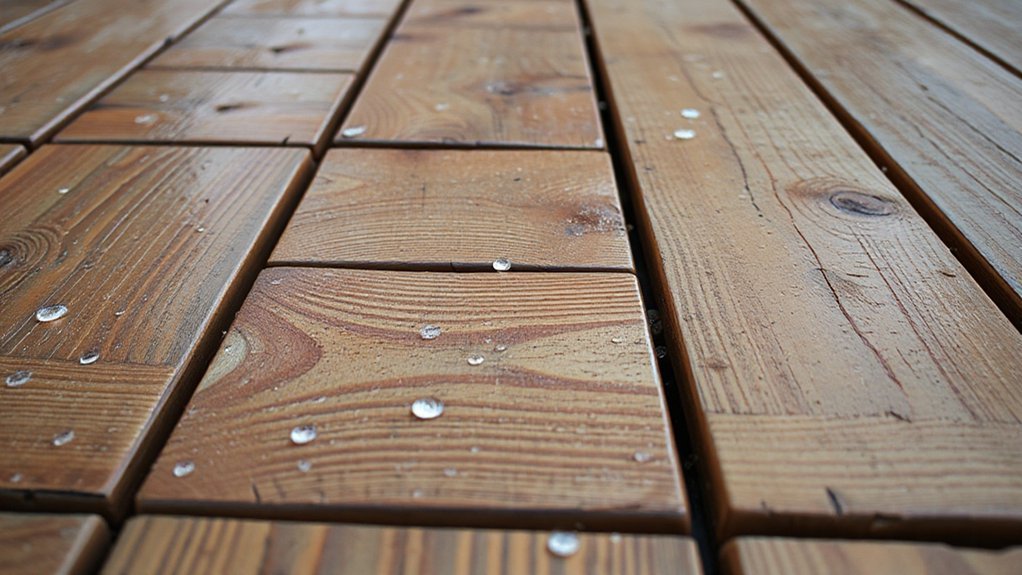
Treated decking uses lumber that has been chemically infused to resist decay, insects, and moisture, extending its service life and reducing maintenance. You benefit from improved durability and predictable performance, especially in outdoor environments exposed to moisture and temperature swings.
This treatment protects framing, boards, and fasteners, lowering failure risk and long-term repair costs. You should understand that treatments vary by preservative systems, penetration depth, and formulation, which influence longevity and field handling.
Eco-friendly options exist, including lower-toxicity formulations and sustainable sourcing, without sacrificing protection.
Aesthetic considerations matter too: uniform color retention, grain visibility, and compatibility with stains or sealers affect curb appeal and perceived value.
Choose a system aligned with climate, maintenance goals, and environmental priorities to optimize both performance and appearance.
Common Treatments and How They Work
You’ll look at common decking treatments and how they work, focusing on the types of treatments and their protective mechanisms.
These options include surface finishes, preservatives, and stabilizers, each chosen for how it guards boards against moisture, decay, and wear.
Understanding these choices helps you assess application methods, performance, and compatibility with your project.
Types Of Decking Treatments
Several common decking treatments work by either protecting wood from moisture, fungi, and UV rays or by enhancing its dimensional stability. In this section, you’ll learn the core types and how they function.
Pressure treatments inject preservatives deep into the wood, reducing decay and insect damage while maintaining usable strength.
Surface-applied finishes form a protective film that limits water ingress and slows abrasion, often affecting color variation and gloss.
Waterborne sealers stabilize moisture movement with low odor, supporting dimensional stability without toxic solvents.
Penetrating oils permeate the surface, enhancing stain adhesion and reducing surface checking, while preserving wood grain detail.
Thermal modification alters the wood’s chemistry, improving decay resistance and dimensional stability.
Each method impacts color variation and wear differently, so select for your climate, aesthetics, and maintenance plan.
How Treatments Protect Boards
Common treatments protect boards by using chemistry and films that block moisture, decay, and UV damage while maintaining board strength. You’ll find that treatments fall into two mechanisms: barrier films and migratory preservatives.
Barrier films reduce moisture ingress and minimize surface degradation, preserving dimensional stability. Migratory approaches introduce active chemicals that diffuse into wood, deterring fungi and insects and slowing decay.
Wood staining can be combined with formulas to provide color and additional UV protection, without sacrificing permeability for drying and movement.
Chemical preservatives stay within the wood matrix, offering long-term protection against decay organisms and insects. The balance between penetration depth, finishability, and durability guides performance ratings.
Selection depends on exposure, maintenance expectations, and compatibility with fasteners, coatings, and compatible wood species.
Durability, Pest Resistance, and Moisture Performance
Durability, pest resistance, and moisture performance are interrelated factors that determine a deck’s lifespan. You assess boards by their decay resistance, insect deterrence, and moisture handling, which together define long‑term stability.
Increased durability reduces maintenance cycles and postpones costly replacements, while strong pest resistance minimizes structural damage from wood-boring organisms. Moisture performance governs dimensional stability, warping, and surface slipperiness after rain or humidity fluctuations.
When selecting treated boards, you’ll weigh preservative retention, penetration depth, and coating compatibility to sustain strength without compromising board integrity.
Consider how garden privacy and aesthetic appeal influence your choice: durable, pest‑resistant options can support private, visually pleasing layouts with fewer repairs. You’ll benefit from a material that resists both biological threats and moisture‑related degradation over time.
Climate-Specific Treated Decking Options
Climate conditions dramatically influence how treated decking holds up, so choosing climate-specific options helps maintain performance and longevity.
In hot, humid zones, you’ll favor higher decay resistance, moisture management, and dimensional stability, using treatments that minimize swelling without compromising grip and screw pullout.
In cold or freeze-thaw regions, select coatings and cores designed for thermal cycling, reduced moisture uptake, and crack resistance, preserving structural integrity over seasons.
Northern climates benefit from low-sorption preservatives and enhanced surface protection against ice abrasion, while coastal environments require treatments with salt spray resistance and UV stabilization.
Align choices with wood preservation goals that balance durability and service life, rather than relying on a single solution.
Consider environmental impact alongside performance, ensuring compatible sustainability and material reuse where possible.
Maintenance Tips to Extend Treated Decking Life
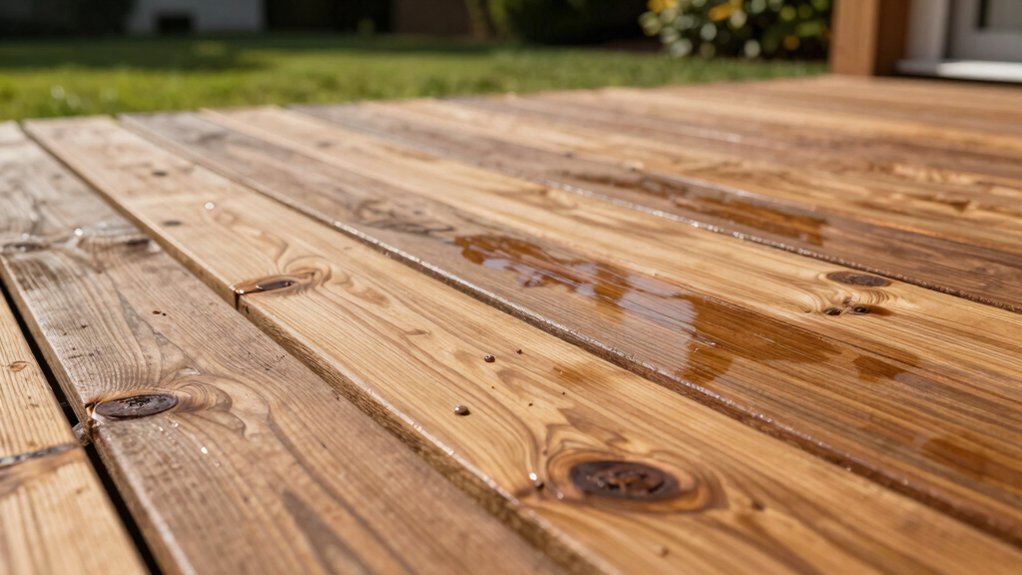
Regular maintenance prolongs treated decking by limiting moisture ingress and surface wear. Start with a yearly inspection to identify loose fasteners, splinters, and any swelling or checking.
You should clean surfaces to remove debris and algae, using a stiff brush and mild detergent, avoiding high-pressure techniques that can gouge boards.
Schedule re-sealing or staining every 2 to 4 years, selecting finishes compatible with treated lumber and your climate. Apply evenly along the grain and allow proper cure time.
Use timber-friendly steps: fix fasteners, replace damaged boards, and maintain spacing to reduce moisture retention.
When selecting products, prioritize sustainable sources and eco-friendly preservatives to minimize environmental impact while preserving protection.
Document maintenance intervals, noting weather exposure, and adjust treatments to extend life without compromising safety or performance.
How to Spot Treated vs. Untreated Decking on a Budget
When you’re budgeting for a treated- vs. untreated-deck project, start with visual and tactile checks to distinguish lumber types without paying extra for branding. You’ll examine surface color, grain uniformity, and resin sheen; treated boards often show a greenish or brown tint from preservative uptake, while untreated lumber looks natural and drier.
Check for sparkly, waxy coatings or scent that hints at chemical treatment. Probe moisture content by heft and feel; treated wood tends to feel heavier and slightly oily. Compare edge milling and end grain; untreated stock may have tighter, cleaner ends.
Conduct a cost comparison by tallying price per linear foot and expected lifespan. Consider environmental impact data from suppliers, prioritizing posts and boards with lower ecological footprints.
Buying Guide: Choosing the Right Treated Decking for Your Project
Choosing the right treated decking starts with understanding your project goals and environment, then matching boards to maintenance, performance, and budget. You’ll evaluate wood species compatibility with treatment, resistance to decay, and load requirements for your framing. Consider decay resistance ratings, dimensional stability, and ease of finishing because these affect long‑term upkeep and appearance.
For garden aesthetics, select tones and grain patterns that harmonize with surrounding flora and hardscape. In decking design, factor board width, spacing, and fastening methods to minimize warping and water trapping. Maintenance cadence matters: higher‑rated treatments may reduce sealing frequency but can influence stain compatibility.
Budget trade‑offs should balance initial cost with lifecycle durability. Finally, verify warranty terms and supplier reliability to ensure consistent color, hardness, and uniform treatment across deliveries.
Frequently Asked Questions
How Long Does Treated Decking Typically Last in Coastal Environments?
Treated decking typically lasts 15 to 25 years in coastal environments, depending on maintenance and exposure. You’ll benefit from high marine durability and saltwater resistance, though periodic sealing and inspections are essential to preserve structural integrity and aesthetics.
Are There Eco-Friendly Treatment Options for Decking Wood?
You’ll find roughly 60% of homeowners seek eco friendly alternatives, proving demand matters. Eco friendly alternatives exist, including chemical free treatments. You benefit from technical options, as chemical free treatments reduce emissions while maintaining durability in diverse climates.
Can Treated Wood Be Recycled After Its Lifespan Ends?
Yes, treated wood can be recycled, but you face recycling challenges and potential chemical leaching. You’ll need specialized facilities, careful separation, and proper handling to minimize environmental risks while remanufacturing or reusing components.
Do Different Treat Levels Affect Warranty Coverage?
Different treatment levels can affect warranty coverage, so you should check the manufacturer’s policy. If you choose higher treatment levels, you may gain extended coverage; lower levels might limit guarantees. Verify applicable terms, exclusions, and required maintenance steps for accurate warranty coverage.
Is There a Risk of Chemical Odor From Treated Decking?
Yes, there can be a chemical odor from treated decking. You may notice it briefly after installation, especially with new, treated decking, but it typically dissipates as boards off-gas and cure.
Conclusion
Treated decking extends your project’s life by resisting rot, pests, and moisture, so you’ll spend less on repairs over time. A key stat: pressure-treated boards can last 20–40% longer than untreated wood under similar conditions, depending on climate and maintenance. You’ll gain predictable performance, lower maintenance costs, and better resale value when you choose the right treated option for your environment. Stay proactive with routine cleaning and re-sealing to maximize lifespan and keep boards looking solid.