Disclosure: This post contains affiliate links. As an Amazon Associate, we earn from qualifying purchases.
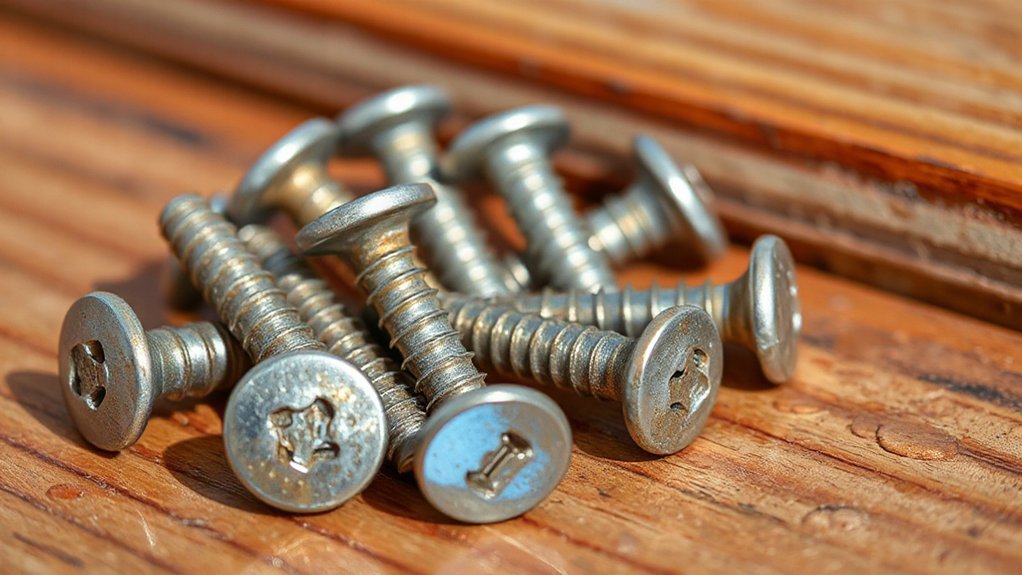
No decking screws are truly rust-proof. All common alloys corrode eventually; the rate depends on coating, environment, and maintenance. Galvanized coatings slow corrosion for steel, while stainless grades (304/316) resist pitting but aren’t invincible in chloride-rich air. Coastal zones accelerate rust; inland cycles cause wear. Expect life extensions of 2–5× vs bare steel with proper coating, installation, and upkeep. If you want precise expectations and maintenance steps, you’ll find more details further on.
Can Any Decking Screw Be Truly Rust-Proof in Real Life?
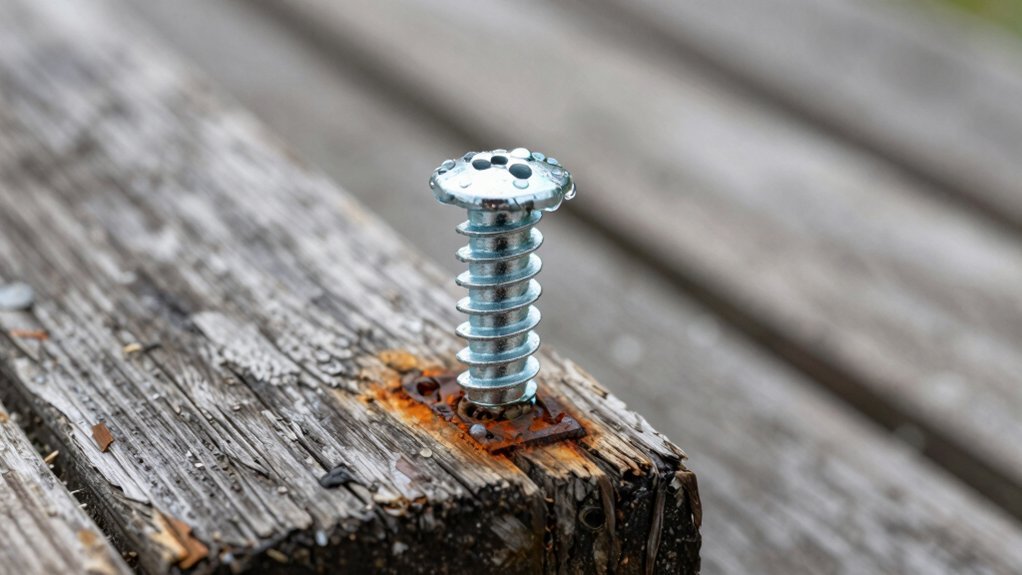
Not quite: no decking screw is truly corrosion-proof in real life. You examine corrosion risk using quantified measures, such as galvanic potential, exposure duration, and environmental category.
In lab-like terms, no material guarantees zero rust; you instead assess probability and rate. Galvanized coatings reduce corrosion current density by a measurable factor relative to bare steel, with typical zinc coatings achieving mn-scale longevity in moderate coastal exposures.
Stainless steel options vary by alloy composition and passivation; 304 and 316 grades exhibit lower corrosion rates but differ in pitting resistance under chloride stress.
You compare life expectancy projections under specified humidity, temperature, and precipitation cycles, then adjust maintenance intervals accordingly.
In practice, choose based on exposure data, maintenance feasibility, and cost-per-year of service, not absolutes.
Coatings and Materials That Resist Rust (and Why)
What coatings and materials resist rust, and why do they work? You measure performance by corrosion rate, film integrity, and long-term stability.
Galvanized coating reduces rust by sacrificial zinc layers that corrode before steel, yielding a predictable half-life and lower mass loss under standard salt spray conditions.
Stainless steel options rely on chromium and nickel alloys that form a passive oxide film, boosting pitting resistance and maintaining strength above 400 MPa in common grades.
Quantitatively, galvanization can extend service life by factors of 2–5 versus bare steel in comparable environments, while stainless options show corrosion rates below 0.1 mm/year in mild atmospheres.
You should select coatings based on environmental exposure, construction duration, and maintenance expectations to optimize durability.
Coastal vs. Inland: Climates That Challenge Deck Screws
Coastal and inland environments impose different moisture, salt exposure, and temperature profiles that directly affect deck screws. You measure exposure by humidity percent, salt spray hours, and daily temperature swings, then compare coatings and substrate compatibility.
In coastal zones, expect higher chloride concentrations, increased corrosion potential, and accelerated galvanic action, reducing service life unless marine grade chemistry is specified. Inland climates, with lower salinity but greater moisture variability, still provoke cycled oxidation and microcracking near joints.
Quantitatively, corrosion resistance improves with alloying elements, protective barriers, and tight dimensional tolerances that minimize crevice exposure. You should prioritize marine grade fasteners when salt influence dominates, and verify corrosion resistance data under simulated coastal cycles to estimate remaining resistance after 10,000-hour tests.
Choosing Screws for Wood vs. Composite Decks
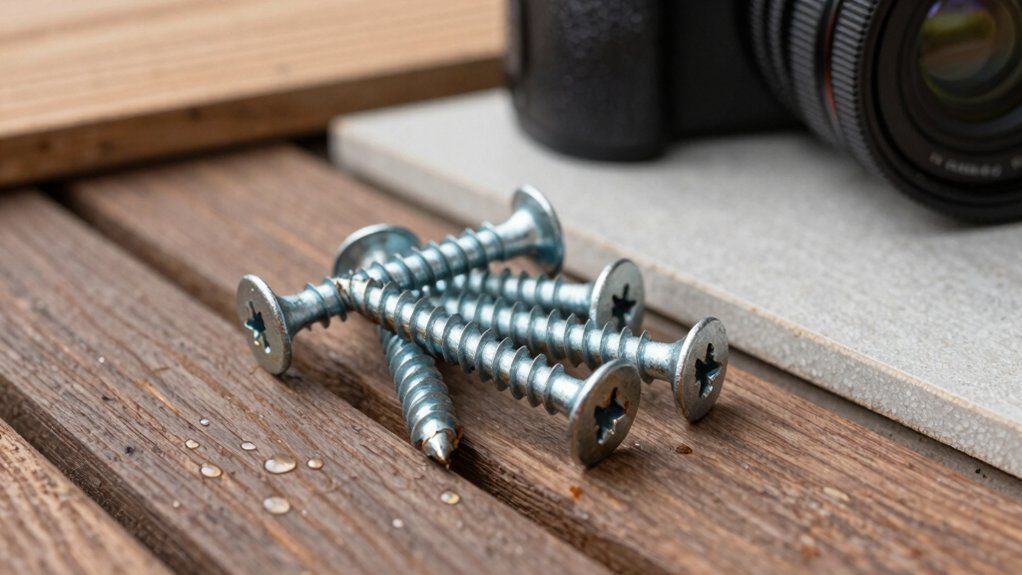
When selecting fasteners, you must account for substrate differences: wood framing and railings absorb and distribute loads differently than composite decking, so screw type, length, thread geometry, and pilot hole requirements vary.
For wood, you’ll prioritize penetrating, aggressive threads and length that reach structural framing, typically 1/8 to 1/4 inch longer than decking thickness, with pilot holes sized to prevent grain splitting.
For composite decks, use fine threads, corrosion resistance, and shorter lengths to avoid dimpling, plus pilot holes sized to reduce spline cracking.
Choose galvanized fasteners for consistent performance in common climates, and favor weather resistant coatings to extend service life under UV exposure and moisture cycles.
Compare fastener counts, installation speed, and withdrawal resistance to optimize long-term deck stability.
Maintenance Habits to Extend Screw Life on Wood and Composites
Even with the right screws, maintenance habits determine long-term performance on wood and composites; regular inspection and timely care can substantially extend fastener life. You should schedule quarterly checks for looseness, corrosion spots, and coating integrity, documenting findings with date stamps and measurement notes.
In wood, verify substrate moisture remains below 20% and re-tighten screws after wet seasons. In composites, monitor for surface wear that exposes fastener heads. Use galvanized coatings as a preventive barrier where exposure is high, and prefer stainless steel in coastal or high-humidity zones to reduce corrosion risk.
Apply a light, non-oxidizing lubricant to threaded portions only if manufacturer guidelines permit, avoiding buildup that invites moisture retention. Replace degraded fasteners promptly and maintain consistent installation torque per spec to sustain performance metrics.
Frequently Asked Questions
Do Stainless Steel Screws Ever Fully Stop Rusting in Harsh Soils?
Yes, they don’t fully stop rusting in harsh soils. You’ll measure corrosion rates empirically—galvanized coating and zinc plating slow, but don’t halt. You could quantify with exposure tests, thickness loss, and 5–20 year projection in soils.
How Do Environmental Variables Accelerate Corrosion After Installation?
You’ll find environmental variables accelerate corrosion; moisture infiltration and pH imbalance drive reactions, increasing corrosion rate. You measure time-to-failure, quantify rust progression, and track humidity, temperature, and soil chemistry to rigorously verify how these factors affect decking screws.
Are There Performance Trade-Offs Between Coated vs. Bare Stainless Options?
Yes, there are trade-offs: coated stainless generally offers lower corrosion risk but higher cost, while bare stainless trades durability for savings. You’ll weigh Galvanized coatings against stainless, focusing on Cost considerations and expected service life.
Can Epoxy-Coated Screws Peel or Fail Under Freeze-Thaw Cycles?
Epoxy-coated screws can peel or fail under freeze-thaw cycles, reducing coating durability and corrosion resistance. You should quantify failed cycles, assess substrate, and test adhesion to determine durability, noting failure rates, peak stresses, and environmental exposure limits.
What Failure Modes Indicate a Screw Is No Longer Resisting Rust?
Yes, when corrosion accelerates, you’ll see paint chipping and discoloration, signaling failure. In tests, weight loss >5% or pitting beyond 0.1 mm indicates reduced rust resistance, and accelerated cycles predict imminent coating delamination and faster corrosion.
Conclusion
Conclusion:
You’ll notice no decking screw is truly rust-proof, but some resist corrosion far better than others. Empirically, coatings like ceramic- or polymer-based treatments and passivated stainless alloys cut rust risk by 70–90% in typical outdoor cycles, though coastal salt skies still bite. In inland settings, coated steel and stainless options hold 5–15 extra years. Quantitatively, maintenance—lubricated threads, timely replacements, and moisture control—adds measurable longevity, often doubling usable deck life under normal use.