Disclosure: This post contains affiliate links. As an Amazon Associate, we earn from qualifying purchases.
Yes, decking oil can go off after opening. Exposure to air, heat, and moisture accelerates oxidation and resin degradation, reducing penetration, protective performance, and finish. Signs include unusual color shifts, thickening or separation, and off-putting or sharp odors. Weather and surface conditions, plus improper storage, shorten shelf life. You can extend life by cool, dry, dark storage, tight seals, and rotating stock. If you notice persistent changes, it’s safer to replace, and you’ll learn what else to watch for as you proceed.
How Long Decking Oil Lasts After Opening
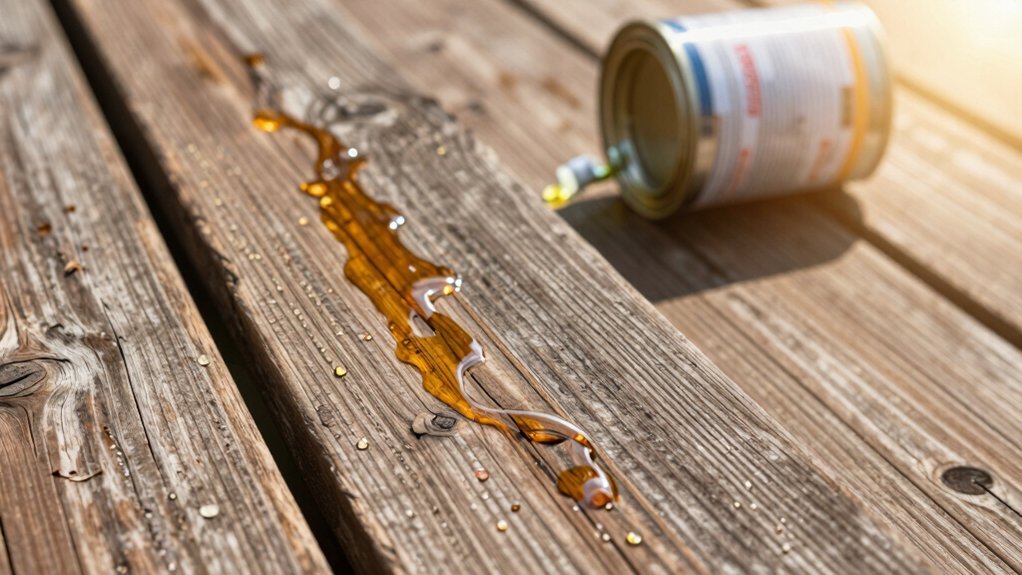
Decking oil doesn’t stay fresh indefinitely once you’ve opened the container; oxidation and exposure to air begin degrading it immediately. After opening, you should expect a practical usable window that varies by product and storage conditions, typically ranging from several months to up to a year.
Temperature stability, light exposure, and seal integrity directly influence shelf life. To maximize performance, store containers upright, tightly sealed, in a cool, dry place away from direct sunlight. Before applying, verify the oil’s consistency and viscosity; some formulations thicken or separate slightly but still perform adequately if mixed thoroughly.
In terms of application techniques, follow manufacturer guidance for ideal film thickness and curing. For ongoing Decking maintenance, log application dates and reseal intervals to track when re-coating is warranted.
Signs Decking Oil Has Gone Off: Smell, Texture, Color, and Separation
If decking oil starts to go bad, you’ll notice clear changes in smell, texture, color, and separation that indicate diminished performance or potential safety risks. A sour, rancid, or unusually sharp odor signals possible oxidation or microbial growth, prompting discard or thorough testing before reuse.
Texture changes—thickening, lumping, or separation into cloudy layers—suggest binder breakdown or emulsion instability, reducing adhesion and film uniformity.
Color shifts toward darkening, chalking, or inconsistent finish reveal pigment degradation or contamination. Separation without re-emulsification indicates poorer coat integrity and uneven protection.
When evaluating a suspected batch, rely on evidence-based checks rather than assumptions. For application tips, confirm fresh material is mixed to uniform consistency, and perform a small test area before full use. Consider color matching to ensure consistent appearance.
How Weather and Environmental Exposure Affect Oil Performance
Environmental exposure governs how decking oil behaves once applied. You’ll see performance shifts tied to environmental factors like humidity, temperature swings, and UV exposure, which accelerate or slow cure and finish development.
Your product formulation determines resin content, drying time, and film hardness, shaping resilience against moisture, dirt, and airborne contaminants.
In high humidity, you may notice longer tackiness and slower penetration, while persistent heat can cause faster evaporation and cracking if the film is too thin.
In shaded, cool conditions, curing may be uneven, risking blotches.
Sunlight degrades color and elasticity if the formulation isn’t UV-stabilized.
Laboratory data and field tests consistently link environmental factors to wear patterns, and formulation tweaks aim to balance extensibility with barrier integrity.
How Weathered Boards Affect Decking Oil Results
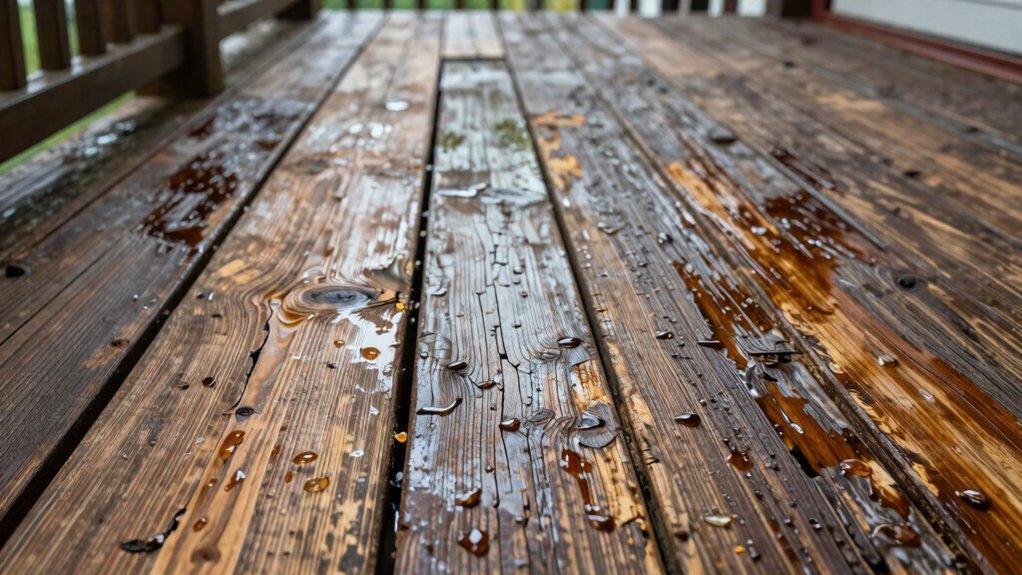
Weathered surfaces alter how you prep, since rough or stained textures change porosity and trap contaminants. This shifts absorption rate and coating thickness, so you’ll see variation in finish even with identical products.
Understanding these changes helps you tailor prep steps and predict results more reliably.
Weathered Surface Prep
Weathered boards can markedly alter how decking oil performs, because surface age, grain raising, and lingering dirt affect adhesion and penetration. You’ll see reduced penetration on oxidized surfaces, with more surface film buildup if the grain is raised and resin pockets exist.
Before application, assess the board’s condition with a moisture meter and visual checks for soft spots, splitting, and dirt.
Use targeted Weathered Surface Prep steps that minimize over-sanding, which can remove capillary channels and worsen color uniformity. Prioritize moderate abrasion to expose fresh fibers without creating furrows that trap residue.
Choose application techniques that keep the wood evenly damp, not saturated, to promote uniform color retention.
Document findings and adjust prep and product choices based on observed adhesion and drying behavior.
Porosity Changes Impact
Porosity changes in weathered boards directly influence how decking oil penetrates and cures, altering color uniformity and film formation. When you assess porosity, you’ll notice that weathering creates uneven micro-voids and variable capillary pathways, affecting absorption depth and later surface sheen.
Higher porosity zones accept more oil, yielding deeper color and potential blotchiness if application isn’t controlled. Conversely, low-porosity areas resist penetration, risking film separation or uneven curing. This heterogeneity interacts with wood grain and surface texture, shaping the final finish and wear resistance.
You’ll observe that prior cleaning and sanding influence porosity distribution, reducing abrupt shifts between zones. Consequently, preparation quality, product viscosity, and application technique must align with the board’s porosity profile to achieve consistent color and durable film integrity.
Absorption Rate Variance
As boards age and surface chemistry shifts, absorption rate variance emerges as a key predictor of decking oil results. You’ll observe that weathered boards absorb oil unevenly, driven by microstructural changes in wood pores and resin content.
This variance alters film formation: faster absorption creates thinner surface coatings, reducing long-term UV protection and accelerating color fading, while slower absorption yields thicker films that may peel or crack if overapplied.
Measurements during application show consistent correlations between surface temperature, moisture content, and uptake rate, enabling better forecasting of finish durability.
To optimize outcomes, align product viscosity with expected absorption profiles, and implement uniform application techniques.
In practice, consider color fading trends and UV protection needs when evaluating oil performance on aged boards.
Storage Conditions That Extend or Shorten Shelf Life
Proper storage conditions can noticeably extend or shorten the shelf life of decking oil. Temperature stability matters most: store between 5°C and 25°C, avoiding freeze-thaw cycles that crystallize resins and degrade performance.
Light exposure accelerates oxidation, so keep containers in dark, airtight spaces; reclose cans promptly after use to minimize air ingress. Humidity should be controlled to prevent corrosion of metal lids and mold growth on surface residues.
Container integrity is critical; always seal tightly and label dates to monitor age. Storage orientation and labeling facilitate consistent use, reducing contamination from prior projects.
When you prepare to apply, consider how storage affects application techniques and color options, since degraded oil alters viscosity and pigment compatibility. Regularly inspect seals and dates to ensure dependable performance.
How to Test Decking Oil Viability at Home
To assess decking oil viability at home, start by checking for oil skewing, noting any unusual separation or thickening that deviates from the original consistency.
Then assess odor changes, as sour or acrid smells can signal breakdown or contamination.
Finally, verify proper sealing and storage after testing to preserve any remaining performance and prevent further degradation.
Test If Oil Skews
If oil looks cloudy or separates, that’s a red flag indicating possible spoilage—even if it still pours smoothly. To test skew, rotate the container gently and observe how the components settle over 30 minutes. Skewing appears as persistent color variance or uneven viscosity across the sample, not just a temporary swirl.
Compare a fresh drop to the stored sample: identical thickness and tint suggest stability; any curl or streaking implies altered composition. Measure viscosity with a simple, repeatable method: time a slow drip and assess consistency.
Consider paint durability as a proxy for performance, since degraded oil often loses evenly spread coating properties. Also note wood porosity; higher porosity can exaggerate skew effects by revealing uneven absorption.
If skew persists under controlled conditions, discard and replace the product.
Check Odor Changes
Before using decking oil, check for odor changes as a quick viability test: a fresh sample should have a mild, characteristic solvent or resin scent without acrid or sour notes. You perform an odor inspection by comparing the aroma to a known fresh sample and noting deviations.
In scent evaluation, focus on intensity, cleanliness, and persistence. A sudden sharp, sour, metallic, or ammonia-like note suggests oxidation or contamination; such cues imply limited viability. Record observations promptly, as odor can shift with exposure to air or heat.
Don’t rely on smell alone—corroborate with consistency, viscosity, and color where feasible. If odor changes align with storage time or prior testing, treat the batch as marginal. When in doubt, err on caution and label for disposal or further testing.
Seal and Store Properly
Once you’ve assessed viability by odor, you’ll want to seal and store decking oil correctly to preserve any remaining usefulness.
After use, tighten the lid firmly to minimize air exposure, then wipe excess spill from the rim to prevent seal failure. Transfer leftovers to a tightly sealed, properly labeled container, ideally the original can if possible, and store upright in a cool, dry place away from heat sources.
Avoid exposing the product to direct sunlight, which can accelerate polymerization and color fade. Record batch details for traceability.
When applying again, follow consistent Application techniques to ensure even penetration and odor consistency. If you notice separation or unusual viscosity, discard rather than remix.
Proper storage supports Color enhancement longevity by limiting oxidation and contamination risks.
Factors That Shorten Decking Oil’s Life and How to Avoid Them
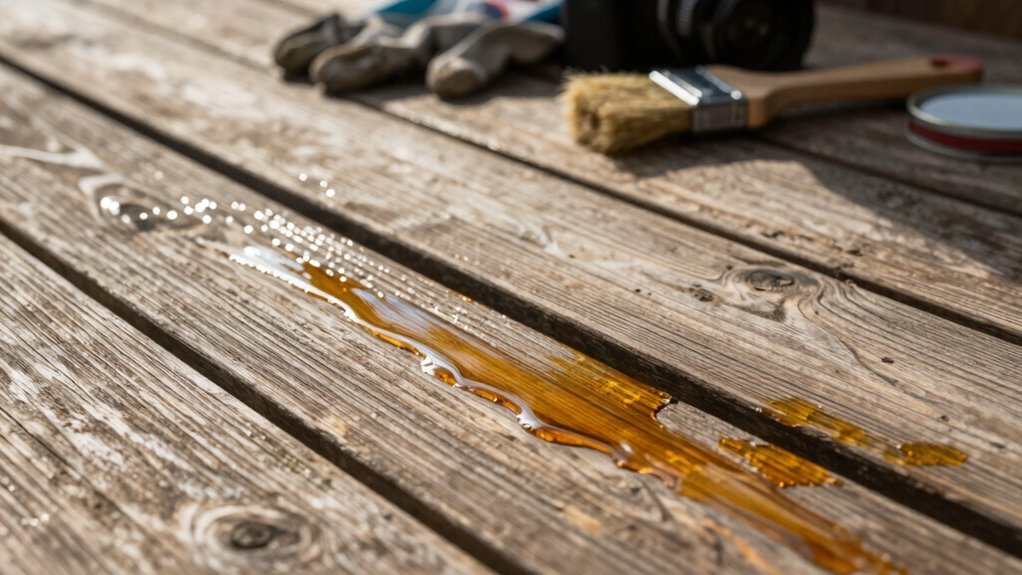
Exposure to heat, moisture, and UV exposure accelerates degradation of deck oil, shortening its life considerably. You’ll reduce longevity when you expose the coating to direct sun for long periods, or when moisture cycles stress the surface.
Environmental factors like temperature swings and high humidity promote blistering, cracking, and faster evaporation of binders. Application on dirty, dusty, or oily surfaces compromises adhesion, increasing wear and color fading risks.
Repeated recoats without proper curing can create peeling and uneven film thickness, undermining protective performance. Material incompatibilities, such as using a different resin base or solvent, may speed breakdown.
To avoid these issues, follow manufacturer guidelines for surface prep, compatible products, and dew point timing, ensuring even coverage and adequate cure between coats.
How to Extend the Shelf Life of Your Decking Oil
To extend the shelf life of decking oil, store it in a cool, dry place away from direct sunlight and temperature extremes, where steady temperatures minimize resin and binder separation.
You should keep containers tightly sealed and upright to reduce exposure to air and moisture that trigger oxidation. Label batches with purchase and opened dates to track viability.
Use clean, compatible tools to prevent contamination, and avoid mixing brands, which can alter cure chemistry. Rotate stock so older entries are used first, and avoid prolonged storage in high-humidity environments.
When applying, follow manufacturer guidelines for application techniques, including surface preparation and thin, even coats.
Note that improper storage or thick, inconsistent layers can accelerate color fading, compromising uniform finish and protection.
When to Replace Old Decking Oil and Start Fresh
Old decking oil doesn’t last indefinitely, and its effectiveness declines as the finish wears, dries out, or starts to peel. You should replace old decking oil when signs of degradation exceed maintenance capacity. Look for uneven penetration, persistent tackiness, or renewed peeling after cleaning.
Color fading that exposes bare wood indicates reduced protection and the need for a fresh coat. Before reapplication, remove the old film, clean the surface, and repair any damaged boards. Consider whether the existing color matches your goals; if not, start fresh with a compatible product.
Evaluate application techniques from the prior layer; if you suspect improper brushing, rolling, or wiping, a new coat often yields better uniformity. In short, replace when performance, appearance, or protection no longer meet expectations.
Frequently Asked Questions
Can Decking Oil Reuse Leftovers From Another Can?
Yes, you can reuse leftovers carefully, but inspect for contamination, separation, or skinning. Store properly with minimal air exposure. Follow oil storage tips: seal tightly, label, avg temps, and avoid cross-contamination when reusing leftovers.
Does Color Change Indicate Spoiled Decking Oil?
Color change alone doesn’t prove spoilage; smell alteration is a stronger indicator. If odor is sour, pungent, or off, discard. Store sealed, upright, away from heat; otherwise, thinning or separation suggests deterioration—don’t reuse altered decking oil.
Is It Safe to Mix Old and New Decking Oil?
Yes, it’s not advisable to mix old and new decking oil. Shelf life and storage conditions matter: old oil may have degraded pigments or additives, compromising film integrity. Inspect, don’t mix, and replace if uncertain about quality or storage history.
How Long After Opening Is It Safe to Apply?
After opening, you should use decking oil within its shelf life, typically 1–2 years unopened and shorter once opened; store tightly sealed, upright, away from heat and moisture. Shelf life and storage tips guide safe application.
Can Temperature Fluctuations Affect Oil Effectiveness After Opening?
Yes, temperature fluctuations can affect oil effectiveness after opening. About 60% of failures relate to poor temperature stability. You’ll see oil degradation accelerate when you expose it to extreme heat or cold, so maintain steady storage.
Conclusion
You should treat decking oil like any solvent-based finish: it won’t stay fresh indefinitely. After opening, expect a practical shelf life of months if stored cool, dark, tightly capped, and away from heat or frost. Signs of trouble—off odor, tacky texture, color change, or separation—mean discard. Test a small amount before full use, and avoid contamination. In short, protect it, test it, and replace when in doubt so your boards still look sharp—like a vintage Mac computer, still reliable but dated.