Disclosure: This post contains affiliate links. As an Amazon Associate, we earn from qualifying purchases.
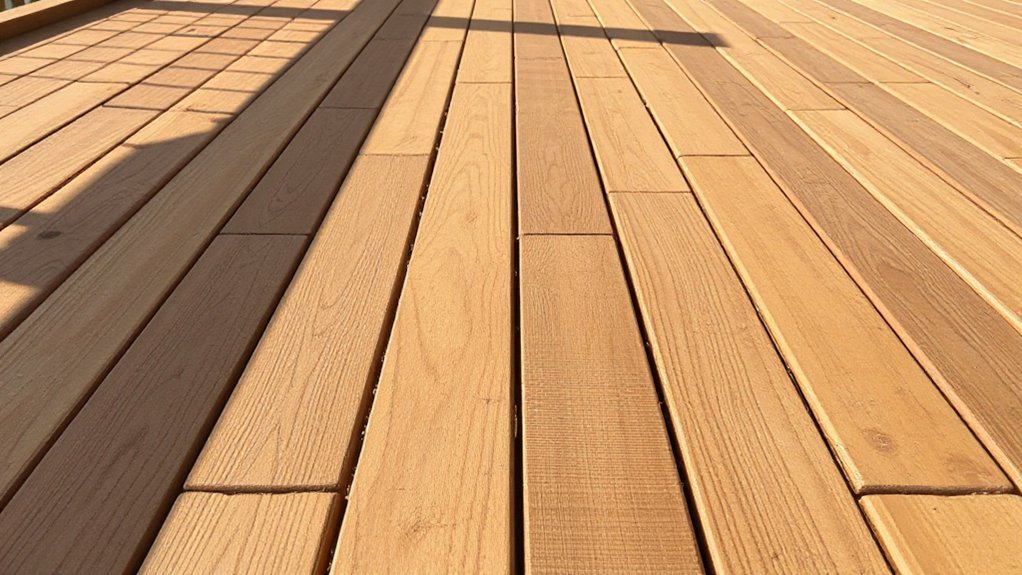
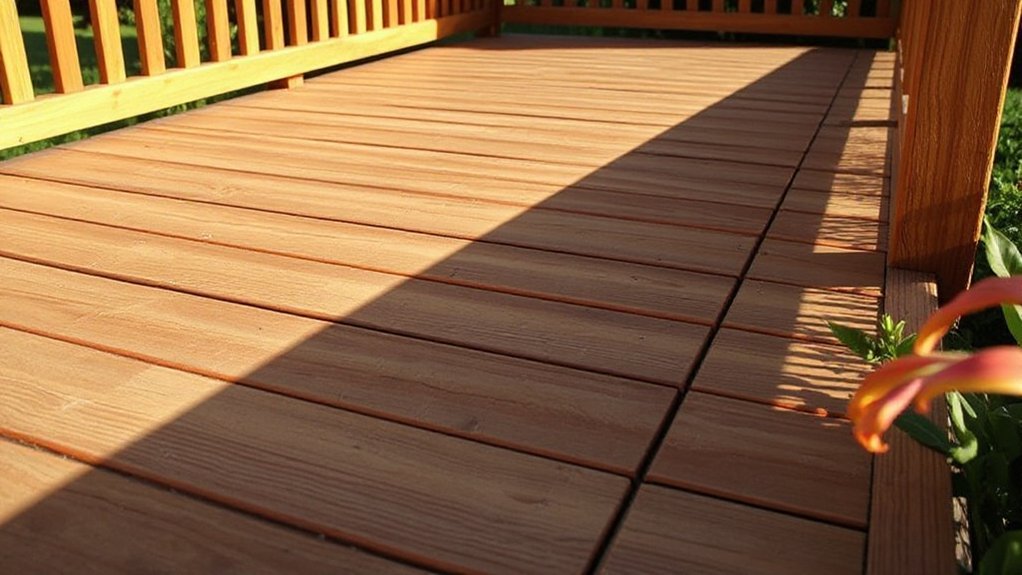
Decking should be screwed for maximum withdrawal resistance, durability, and long-term stability, especially in outdoor exposure. Screws resist wood movement better, draw down tightly, and handle composite or hardwood decking well; they also minimize edge splitting when placed with careful spacing. Nails offer speed but lower withdrawal resistance and edge stability. Use a nail-first baseline for alignment in controlled conditions, then switch to screws where withdrawal risk is higher. For ongoing performance, you’ll find more nuanced guidance ahead.
Nails vs Screws for Decking: Pros, Cons, and the Decision
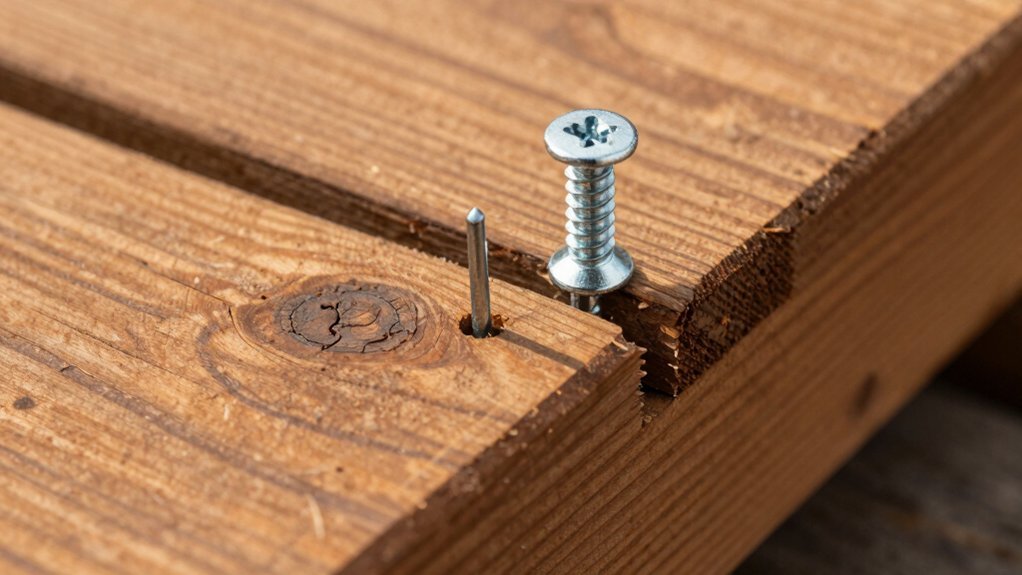
When choosing between nails and screws for decking, you’ll weigh holding power, installation speed, and long-term performance. Nails provide rapid installation with consistent seating, but they offer less withdrawal resistance in high-traffic regions or seasonal movement.
Screws deliver superior holding power and adjustability, resisting pull-out under wood expansion and contraction. For long-term performance, consider nail durability versus screw durability in your climate and substrate; screws resist loosening as boards shift, while common nails may loosen over time if not properly driven.
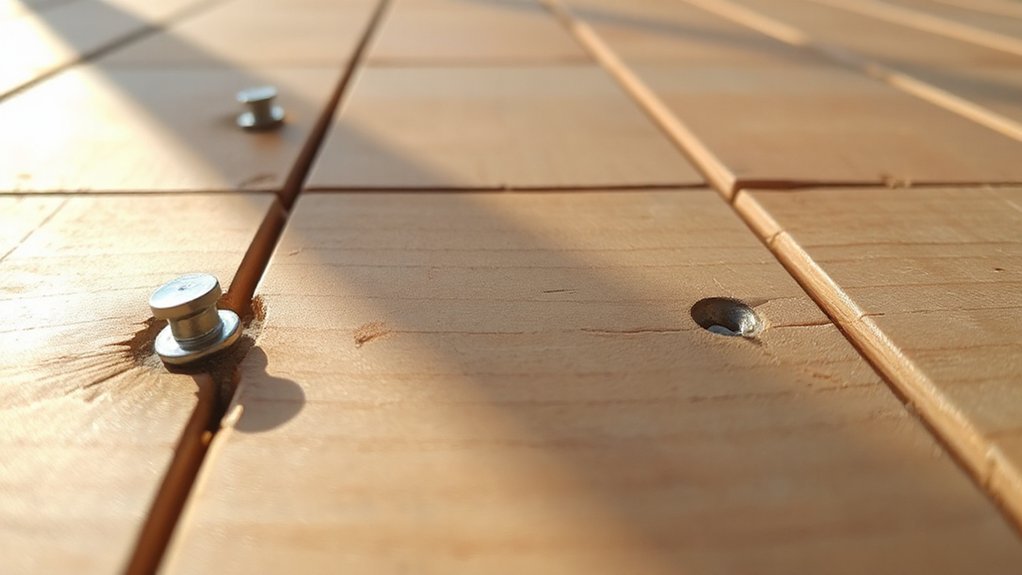
Screw aesthetics influence visible decking outcomes, as counter-sunk or trim-head screws can create smoother surfaces and reduce snag risk. Choose fastener type by balancing anticipated movement, load demands, and maintenance tolerance, then align with deck design goals and installation technique.
Maintain accuracy in spacing and driving depth to maximize performance.
Wood Type and Climate: How They Shift Fastener Choice
You must consider how different wood types interact with fasteners and why species selection alters corrosion and holding strength.
Climate adds another layer, affecting moisture cycles, expansion, and retreat, which shifts ideal fastener type and coating.
This discussion starts by linking wood type variations with climate-driven performance to frame fastener choices.
Wood Type Variations
Wood species and climate drive fastener choice because different woods react to moisture, density, and grain structure in distinct ways. In this section, you examine how wood type variations influence fastener selection and performance.
Dense hardwoods, like certain oaks, demand higher withdrawal resistance and may favor screws with deeper thread engagement, while softwoods often tolerate lighter fasteners or alternative fastener materials without compromising hold.
Grain orientation and end-grain exposure alter splitting risk, guiding pilot hole size and predrill depth.
Species-specific tannins and extractives can affect corrosion compatibility, prompting consideration of hardware coatings.
You should also account for finish compatibility; decorative nail finishes matter for aesthetics, whereas alternative fastener materials address longevity.
Align fastener choice with wood behavior to optimize deck stability and maintenance.
Climate Impact on Fasteners
Climate and moisture patterns directly influence fastener performance, building on how wood type shapes choices. You’ll see climate drives expansion, contraction, and corrosion risk, which shifts fastener selection toward materials with compatible coefficients and coatings.
In humid, coastal environments, you’ll prioritize stainless or coated stainless steel to resist corrosion and maintain joint integrity over decades. Drier, interior climates permit corrosion-resistant options but may allow cheaper cousins if moisture exposure stays minimal.
Temperature swings affect wood movement, so you’ll consider longer screws or through-bolts to prevent loosening. Material durability matters: you evaluate both coating systems and substrate compatibility to minimize fatigue, embedment loss, and pullout.
Environmental impact matters too: choose fasteners with lower embodied energy and responsible production where performance won’t be sacrificed.
When to Nail Decking: Best-Case Scenarios and Limits
In this section, you’ll consider how nail head preference and weather-driven limits shape when decking nails are appropriate. You’ll specify which nail heads minimize corrosion and guarantee flush seating under varying conditions, and when climate or exposure calls for alternative fasteners. The discussion will set clear boundaries on best-case scenarios for nailing and the limits that prompt a switch to screws.
Nail Head Preference
When should you choose a nail head for deck boards, and what limits apply? You assess head type by material, exposure, and finish: smooth or oversized heads resist pullout in softwood and preserve planed surfaces, while bugle or conforming heads reduce wood splitting in tight locations.
Nail head preference favors flush seating when concealed-fastener plans are absent, ensuring minimal surface disruption for a straight run. Limitations include potential head mushrooming on hardwoods, increased risk of nail-head loosening under weather cycling, and cosmetic mismatch with screws in adjacent areas.
Consider fastener aesthetic to match deck style and avoid protrusion that loosens seating. For appearance-sensitive applications, align nail head size with board thickness, then verify uniform seat depth to sustain long-term spacing integrity.
Weather-Driven Limits
Choosing the right fastener still hinges on wood behavior under weather, so you’ll favor nails in scenarios where moisture fluctuations are minimal and exposure is controlled.
Weather-driven limits define when nails outperform screws: limited swelling, predictable dimensional change, and reduced dynamic shear. In dry, sheltered deployments, moisture absorption is slow and uniform, allowing nails to maintain a tight, elastic joint without frequent loosening.
However, when moisture amplitudes rise or cycles are rapid, nails risk creep and splitting, and fastener corrosion becomes a concern if coatings or alloys aren’t matched to exposure. Screws often provide superior withdrawal resistance in fluctuating conditions, but you must choose corrosion-resistant grades for exterior use.
Establish limits by site humidity, rainfall exposure, and seasonal temperature swings, then verify with field testing and proper maintenance.
When to Screw Decking: Best-Case Scenarios and Limits
Screwing deck boards is most advantageous when you need precise fastener placement, superior shear strength, and a tight, uniform surface, particularly with composite or hardwood decking where molding and spacing are critical.
You should use screws in scenarios requiring dimensional stability across changes in temperature and humidity, where fastener pullout is a concern. Case-by-case, screws excel for high-traffic spans, edge support, and fittings near transitions, while keeping surface flush and consistent.
Be mindful of fastener corrosion, choosing noncorrosive or coated hardware for outdoor exposure. Consider decking expansion behavior; allow for controlled gaps and avoid over-compression that can create buckling.
Reserved limits include very thin profiles, soft decks, or installations with extreme substrate movement, where nails may better absorb stress.
Decking Installation Tips: Nail-First and Screw-First Approaches
A nail-first approach sets a quick baseline alignment for deck boards and helps control edge straightness before fastener interference. You’ll establish a reference line across boards, then verify plumb and uniform gaps prior to any screw installation.
Nail-first methods reduce edge wander, minimize mid-span cupping, and simplify initial layout checks, but you must account for nail-head visibility and potential splitting in hardwoods.
When you switch to a screw-first sequence, you gain robust draw-down and resistance to wind uplift, yet you may trade speed for increased fastener cost and tool wear.
For decking aesthetics, choose consistent fastener patterns and spacing to promote uniform shading and edge alignment.
Precision-driven practice requires documenting board orientation, seasonal trim adjustments, and secure clamping during *progression* between approaches.
Mixing Nails and Screws: Best Practices for Durability
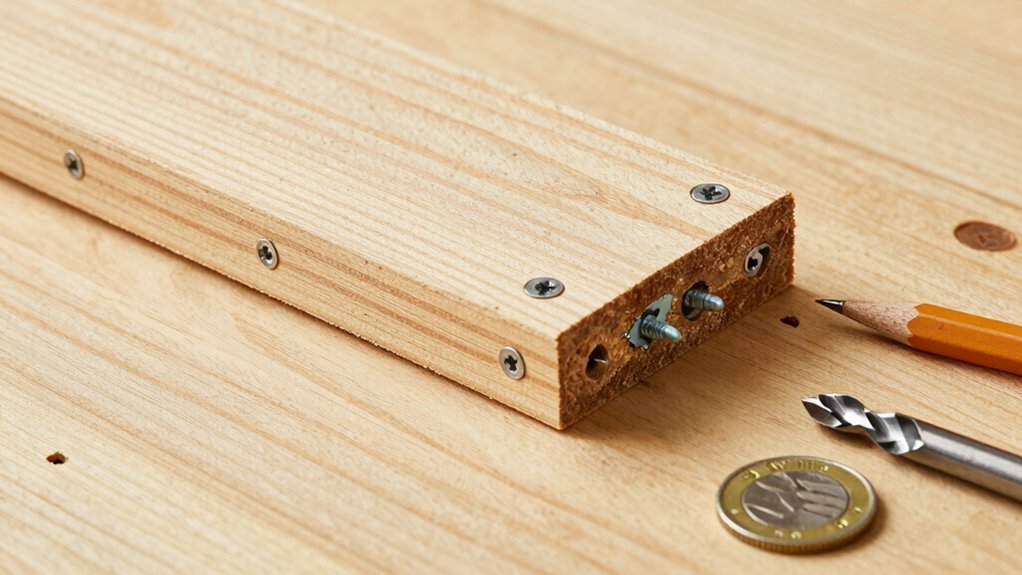
When you mix nails and screws in decking, use a deliberate pattern to balance fastener performance and edge stability. You’ll assign screws near board ends where withdrawal risk is higher and nails in midspan zones to resist shear and flex.
Maintain consistent spacing within each fastener type to prevent staggered loads that can introduce edge lifting. Use corrosion-resistant fasteners and ensure proper penetration depth per material grade, avoiding timber split risk at edges.
Coordinate fastener lengths so screws don’t protrude beyond the board surface, reducing snag hazards. Document installation techniques to reflect joist alignment and seasonal shrinkage, and verify that fasteners remain protected from moisture exposure.
Avoid mixing incompatible coatings that accelerate fastener corrosion; choose a uniform coating system for the project.
Fastener Selection Checklist: Picking the Right Deck Fastener
Choosing the right deck fastener starts with a clear selection checklist that aligns with material type, environment, and load demands. You evaluate substrate compatibility—treated lumber, hardwood, or composite—before selecting fastener type.
For wood decks, choose corrosion-resistant steel or stainless steel for outdoor exposure, and match shank size to joist thickness to avoid splitting.
In composite applications, prefer non-staining, stainless or coated screws to prevent ring-voids and puckering.
Consider head style for aesthetics and weatherproof seal; flat or countersunk heads reduce trip hazards and improve fastener aesthetics.
Assess installation speed alongside drive compatibility; stainless fasteners often require specific bits, while coated options may facilitate faster installation.
Finally, verify the finish resists corrosion in your climate and confirm load requirements meet code, ensuring long-term performance.
Frequently Asked Questions
Can You Reuse Deck Boards With Nails After Removal?
You can reuse deck boards with nails, but inspect for damage; nail corrosion may compromise integrity, and screw pull out could indicate core board degradation. If corrosion or pull-out risk exists, replace boards rather than reuse.
Do Weather Conditions Affect Nail or Screw Performance Long-Term?
Weather conditions affect nail or screw longevity; corrosion resistance declines with moisture, salt, or acidity, increasing failure risk. You’ll face higher installation difficulty as fasteners seize or corrode, compromising joints and lifespan, especially with untreated or unsuitable materials.
Are Hidden Fasteners Ever Better Than Nails or Screws?
You’ll find hidden fasteners are better in many cases, like precision whispering beneath boards. Hidden fastener advantages include cleaner surfaces and reduced splitting, while you weigh nail versus screw debate for strength, corrosion, and ease of replacement.
How Do Fastener Type Impact Deck Warranty Validity?
Your fastener type can affect warranty validity, because wrong choices may invite fastener corrosion and undermine deck longevity. Use corrosion-resistant screws or nails, verify manufacturer specs, and follow installation guidelines to protect warranty coverage and structural integrity.
Can I Mix Cut Nails in Treated Lumber?
Yes, you can mix cut nails in treated lumber, but beware of nail corrosion and reduced fastening strength; use-compatible fasteners, finish-ready coatings, and spacing controls, or you’ll compromise durability and warranty timing.
Conclusion
Ultimately, choose the fastener that matches your deck’s material and climate. For most hardwoods or spanning high-traffic areas, screws deliver superior withdrawal resistance and long-term stability; for softer species or budget focuses, nails can work—if you accept more seasonal movement. Thorough predrilling, correct fastener length, and restricted spacing are essential. Remember: the right fastener is a tool, not a ticket to shortcuts; think of it as the backbone that keeps every board aligned, protected, and true.