Disclosure: This post contains affiliate links. As an Amazon Associate, we earn from qualifying purchases.
Yes, most decking boards are pressure treated to resist decay, insects, and moisture, boosting longevity and stability in outdoor conditions. The treatment forces preservatives into the wood under vacuum and pressure, improving durability and allowing you to install with confidence in damp or ground-contact areas. It also helps control warping and reduces maintenance needs, though you’ll still seal and stain periodically. If you keep these points in mind, you’ll understand how PT decking fits your project and budget.
What Does “Pressure Treated” Mean for Decking?
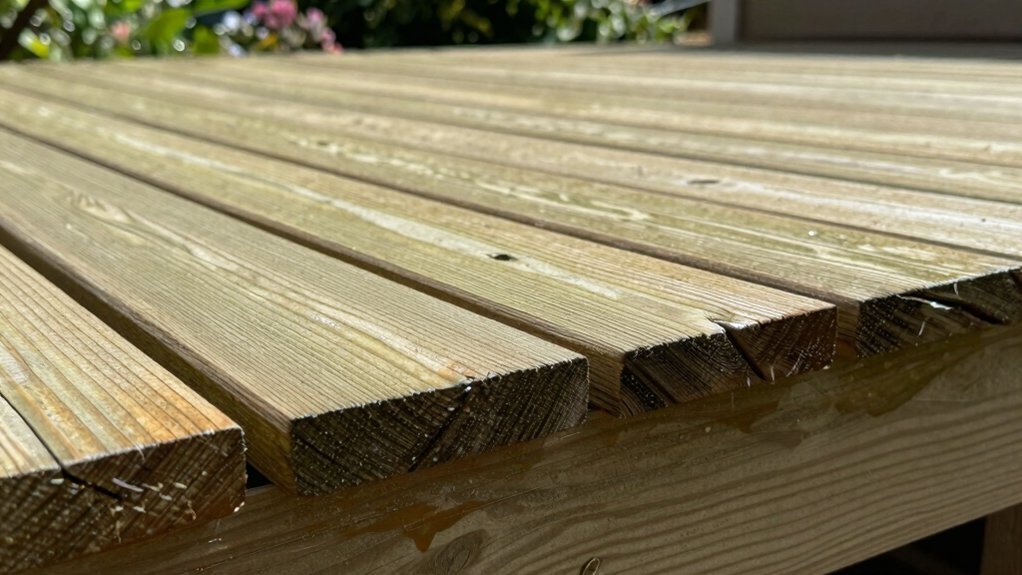
Pressure treated wood is lumber infused with preservatives to resist decay, insects, and moisture. You’ll encounter this term on decking boards labeled for outdoor use, especially in climates with humidity or termites.
The treatment involves impregnating wood with chemical preservatives under pressure, improving long-term durability beyond untreated lumber. You should note that treatment can affect material properties: moisture content, stiffness, and shrinkage may vary by species and grade.
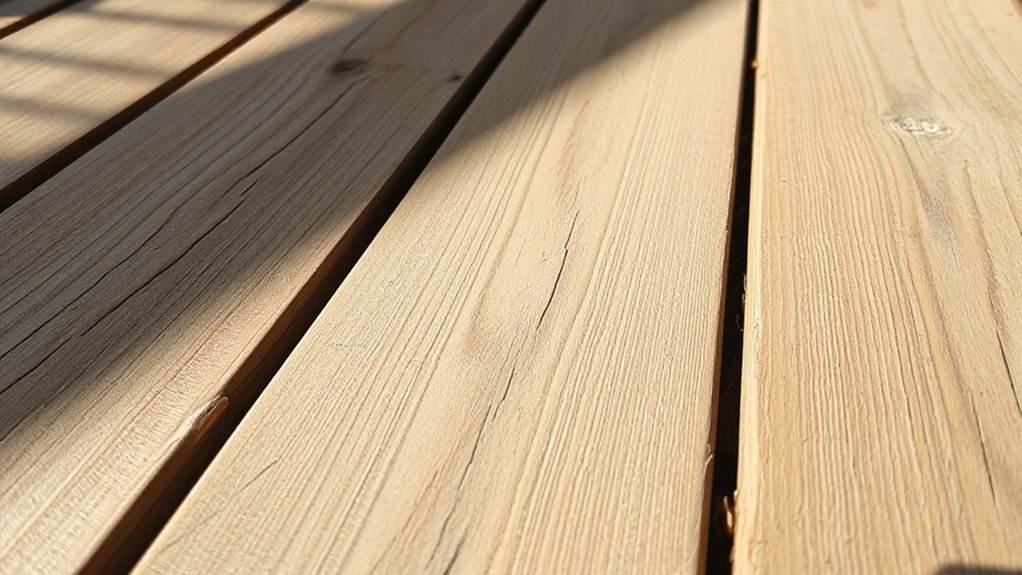
Wood grain orientation influences how boards respond to treatment and load; tighter grains often show more uniform staining and fewer checks.
Color variation is common between boards from the same batch due to mineral content, exposure, and resin pockets. When selecting boards, inspect for consistent tint, absence of uniform staining patterns, and any surface checks that might indicate processing inconsistencies.
Should You Use Pressure-Treated Decking? Key Factors for Homeowners
You’ll weigh longevity and durability against initial cost and installation ease when considering pressure-treated decking.
Ongoing maintenance and safety considerations, like weather resistance and mold prevention, should factor into your decision.
This discussion helps you balance performance with practical upkeep for your deck.
Longevity And Durability
Pressure-treated decking offers predictable longevity when properly selected and installed. You’ll evaluate natural decay resistance, dimensional stability, and load-bearing capacity to forecast performance over time.
Wood grain consistency influences nail-holding strength and board straightness, affecting span limits and fastener spacing, which in turn controls deformation risk under load. Select grades with minimal checks and uniform density to maximize long-term durability.
Weather resistance matters; treated wood resists moisture ingress, reducing swelling and fungal attack that accelerate decay. However, ventilation, drainage, and sun exposure still drive aging, so orient boards to promote quick drying and avoid standing water.
Consider coating strategies only after installation to preserve moisture balance. In practice, match treatment level to your climate, intended use, and expected service life for reliable, long-term decking performance.
Maintenance And Safety
While pressure-treated decking offers cost-effective, durable performance, you should weigh maintenance and safety considerations to determine if it’s right for your project. Key factors include periodic inspection for warping, splitting, and fastener corrosion, plus proper sealing to reduce moisture ingress.
Adhere to manufacturer guidelines for reapplication intervals and compatible finishes to maintain warranty validity. When choosing maintenance tasks, prioritize deck staining to protect surface fibers and extend life, selecting products compatible with treated wood and low VOCs for indoor air quality.
For safety, enforce fall protection, secure railing connections, and mindful use of power tools to prevent injuries. Pest control should address wood-destroying organisms with approved treatments, while avoiding chemical overuse near soil and shrubs.
Regular maintenance preserves performance and mitigates safety risks over time.
How Pressure-Treated Wood Is Made and What It Includes
Pressure-treated wood is produced by forcing preservative chemicals into the wood under pressure, which enhances durability and resistance to decay, insects, and weather.
In this process, you observe the wood entering a treatment chamber where vacuum and pressure cycles drive chemicals into the cellular structure. The core step is a controlled wood treatment, ensuring even penetration and retention. Treatments typically combine a preservative blend with wetting agents to improve absorption and distribution.
The resulting product includes fixed preservatives that resist fungal decay, insect feeding, and moisture-related degradation. Manufacturing notes include species selection, heartwood versus sapwood considerations, and recovery of treated cores for quality checks.
You’ll encounter classifications by retention and usage, with labeling reflecting the pressure process and applicable standards. This system emphasizes safety, performance, and long-term deck stability.
Pros of Pressure-Treated Decking: Longevity, Insect Resistance, Cost
You’ll see how pressure-treated decking delivers clear advantages in three key areas: longevity, insect resistance, and cost.
Regarding longevity, treated boards resist decay and fungal growth, extending service life under moisture exposure and seasonal cycles.
Insect resistance reduces damage from termites and other wood-boring pests, contributing to fewer repairs and replacements over time.
Cost-wise, initial material costs are typically lower than exotic or non-treated options, and longer intervals between maintenance cut total ownership expenses.
Aesthetic considerations remain practical: pressure-treated wood accepts decorative finishes and stain systems, enabling protective coatings without sacrificing performance.
Color options can be achieved with compatible stains, preserving uniform appearance across installed runs.
Cons of Pressure-Treated Decking: Chemicals, Environmental Impact, Upkeep
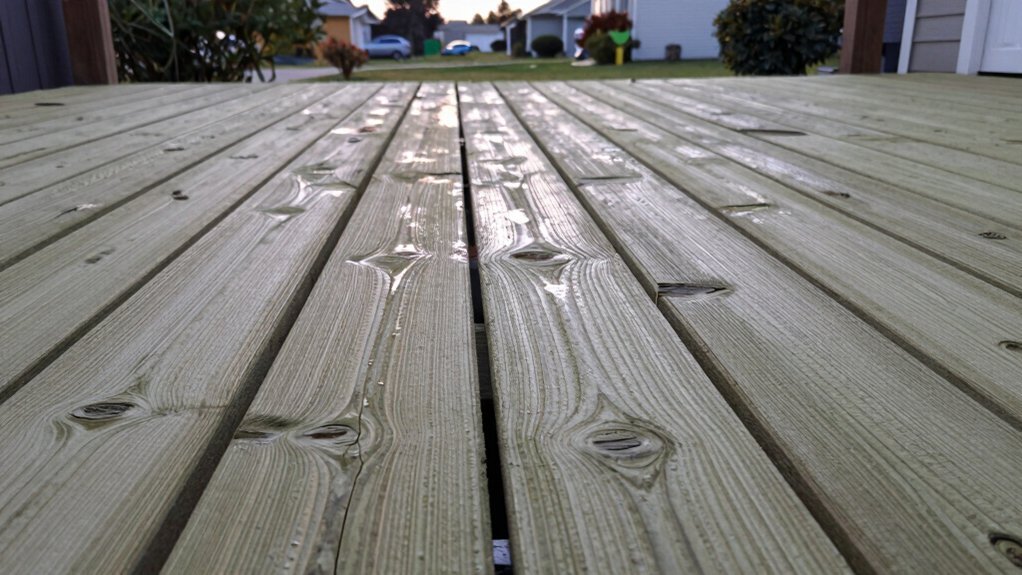
You should consider how chemical leaching and the broader environmental footprint factor into maintenance decisions for pressure-treated decking. While the chemicals provide durability, you must weigh potential leachate concerns and lifecycle impacts against long-term upkeep and safety.
This discussion sets the stage for evaluating trade-offs between performance, environmental responsibility, and ongoing care.
Chemical Leaching Concerns
Although pressure-treated lumber protects decks from decay, it can raise chemical leaching concerns: trace preservatives like chromated copper arsenate (CCA) or newer ammonium copper azole (ACA) formulations can migrate from the wood into soil, surface water, or nearby vegetation, especially when in direct contact with soil or exposed to weathering.
You should evaluate leachate potential when selecting lumber for garden beds, irrigation zones, or slopes near sensitive habitats. Leaching dynamics depend on weathering, wood species, and preservative chemistry, which influence concentrations in surrounding media.
For wood preservation and chemical safety, implement barrier strategies, proper drainage, and clear-contact avoidance to minimize exposure pathways. Regular inspection ensures intact finishes and reduces leaching risk without compromising deck performance.
Environmental Footprint Impact
Pressure-treated decking introduces measurable environmental costs beyond initial performance. You’ll weigh chemical use, disposal, and lifecycle effects when evaluating its footprint. The industry relies on preservatives that can migrate through soil or surfaces, raising concerns about eco impact along the supply chain.
Even with modern formulations, extraction and production consume energy and water, influencing greenhouse gas totals and resource depletion. Sustainable sourcing becomes a key consideration for raw materials, influencing long-term viability and overall footprint.
Maintenance cycles add further environmental load through coatings, cleaners, and power tools. You may favor eco friendly treatments and alternatives with lower toxicity and longer service life to reduce replacements.
Transparent labeling helps you compare durability, emissions, and end-of-life options, guiding responsible selection without sacrificing performance.
Alternatives Worth Considering (Non-PT Decking Options)
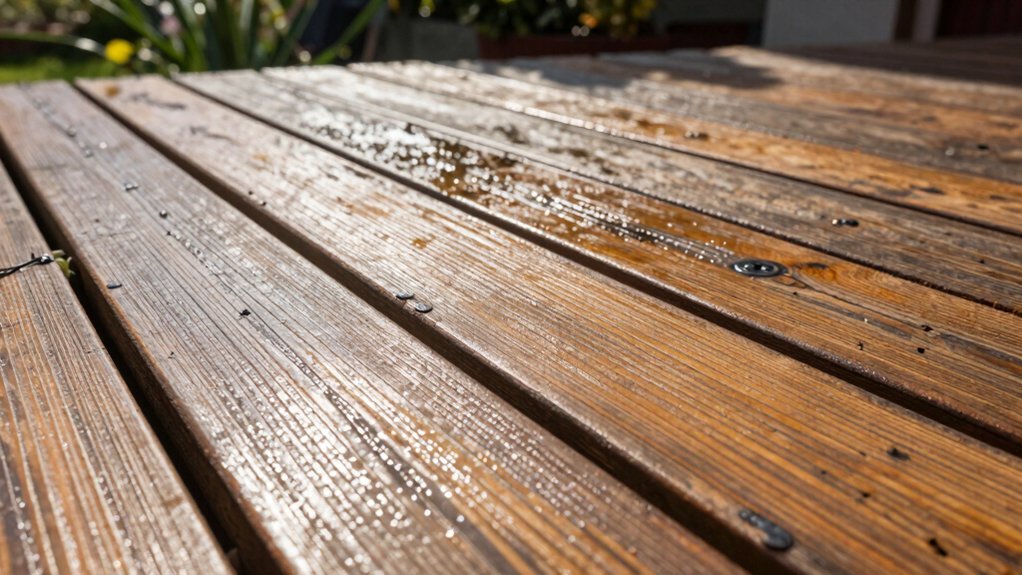
There are solid non-PT decking options that balance durability, cost, and environmental considerations, making them worth a closer look. You’ll assess materials by longevity, maintenance needs, and lifecycle impact rather than upfront price alone.
Natural alternatives include sustainably sourced hardwoods and engineered wood products designed for outdoor use, offering familiar aesthetics with controlled sourcing.
Composite options blend recycled plastics with wood fibers, yielding low termite risk, minimal warping, and reduced upkeep. When evaluating, consider moisture resistance, dimensional stability, and color retention over time.
Performance varies by climate and installation method, so align choice with load expectations and local building codes.
For environmental considerations, verify certifications and supplier transparency, ensuring responsible harvesting or recycling practices accompany any natural or composite selection.
Maintenance and Finishing Tips for Pressure-Treated Decking
To keep pressure-treated decking performing well, establish a proactive maintenance routine that focuses on cleaning, sealing, and inspecting for damage.
Begin with seasonal cleaning using a mild detergent and soft brush to remove mold, mildew, and algae; avoid high-pressure water that can raise grain. Rinse thoroughly and allow drying before sealing.
Choose a compatible deck sealer or stain that penetrates wood and offers UV protection; recoat every 2–3 years, or per product guidance, to minimize graying and moisture uptake.
Inspect for loose fasteners, cracked boards, and rot; replace damaged sections promptly.
When planning garden design, integrate uniform spacing and shade considerations to reduce moisture pockets.
For outdoor furniture, position pieces on solid, clean surfaces to prevent staining and edge wear.
Maintain clearance for airflow to prolong finish life.
Safe Handling and Installation Best Practices
Safe handling and installation start with proper planning and controlled procedures to protect both the installer and the wood. You verify site conditions, PPE, and ventilation before any cutting or staining begins. Follow manufacturer guidelines for tool speeds, dust control, and waste disposal to minimize exposure.
Handling treated boards requires gloves and eye protection to prevent irritation and splinters; avoid skin contact with fresh cuts and allow adequate airflow during drying.
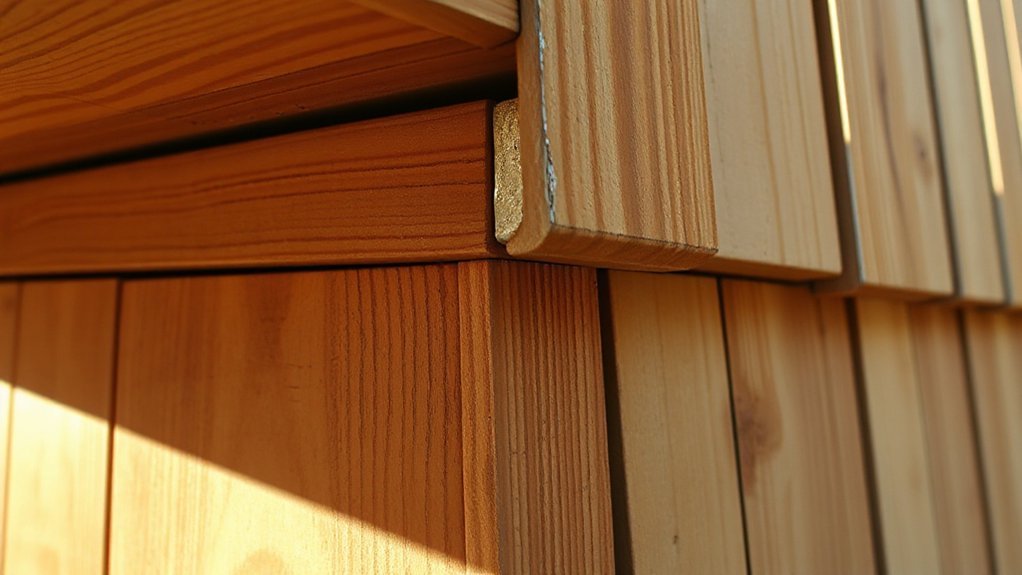
When installing, align boards with the grain, maintain consistent gaps, and secure with corrosion-resistant fasteners suitable for treated wood. Clean surfaces thoroughly to prevent residue transfer and choose compatible sealants if finishing is desired.
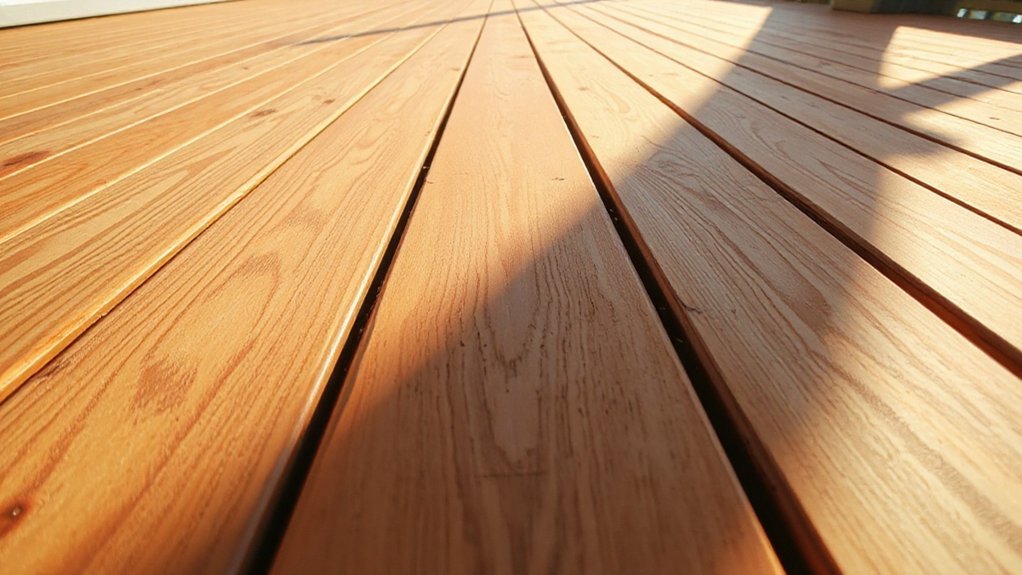
Consider decking color options and wood grain textures to achieve a uniform appearance while preserving long-term performance. Periodically inspect for damage and replace components as needed.
Is PT Decking Right for Your Project and Budget? A Quick Decision Guide
Choosing PT decking comes down to balancing cost, durability, and maintenance. If you’re seeking a budget-friendly, low-maintenance option with proven performance in wet or variable climates, pressure-treated boards are worth considering.
To decide, assess your project scope and environment: expect moderate to high moisture exposure, ground contact, or seasonal wetting, which PT wood handles with proper sealing and venting.
Consider lifecycle costs, including routine staining or sealing, and potential treatment recalls or warranties.
Decking aesthetics influence final appeal; while PT boards accept stains, grain variation and uniform color may differ from exotic options.
Pricing considerations matter: initial purchase is lower, but maintenance can shift long-term budgets.
For longevity, pair PT decking with correct fasteners and flashing, and follow manufacturer guidelines.
Frequently Asked Questions
How Long Does Pressure-Treated Wood Typically Last Outdoors?
You’ll typically get 15–40 years outdoors, depending on durability factors and treatment processes. Proper installation, ventilation, and maintenance extend life; untreated sections fail sooner. Durability factors include species, preservative type, climate, moisture, and load.
Are There Health Risks From PT Chemicals During Installation?
You’ll confront health concerns and chemical exposure risk during installation, so take precautions. Health concerns include skin contact and dust inhalation; use PPE, ventilation, and wash skin thoroughly to minimize exposure while you work.
Can PT Decking Be Recycled or Repurposed After Disposal?
PT decking can be recycled or repurposed, but options vary by local facilities. You should consult your recycler. Recycling options exist for treated wood composites; consider Environmental impact, including potential contaminants, and safe handling during processing.
Do Different Wood Species Affect PT Treatment Effectiveness?
Yes, wood species influences treatment effectiveness; some species absorb preservatives differently, so you’ll see varied protection. You’ll notice coincidence: choosing a compatible species aligns with stronger, longer-lasting treatment, optimizing performance across applications.
What Maintenance Schedule Maximizes PT Deck Lifespan?
You should follow a maintenance schedule of annual inspections, cleaning, then targeted treatments; plan deck staining every 2–3 years and deck sealing annually to maximize PT deck lifespan and prevent moisture-related damage.
Conclusion
You’ve got options beyond pressure-treated decking, but PT wood remains a reliable baseline for longevity and affordability. If you prioritize cost, insect resistance, and ease of availability, PT decking fits your project. However, consider environmental concerns, chemical handling, and maintenance needs before buying. Weigh alternatives like composite or naturally durable species to match your budget and performance goals. In the end, balance upfront costs with long-term upkeep to pick the right choice for your deck.