Disclosure: This post contains affiliate links. As an Amazon Associate, we earn from qualifying purchases.
For a fast, even finish on large, flat deck areas, use a roller. It speeds coverage and minimizes fatigue, especially with oil- or water-based stains, but you’ll sacrifice edge detail. Turn to a brush for deep grain, tight corners, and textured surfaces to push stain into grooves and create clean edges. Match your tool to deck type and stain formula for durability. If you want more nuance, you’ll discover proven techniques and best practices next.
Roller vs Brush: Decide the Right Tool for Your Deck
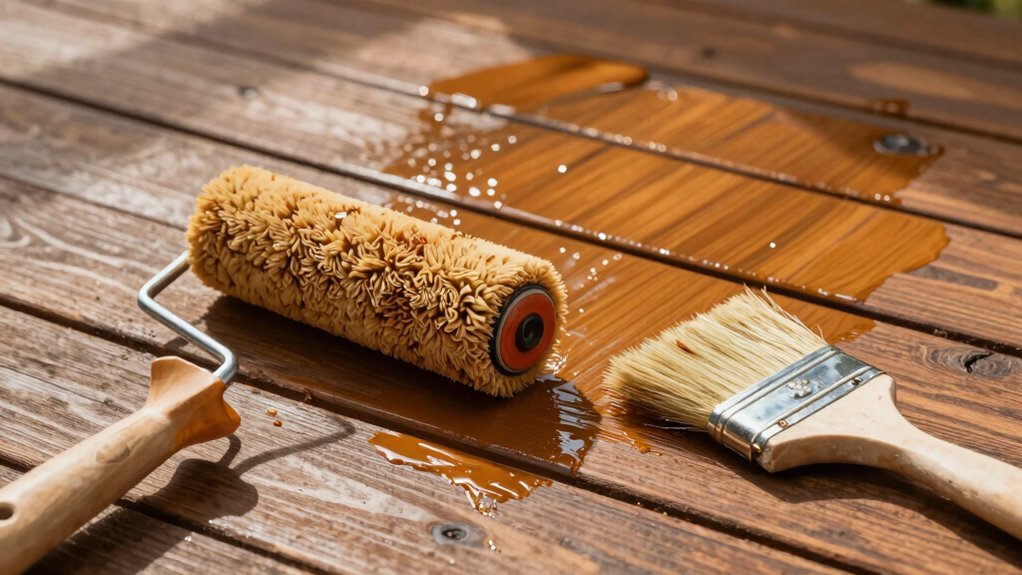
Choosing between a roller and a brush depends on your deck’s surface and the finish you want. You’ll weigh coverage, texture, and control to decide which tool suits you best.
A roller delivers quick, even coats on flat boards and smooth surfaces, promoting color consistency across larger areas. It’s ideal for solid colors and stains with a uniform appearance, provided you use an appropriate nap length and load.
A brush offers precision for edges, railings, and boards with grain detail, letting you follow grain flow and reach tight corners.
Consider tool durability: brushes tolerate tough bristles and long sessions, while rollers resist marring on rough textures.
For overall results, blend techniques only when necessary, then maintain a steady hand and steady pace.
When to Reach for a Deck Stain Roller
A deck stain roller shines when you need fast, uniform coverage on flat, open surfaces. You reach for it when large, smooth areas demand quickly even color, not feathered patches or streaks. Use it for consistent color across boards, especially when you’re working with mid- to long-grain runs and minimal detail work.
Rollers reduce fatigue on big spans, supporting steady, uninterrupted strokes that boost color consistency. Be mindful of tool ergonomics: choose a roller with a comfortable handle and balanced weight to minimize wrist strain during extended sessions.
For fresh decks or when you’re balancing multiple coats, a roller can accelerate your timeline without sacrificing finish. Reserve deep grooves and intricate edges for a brush later in the process.
When a Brush Wins: Deep Grain and Edges
When you’re tackling deep grain, a brush can deliver better edge control and more consistent coverage on intricate textures.
You’ll notice enhanced texture definition from the Brush Performance Wins point, especially around tight grooves and corners. This is where edges coverage matters most, and it sets up a cleaner, longer-lasting finish.
Deep Grain Benefits
When you’re aiming for deep grain definition, a brush often wins because its bristles lay down thick, consistent coats that push into crevices and along edges more effectively than a roller.
With a brush, you achieve pronounced grain lines that read as natural texture rather than uniform pigment. This approach supports grain enhancement by highlighting directional wood patterns and creating a tactile, visual depth that a roller rarely matches.
You’ll notice improved color saturation where the stain catches the wood’s contours, yielding richer, dimensional appearance. Brush use also aids texture preservation by minimizing over-application that can flatten grain.
For projects prioritizing authentic wood character, a brush provides precise control, efficient edge work, and durable, long-lasting surface definition.
Edges Coverage Edge
Edges often benefit from a brush because precise application corners and tight contours without overspread. You’ll control edge coverage with steady strokes, ensuring clean boundaries between boards and in crevices.
A brush lets you place stain where a roller might dribble or pool, delivering consistent color along railings, gaps, and trims. Focus on finishing touches by maintaining a wet edge and blending as you go to avoid lap marks.
Use a narrow brush for tight runs, then switch to a broader stroke for broader edge zones if needed. Keep even pressure, light coats, and avoid overworking the wood to prevent brush marks.
This approach prioritizes edge coverage and a professional, uniform appearance across the deck.
Brush Performance Wins
Brush performance shines where the grain is deep and edges demand control. When you pick a brush, you gain precision that a roller can’t match, especially on tight corners and intricate grain patterns. You’ll notice paint texture stays even, with fewer stipples and uneven patches, because bristle stiffness and alignment deliver consistent laydowns.
For deep grain, a well-suited brush lays color into crevices, reducing drama at junctures. Edges stay sharp, avoiding bleed onto siding faces. You’ll appreciate tool ergonomics: comfortable grip, balanced weight, and controlled wrist movement that prevents fatigue during long sessions.
The result is cleaner lines, better coverage on textured surfaces, and a professional finish that resists peeling. In short, a brush wins when detail matters.
Match Tools to Deck Type and Stain (Wood, Composite, Oil, Water-Based)
Choose tools that match your deck type and stain, so you apply the finish evenly and resist wear.
For wood, oil-based stains pair well with natural-bristle brushes or rollers designed for grain fill.
For composite and water-based stains, use synthetic tools to avoid streaks.
Align the stain type with your deck material to make certain of compatibility and long-lasting results.
Deck Type Compatibility
Choosing the right tool for your deck type guarantees you apply stain evenly and without waste: wood, composite, oil-based, and water-based formulations each demand specific applicators. You’ll match tools to material to maximize deck maintenance and stain durability.
For wood, use a roller or brush that holds ample product and reaches grain texture without overworking fibers.
Composite decks benefit from rollers with short naps or high-quality brushes to avoid streaks and excessive saturation.
Oil-based stains glide best with natural-bristle brushes, while water-based formulas perform well with synthetic rollers that minimize brush marks.
Always pre-clean and dry surfaces, then test in a hidden area.
Select tools that balance coverage speed with control, reducing runs and lap marks.
Proper compatibility yields consistent color, longer protection, and easier upkeep.
Stain Type Alignment
To guarantee even coverage and maximum durability, align your tool choice with both the deck type and stain formulation.
Stain type alignment means selecting tools that suit wood, composite, oil, or water-based products. For wood decks, use rollers or brushes that push pigment into grain, ensuring color consistency and thorough stain absorption.
On composite surfaces, prefer high-porosity rollers or microfiber brushes that minimize surface picking and streaks. Oil-based stains pair well with dense rollers that distribute evenly, while water-based formulas benefit from lightweight brushes or synthetic rollers to prevent lap marks.
Always test on a small area, monitor absorption rates, and adjust pressure accordingly. Matching tools to the stain type reduces laps, preserves finish quality, and yields uniform color across the entire deck.
Prep Steps by Deck Type and Stain
When prepping a deck, start by identifying your deck type and the stain you plan to use, since different combinations demand specific steps. You’ll tailor prep to wood species, grain, and existing finish.
For single-layer exterior decks, clean thoroughly, remove loose fibers, and rinse until the surface is free of residue. If you’re refinishing aged or previously sealed surfaces, test for coating compatibility and potential peeling.
Lightly sand high-traffic boards to promote adhesion, then vacuum and wipe with a tack cloth. For cedar or redwood, treat with a fast-drying cleaner to avoid warps.
In all cases, perform surface preparation with care, ensuring dry conditions before staining. This approach supports deck maintenance and improves finish longevity.
Techniques for Even Color With a Roller
A roller can deliver even color when you load it correctly and apply the stain in steady, overlapping passes. Begin by loading just enough stain on the roller nap to avoid drips, then roll along the deck boards with a light, consistent pressure.
Maintain a consistent direction and use long, even strokes to minimize lap marks. To achieve color blending, keep successive passes slightly overlapping and work in sections, not random patches.
Watch for puddling at joists or end grains; back-roll those areas to even the surface. Clean tool tips between sections to preserve nap integrity.
After finishing a section, wipe excess from the roller to avoid texture variation. With proper tool maintenance, you’ll secure uniform, professional-looking color.
Deep Penetration Techniques With a Brush
With a brush, you can achieve deep penetration by working the stain into the wood fibers rather than just coating the surface. Start with a generous bead along the grain, then use long, even strokes to push pigment deeper.
Maintain a consistent paint consistency to prevent runs or thin spots; too thick slows absorption, too thin floods pores.
Work small sections to control depth and minimize lap marks, blending edges while the stain remains wet.
Allow the stain to penetrate before wiping or back-brushing if this method suits your wood and finish.
Monitor drying time closely; environments with high humidity or heat alter absorption, so adjust application cadence accordingly.
Finish requires even penetration to ensure uniform color and protection, reducing the need for later touch-ups.
Time, Cost, and Cleanup: Roller vs Brush
Roller and brush each affect time, cost, and cleanup differently, so choosing depends on project size and finish goals. You’ll save time with a roller on large, flat surfaces, but you’ll trade some control for speed. A brush gives precision in intricate areas and edges, often reducing touch-up later, though it can extend the overall duration.
For cost analysis, consider tool reuse, paint coverage, and material waste; rollers typically lower material waste but require replacements for naps and covers, while brushes incur steadier maintenance.
Cleanup process favors rollers when the surface is smooth and roller sleeves are disposable or reusable with washing, whereas brushes demand thorough rinsing and drying to prevent bristle damage.
Weigh dust, elapse time, and finish quality to determine the most efficient option for your deck project.
Frequently Asked Questions
Can Rollers Apply Stain on Vertical Surfaces Without Drips?
Yes, you can, but prep matters: apply evenly with steady roller motion on vertical surfaces, avoid overloading, and keep a light, continuous finish to minimize drips. Focus on stain absorption and roller durability throughout the job.
Which Tool Minimizes Lap Marks on Curved Railings?
Yes, use a curved railing technique with a high-quality brush for precision. For stain application tips, maintain a thin coat, keep a wet edge, and work in small sections to minimize lap marks on curved railings.
How Long Before Recoating After Using a Roller?
You should wait about the drying time before recoating: typically 4–6 hours for most deck stains, ensuring the surface is dry to the touch. Adhere to the reapplication interval recommended by the product; don’t rush the process.
Can Brushes Cause Brush Marks on Smooth Cedar?
Yes, brushes can leave brush marks on smooth cedar if you apply too thickly or unevenly. To avoid it, use light, even strokes, maintain a wet edge, and consider a high-quality brush designed for exterior stains.
Do Hybrids Exist for Cost-Effective Deck Staining Tools?
Yes, hybrids exist as cost effective deck tools. You’ll discover hybrid staining tools that combine roller and brush benefits, saving you time. You’ll wield efficiency like a craftsman, choosing cost effective deck tools for steady, even finishes.
Conclusion
Choosing wisely blends speed with precision. A roller speeds you to even, broad coverage, while a brush finds the grain and edges you don’t want to miss. Use the roller for large surfaces, the brush for detail and deep penetration. Pick wood, oil, or water-based stains by deck type and job. Prep smart, technique strong, cleanup quick. In the end, the right tool turns a dull deck into a lasting, sparkling finish you’ll actually enjoy.