Disclosure: This post contains affiliate links. As an Amazon Associate, we earn from qualifying purchases.
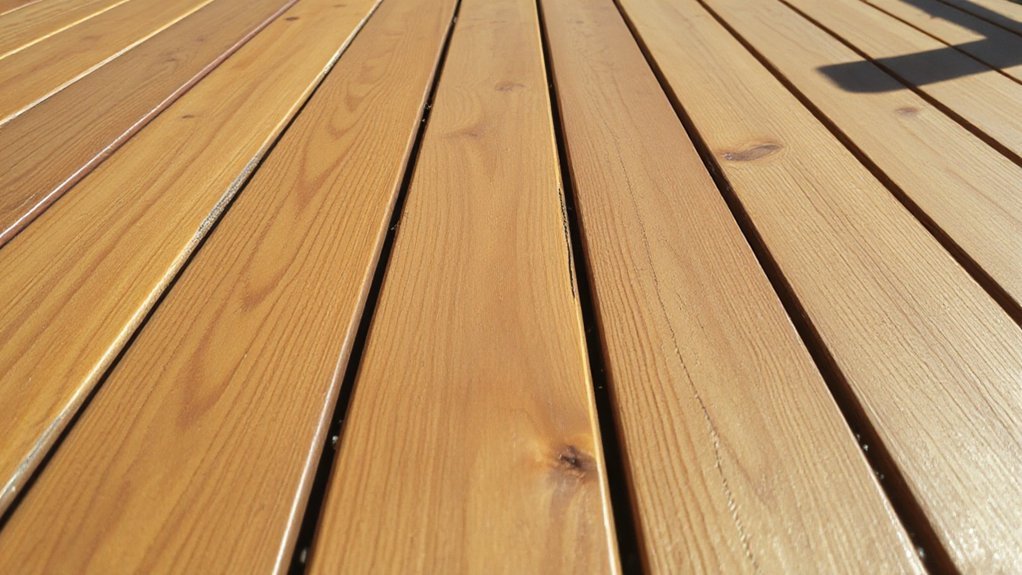
Yes. Decking should have gaps to manage drainage, moisture, and wood movement. Gaps prevent standing water, warping, cupping, and edge lifting, while supporting airflow for drying. They also affect safety, design, and maintenance—wider gaps help in wet or high-traffic areas but can trap debris, so sizing matters. Material, climate, and usage guide the exact width. With proper spacing, you get durability, better drainage, and a cleaner look; you’ll see how this choice pays off as you proceed.
Why Gaps Matter: Benefits, Trade-offs, and When to Skip Them

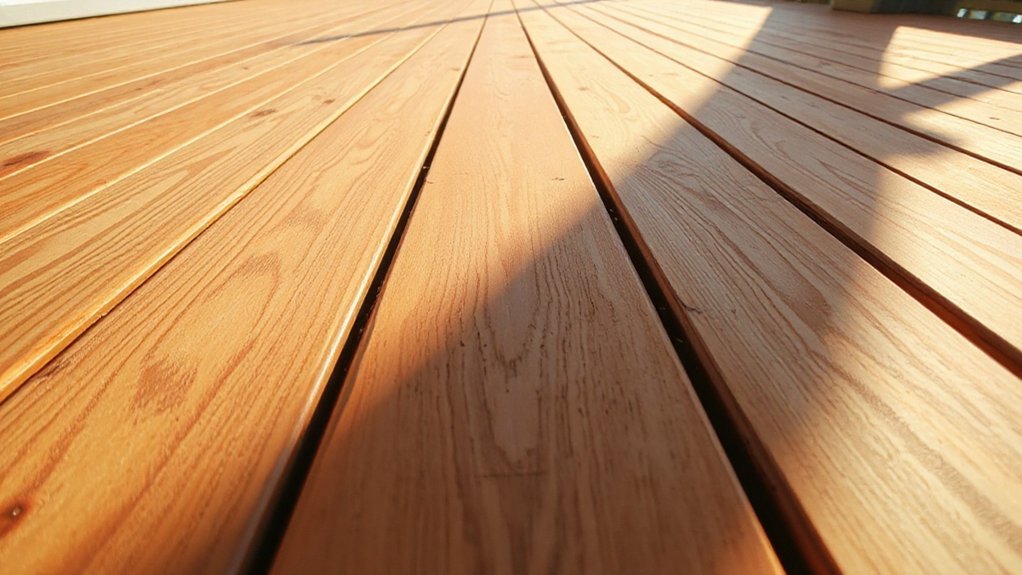
Gaps between deck boards serve specific, practical purposes: they control drainage, accommodate wood movement, and prevent warping. You’ll notice that these gaps influence decking aesthetics by shaping light patterns, shadow lines, and the overall finish.
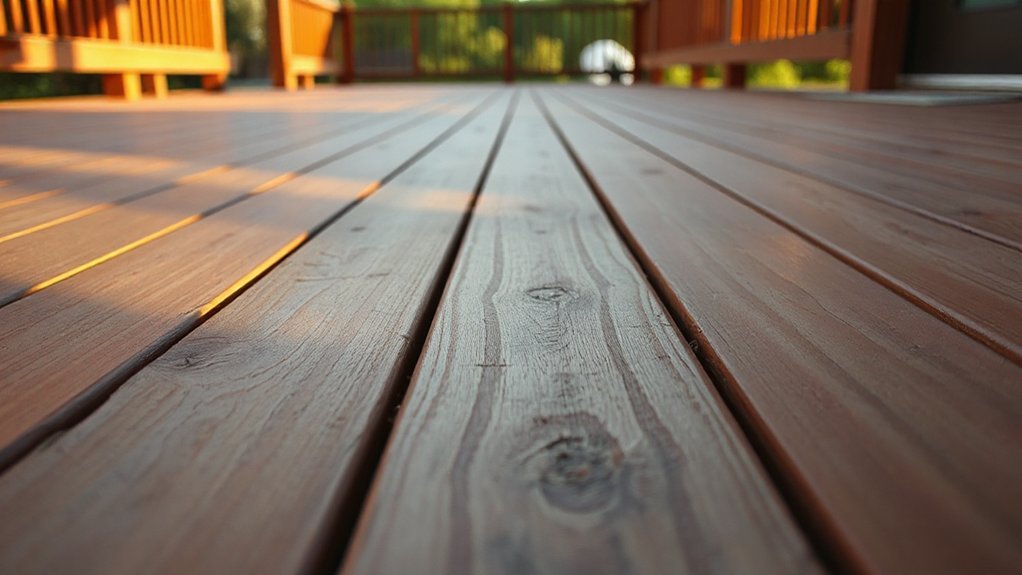
Practically, they allow water to escape quickly, reducing standing moisture and delaying deterioration. You’ll also gain regulated airflow, which helps drying after rain and lowers rot risk.
Trade-offs exist: too-wide gaps can trap debris, promote weed growth, or create trip hazards; too-narrow gaps may hinder drainage and expansion. You might skip gaps in some climates or with certain composites, but that choice shifts maintenance needs and performance.
Consider the environmental impact, noting that broader gaps can reduce chemical exposure by improving drying, while tighter gaps may require more frequent cleaning.
How to Decide Gap Width: Criteria for Climate, Wood Type, and Usage
When choosing gap width, start by aligning with your climate, wood type, and intended use. You’ll assess how humidity, freeze–thaw cycles, and seasonal expansion affect joints, then weigh whether your deck material tolerates tighter or wider gaps without compromising drainage.
Consider wood characteristics: species with higher shrinkage require larger gaps to prevent sticking or buckling, while stable varieties permit smaller intervals.
Your usage profile matters too: high-traffic areas, planters, or frequent wet conditions may justify modestly wider gaps to reduce splinters and water retention.
You should balance maintenance and aesthetics; narrower gaps yield a cleaner look, while wider gaps can enhance drying and airflow, altering aesthetic impact.
In all cases, document practical tolerances, installation tolerances, and contractor guidance for consistent results.
Deck Gap Spacing Guidelines by Material and Design
Material and design choices drive distinct gap-spacing standards, so you should start by aligning gaps to the specific decking material’s expansion, contraction, and drainage behavior.
Design-driven guidelines then translate those behaviors into target ranges, with emphasis on manufacturer recommendations, installation method, and visible evenness.
In practice, you’ll compare gap-spacing implications across materials and designs to identify the most consistent, serviceable option for your deck.
Gap Spacing By Material
Proper gap spacing varies by material due to expansion, contraction, and drainage needs. Selecting the right spacing minimizes binding and water retention while ensuring airflow. You’ll consider how each material responds to moisture and temperature, translating that behavior into a practical spacing target.
Wood, for instance, exhibits noticeable expansion and can warp if gaps are too small, while composite planks may tolerate smaller deltas but demand accurate alignment to avoid misfit. Metal options, treated to resist corrosion, still shift with heat, influencing drainage performance.
Stone and porcelain tiles require precise, uniform joints to prevent lateral movement. Material expansion informs maintenance cadence, while aesthetic impact guides visible gap regularity.
Design-Driven Gap Standards
Design-driven gap standards translate material behavior into actionable spacing targets, ensuring both function and form align with your deck’s aesthetic. You apply empirical limits drawn from each deck material’s thermal expansion, moisture response, and structural tolerances, converting them into repeatable gap rules.
By design, these standards bind performance and appearance, preventing uncontrolled movement from undermining joist alignment or surface continuity. You’ll reference a material-specific tolerance band, translating it into a precise gap range that accommodates seasonal cycles without producing trip hazards or visual discord.
Consider gap aesthetics as a measurable attribute, not a stylistic afterthought, confirming consistency across boards, profiles, and fasteners. The result is a coherent deck experience, where spacing decisions reflect material behavior and pursuit of a clean, intentional composition.
Deck Gaps vs Solid Decking: When Each Makes Sense
You’ll weigh how drainage and weep systems interact with gaps, and how proper spacing prevents water buildup while allowing quick drying.
Consider how movement and expansion gaps alleviate structural stress without compromising safety or appearance, especially as temperatures shift.
Weigh aesthetics and ongoing maintenance, since gaps influence cleanability, debris resistance, and the long-term look of solid decking versus spaced designs.
Drainage and Drainage Weep
Drainage gaps and drainage weep holes are a practical choice when you need to manage water quickly off a deck surface. You evaluate how gaps influence runoff rate, pooling risk, and ease of maintenance, not just look.
In this context, you balance performance with durability: gaps reduce surface water but can expose edges to wear, while solid decking must channel moisture through underlying framing. For effective drainage, you consider the deck’s slope, texture, and the substructure’s drainage path.
Material selection affects long-term behavior under wet conditions, so choose components that resist moisture-related decay or corrosion. You’ll find that deck aesthetics aligns with function when gaps provide predictable shedding without compromising structure.
Movement and Expansion Gaps
Movement and expansion gaps serve a practical role in decking by accommodating seasonal shifts and material creep; when used judiciously, they preserve joint integrity and reduce surface binding.
You’ll assess when gaps are warranted versus solid decking by evaluating substrate movements, fastener behavior, and board species. Deck expansion should be planned where differential expansion exceeds the tolerances of the decking system, particularly with heat, moisture, and load fluctuations.
Gaps must be sized and placed to prevent edge lifting, cupping, or trip hazards while maintaining a predictable surface. Consider continuous framing cells and expansion allowances at ends, corners, and transitions. Avoid oversized gaps that invite debris accumulation or slip risks.
In this regard, deck expansion considerations influence gap aesthetics, ensuring functional separation without conspicuous visual discontinuities.
Aesthetics and Maintenance
Deck gaps and solid decking each offer distinct aesthetic and maintenance profiles, and selecting between them hinges on visual harmony, cleaning practicality, and long-term upkeep.
You evaluate how gaps create rhythm and shadow, influencing deck color perception under varying light, versus solid boards that present a continuous surface. Gaps facilitate drainage and reduce moisture retention, which can lower staining frequency, yet may complicate certain railing styles where fastener visibility matters.
Solid decking delivers a seamless, uniform appearance, simplifying color consistency and edge alignment, but demands vigilant cleaning to prevent mold and staining in shaded areas. Consider practicalities like seasonal sweeping, power-washing tolerance, and sun exposure.
Your choice should harmonize with railing styles, ensure safe traversal, and preserve the desired deck color over time without excess maintenance.
Cost, Maintenance, and Long-Term Care of Deck Gaps
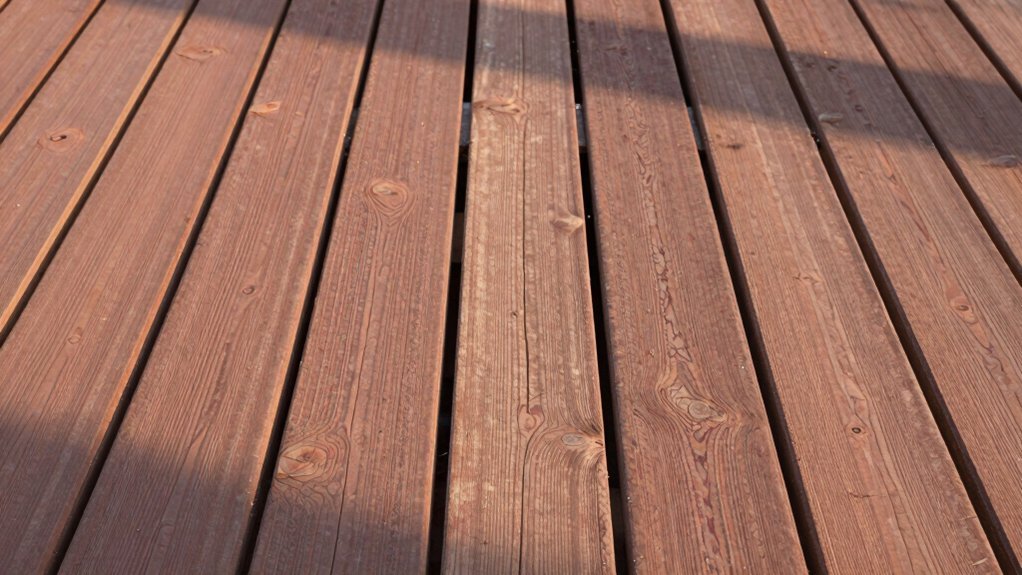
Maintaining deck gaps costs money upfront and requires ongoing attention to prevent structural and cosmetic issues. You’ll perform a cost analysis to compare materials, gap sizing, and installation methods, since initial prices influence long‑term maintenance.
Decking materials choices affect expansion and contraction rates, so you’ll weigh moisture exposure, temperature swings, and backing support when estimating upkeep. Regular inspections catch loosened fasteners, warped boards, and debris buildup that can impede drainage.
Seasonal cleaning reduces staining and mold growth while preserving appearance. Sealants and protective coatings extend life but must be reapplied on a schedule aligned with climate and product specs.
Plan for eventual board replacement or fascia repairs, budgeting for tool use, fasteners, and potential pro services. Clear documentation minimizes surprises and supports predictable maintenance timelines.
Safety and Accessibility Considerations in Gap Design
When designing gaps, prioritize safety and accessibility to reduce tripping hazards and accommodate varied users. You evaluate gap width, spacing, and edge treatment against deck safety benchmarks, ensuring consistent dimensions across surfaces and movements.
You confirm that gaps don’t create pinch points or footholds that could unsettle balance, especially for children and older adults. You align with accessibility standards by providing ramps or alternate routes where increased stride length is required and by incorporating slip-resistant edge profiles.
You document thermal and moisture effects that may alter gap integrity, avoiding deformation or grate-like traps. You assess lighting implications to prevent shadowed transitions.
You communicate decisions transparently to builders, emphasizing maintenance responsibilities and ongoing monitoring to sustain deck safety over time.
How to Create Clean Gaps That Stay Weed-Free
To keep gaps clean and weed-free, start with a precise installation plan that prioritizes unobstructed weeding and ongoing maintenance. You’ll align deck boards to create uniform channels that simplify weed removal and prevent organic buildup.
Use a solid weed barrier beneath the substrate, ensuring overlaps don’t trap moisture. Maintain proper drainage so subsurface moisture stays away from weed seeds yet doesn’t dry out the root zone of desired plants.
Choose compressed spacers that hold consistent gaps, reducing soil retention and weed ingrowth. Install edging to contain soil and mulch, preventing lateral spread.
Regular inspection detects shifts or loose boards before weed colonization, supporting insect prevention by limiting dark, damp niches. Document maintenance intervals to sustain gap integrity and predict performance over time.
Regional Codes and Climate Considerations for Gaps
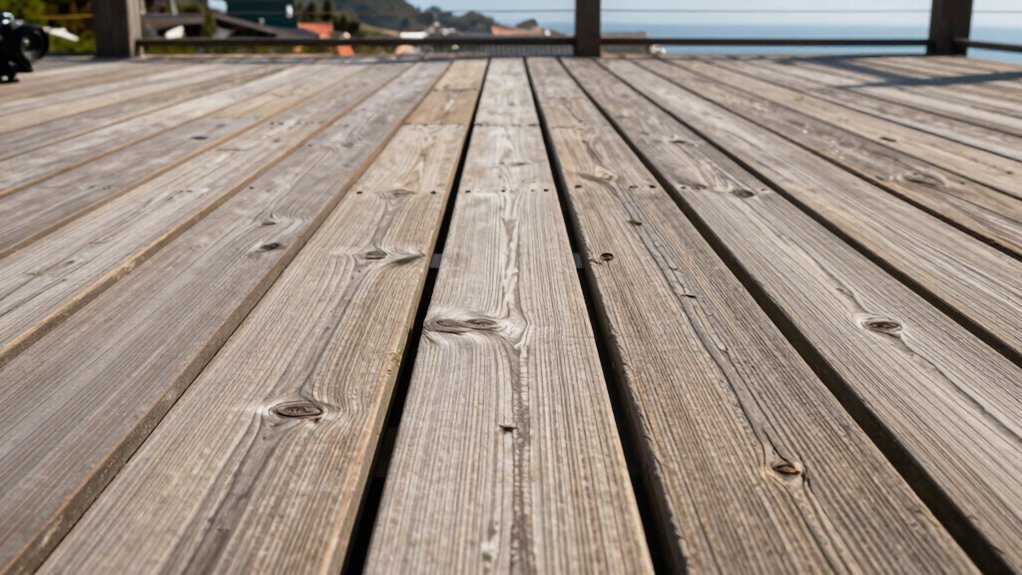
Regional codes and climate conditions shape how you size and manage gaps. You’ll align spacing with local building provisions, ensuring decks drain properly and stay structurally sound under variation in moisture and temperature.
Regional codes dictate minimum gaps, joist clearance, and ventilation requirements, preventing rot and corrosion in exposed environments.
Climate considerations push you to adapt gaps for expansion, contraction, and freeze-thaw cycles, avoiding binding or trapping moisture.
In humid coastal zones, you might increase gaps to promote airflow and dry-out; in dry, hot regions, you focus on preventing cracking and UV damage while preserving slip resistance.
You weigh wind-driven moisture, snowfall, and drainage paths, validating that gaps don’t become weed havens or debris traps.
Stay compliant, document rationale, and monitor performance across seasons.
Quick-Start Checklist: Plan Your Deck Gap Spacing Now
Planning your deck gap spacing now will save time later and prevent moisture, rot, or binding. Start with a baseline gap of 1/8 inch per 6 inches of board width, then adjust for climate, drainage, and fastener type.
Prioritize consistent spacing across the entire deck to avoid trip hazards and slope issues. Use a simple measurement jig to maintain uniform gaps during installation.
Consider fire resistant materials for spans near heat sources or structures, and verify any local requirements for gap sizes in fire-prone zones.
Document your decisions, including board width, substrate slope, and joist spacing, so future inspections are straightforward.
For long-term sustainability, select eco friendly decking options that resist warping while supporting reliable drainage and ventilation.
Frequently Asked Questions
What Are Common Mistakes That Ruin Deck Gap Spacing?
Common mistakes ruin deck gap spacing: you misjudge board expansion, neglect seasonal shifts, and ignore fastener visibility. You’ll guarantee deck board alignment, conceal fasteners, and measure gaps accurately so drainage remains consistent and aesthetics stay precise.
Can Gaps Affect Deck Warranty or Insurance Coverage?
Gaps can affect warranty and insurance if improper spacing leads to water damage or structural issues. For deck maintenance, guarantee proper gap spacing; material selection matters too, because moisture tolerance and expansion affect long-term coverage and integrity.
Do Gaps Help Prevent Termite Infestation on Decks?
Gaps don’t prevent termites; you should focus on proper deck construction and moisture control. If gaps exist, they may affect aesthetics and allow faster moisture buildup, potentially compromising durability. Prioritize drainage, ventilation, and sealed framing for decking aesthetics.
Should Gaps Differ for Elevated Vs Ground-Level Decks?
Do gaps differ for elevated versus ground-level decks? Yes, you tailor spacing: tighter for elevation to prevent debris, looser near ground for drainage. This supports deck expansion, preserving aesthetic appeal while maintaining structural integrity. Are you balancing function with form?
How Do Weather Events Influence Gap Integrity Over Time?
Weather events influence gap integrity by causing humidity expansion and wind stress, gradually widening or shifting joints. You’ll notice seasonal moisture patterns, board swelling, and fastener tension changes that deserve inspection after storms and before heavy use.
Conclusion
You’ve weighed the pros and cons, chosen a material, and mapped spacing that fits climate and use. Gaps matter for drainage, ventilation, and weed control, but they carry trade-offs in maintenance and safety. Decide with a clear plan, then keep alignment tight and weed-free. Remember: measure twice, cut once—and “small gaps, big outcomes” isn’t just a saying, it’s a rule for long-lasting decks. Stay disciplined, recheck seasonally, and adjust as needed.