Disclosure: This post contains affiliate links. As an Amazon Associate, we earn from qualifying purchases.
Yes. Your decking should have a slight fall to shed water away from the house, protect joists and the ledger, and prevent rot and slipping. Aim for about 1/8 inch per foot (roughly 1%), or up to 3/16 inch per foot in wetter climates. Direct runoff toward allowed outlets and away from doors and stairs. Measure carefully with level or laser, recheck after framing, and test with water. If you keep going, you’ll master the setup and long-term benefits.
Why Decking Needs a Slope: Core Safety and Drainage Rationale
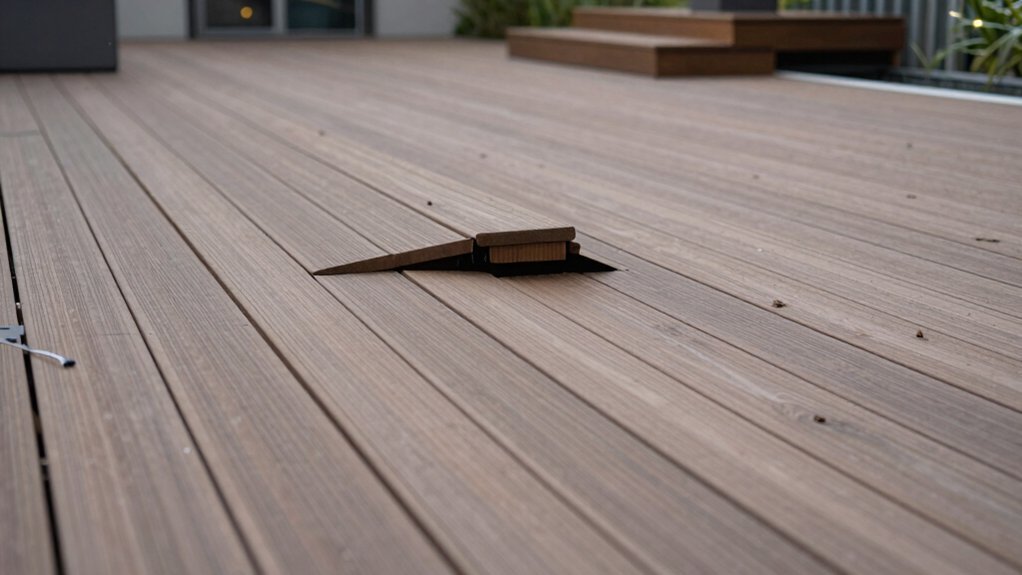
A deck must slope to channel water away from your house and toward proper drainage. You stay focused on safety angles, not guesswork, so every slope point serves a purpose. A positive grade directs runoff off the surface, prevents pooling, and reduces slip risks in wet seasons.
This isn’t about looks alone; deck safety hinges on consistent drainage patterns that minimize standing water near joists and footings. Poor drainage invites rot, insects, and structural deterioration over time, increasing maintenance and hazard.
You’ll balance function with basic aesthetic considerations, ensuring the slope remains subtle yet effective. Documented guidelines or local codes standardize minimums, helping you verify compliance.
How Much Slope Do You Really Need?
How much incline do you really need? You should aim for enough fall to shed water quickly without creating trip hazards or squeezing airflow.
For concrete- or wood-based decks, a slope of about 1/8 inch per foot (1%) is often sufficient for moderate rain, while heavy climates benefit from 3/16 inch per foot (about 2%). Too steep a grade invites faster wear, loose fasteners, and uncomfortable footing.
Your decisions hinge on deck aesthetics and material selection: wood species or composite products respond differently to moisture, so plan slope alongside finish, fasteners, and joints.
Keep transitions gradual across beams and joists, and maintain uniform drainage across the surface. In practice, test slopes with a level and adjust before finalizing boards.
Where to Drain on a Deck and Why It Matters
Good drainage isn’t cosmetic — it protects framing, finishes, and comfort. When you plan deck drainage, you route water away from footings, ledger, and seasonal gaps, guiding runoff to allowed outlets.
Locate drains or weep holes on the deck surface where rainwater, condensation, and splashed wash won’t pool near stairs or doors. Use a slight forward tilt to shed water toward gutters or ground per code, not toward your foundation.
Proper drainage supports deck design by preserving joists, blocking rot, and sustaining fasteners. It also preserves aesthetic appeal, avoiding stains and slippery spots.
Keep debris from blocking grooves and ensure flashing under rail posts remains functional. You’ll maintain a safer, longer‑lasting deck that looks intentional and well‑built.
Measure and Achieve the Right Deck Slope: A Step-By-Step Guide
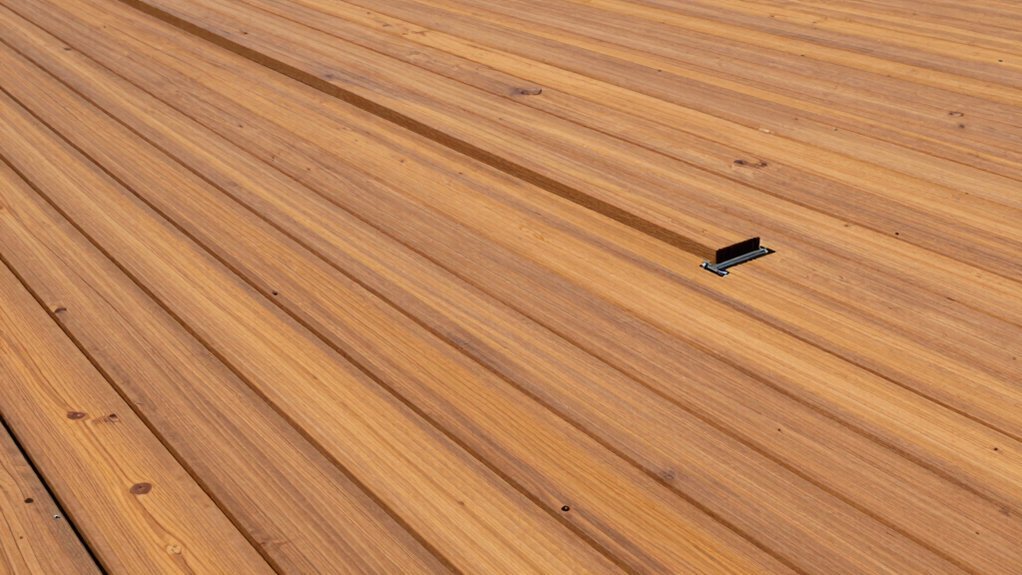
To get the deck shed water properly, you must measure and achieve the correct slope before installing or finishing. Measure a 1/4-inch drop per 1 foot of run as a practical baseline; adjust for local rainfall and deck usage.
Establish a consistent gradient toward the drainage point, using a level, string line, or laser tool to verify rise over run across the entire surface.
When laying deck material, keep fasteners secure and color-matched to reduce visible seams that disrupt aesthetic appeal.
Plan for edges that run slightly lower than the center so water exits rather than pools.
Recheck slope after framing and before materials go on, then test with a water run.
This method minimizes maintenance, preserves durability, and guarantees reliable shedding.
Five Common Fall Mistakes and How to Fix Them
You’ll spot common pitch pitfalls early, so you can fix them before they cause water pooling or trouble with drainage. In this section, we cover typical mistakes in sloped decking and show practical fixes that keep your surface safe and level.
Let’s tackle how to identify misalignments and correct the slope to meet proper drainage and fall standards.
Common Pitch Pitfalls
Common pitch pitfalls derail even strong ideas, so spotting them early saves time and effort. You’ll slip up if you fixate on one benefit while ignoring feasibility, audience, and context.
Start by overloading your pitch with jargon; you’ll alienate decision-makers. Keep your problem statement clear, then link it to concrete outcomes like deck height and aesthetics.
Overpromise and you’ll disappoint; underpromise and you miss momentum. Avoid vague metrics; quantify what success looks like and how you’ll measure it.
Ignore constraints, and you’ll waste resources; acknowledge them and propose practical workarounds. Don’t skip the risk section, or you’ll look reckless.
Craft a tight narrative arc: hook, problem, solution, impact. Finally, tailor tone to the room; a confident, succinct delivery boosts aesthetic appeal and credibility.
Fixing Sloped Decking
If you’re fixing sloped decking, start by spotting the five common fall mistakes that sabotage stability, drainage, and safety.
First, neglecting proper grade and drainage causes pooling and rot; regrade or install proper downspouts and underlayment.
Second, inconsistent joist spacing weakens support; tighten to manufacturer specs and add blocking where needed.
Third, overlooking flashing at ledger and posts invites water intrusion; seal and flash per code.
Fourth, using unsuitable fasteners or wrong timber leads to movement and warping; choose corrosion-resistant screws and rot-resistant decking.
Fifth, poor decking aesthetics and material selection undermine long-term performance; pick materials rated for exterior use and align with your climate.
Correct these, and you’ll improve stability, drainage, and appearance while ensuring safer, lasting value.
Costs, Codes, and Long-Term Benefits of Proper Deck Slopes
Correct slope on a deck isn’t just about looks—it saves money over time by preventing water damage, reducing maintenance, and avoiding costly repairs. You’ll meet costs and codes by planning a consistent fall, typically 1/8 to 1/4 inch per foot, ensuring drainage without creating trip hazards.
Check local building codes for permits, setback rules, and joist spacing; missteps here can trigger redesigns or fines. Long-term benefits include fewer warped boards, reduced staining, and delayed structural work.
When you select materials, consider grade, treatment, and warranty to maximize durability. Practical decks prioritize maintenance ease; keep flashing tight and gutters clear.
Use decorative patterns and aesthetic enhancements to add personality without compromising slope. To put it concisely, correct deck slopes save money, meet codes, and boost curb appeal.
Frequently Asked Questions
Can a Sloped Deck Cause More Maintenance Issues Later?
A sloped deck can create more maintenance if drainage design isn’t sound or structural integrity isn’t monitored. You’ll prevent issues by ensuring proper pitch, waterproofing, and regular inspection, addressing fasteners, joists, and beam connections promptly.
Is a Slight Slope Acceptable for Wheelchair Access?
Yes, a slight slope can be acceptable for wheelchair accessibility, but you must meet deck slope standards. You’ll guarantee safe movement, verify ramp thresholds, and maintain grip, while suspense builds as you confirm compliant, practical, and durable decking.
How Does Climate Affect Ideal Deck Slope?
Climate affects ideal deck slope; you should adjust for climate considerations. Guarantee proper drainage design by accounting for rain, snow, and drainage patterns. You’ll prefer steeper slopes in heavy rainfall areas, and flatter in mild, dry climates.
Should Railing Height Change With Slope?
Yes, railing height should accommodate with deck slope. Measure from finished grade, keeping handrail at a consistent height from walking surface, and adjust post spacing accordingly. Guarantee code compliance, stability, and safe access with each slope change.
Can DIY Tools Mislead About Proper Drainage Outcomes?
DIY misconceptions can mislead you; don’t trust DIY tools to guarantee drainage outcomes. You’ll debunk drainage myths by measuring slope, testing with water, and following local code guidance to guarantee proper runoff and long-term deck integrity.
Conclusion
If you skip the slope, you don’t just invite puddles—you invite chaos, wobble, and a lawn-chair rocket launch the moment you step outside. A tiny tilt saves you from a tidal wave of maintenance, misdirected water, and slippery surprises. Do the math, pick the right drainage, and nail the pitch. Your deck won’t just look right; it’ll behave like a trained adult, shedding rain and pride in one smooth, practical move. Don’t underthink the fall—embrace it.