Disclosure: This post contains affiliate links. As an Amazon Associate, we earn from qualifying purchases.
Decking attracts rats because it provides shelter, food cues, and protected travel routes. Gaps, debris, vegetation, and moisture create nesting sites and easy access under and along the deck. Fresh gnaw marks, droppings, and vague scurrying signal activity near posts, rails, and joists. Seal gaps with durable barriers, reduce moisture, and remove debris to cut harborages. Regular maintenance and monitoring deter colonies and help catch problems early. If you keep at it, you’ll uncover more preventive steps and explanations.
Why Decks Attract Rats and What to Do About It
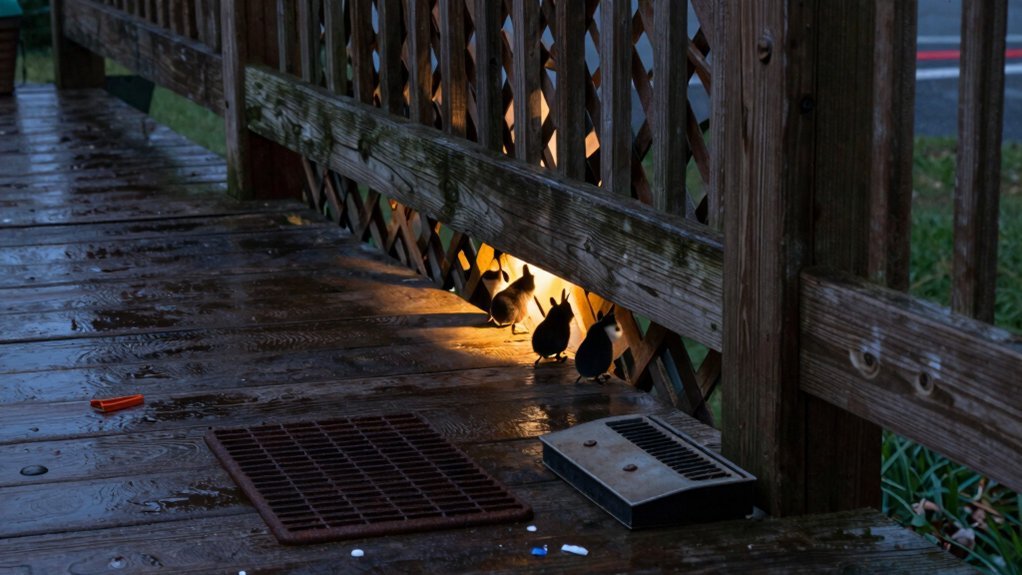
Decks attract rats primarily because they provide shelter, food access, and structural paths that favor rodent survival. You’ll notice that elevated surfaces create crevices for nesting and protected transit between yard zones. Bird nests nearby increase food cues, while tree proximity offers overhead shelter and entry points through branches, gaps, or gaps at fascia joints.
To address this, inspect deck boards and joists for chew marks, gaps, and loose hardware, sealing openings with rodent-resistant materials. Remove accessible food sources by securing trash, removing fallen fruit, and minimizing pet feed exposure. Improve barriers by trimming tree limbs away from the deck, installing tight-fitting lattice or hardware cloth under the frame, and installing door sweeps. Regular maintenance reduces harborages and disrupts rodent travel routes.
Key Signs You Have a Deck Rat Problem?
You’ll want to verify common rodent entry signals, such as gaps, holes, and openings around the deck framing. Look for fresh gnaw marks, shiny new droppings, and tracks in dust or debris near benches, railings, or skirting.
These Habitat Clues help you distinguish active infestation from past activity and guide immediate exclusion and monitoring actions.
Rodent Entry Signals
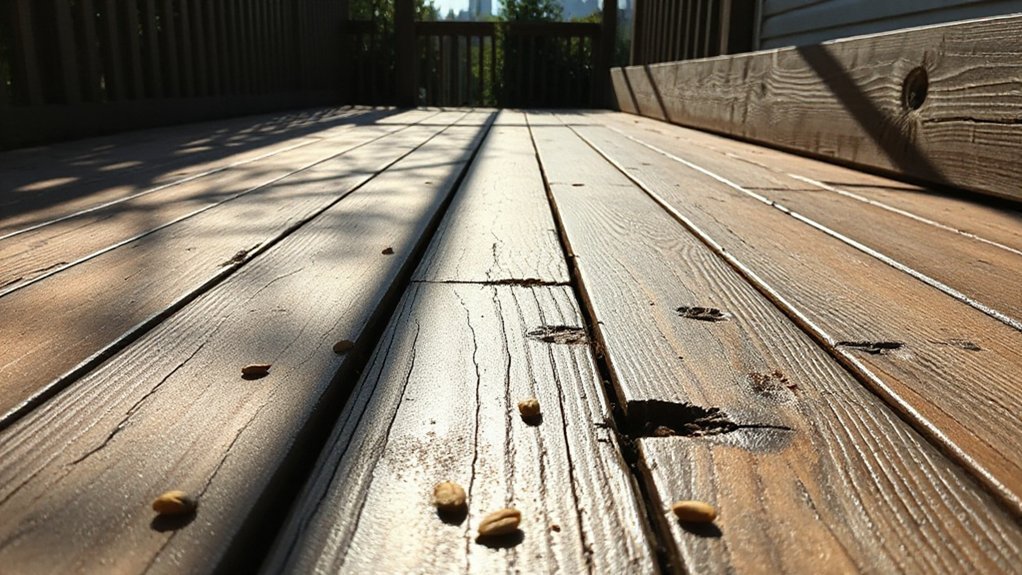
Rodents reveal themselves through clear entry signals, especially around decks where shelter and access converge. You’ll notice fresh gnaw marks on joists, rim boards, and fasteners, plus scuffed dirt tracks leading to hidden voids. Entrance gaps the size of a nickel or larger, often tucked beneath rail posts or decking skirts, warrant immediate inspection.
You’ll hear faint scrabbling or scratching within wall cavities or stair stringers, more pronounced at dawn or dusk. Droppings accumulate near entry points, appearing pellet-shaped with a sharp odor clue. Look for unusual nesting residues, such as shredded material or feathers near overhangs.
Bird nesting tendencies and plant overgrowth around the perimeter create ideal concealment, amplifying risk. Treat any corroborating signals as urgent indicators requiring targeted exclusion and sealing measures.
Deck Habitat Clues
Deck habitats around decks create distinct clues you can’t ignore. You look for consistent gnawing on deck material, scratched surfaces, and tiny droppings near joists or posts, which signal ongoing activity.
Look closely at trap lines, bait stations, and fresh scent marks that indicate recent access points. You’ll notice irregular chew patterns along seams and edge boards, revealing preferred deck material vulnerabilities.
Observe nesting signs: shredded fibers, paper fragments, and fabric scraps tucked beneath decking gaps. Outdoor lighting should reveal movement along beams and under stairs, where rats use shadows for cover.
Track debris buildup after rain, especially near vents and ledgers. A rising odor around the perimeter often accompanies increased traffic. When you confirm these cues, initiate protective sealing and monitoring promptly.
Seal the Gaps: Quick Fixes Under the Deck
You’ll seal gaps efficiently with targeted under-deck fixes that block rat access points.
Use precise gaps measurements to guide framing, mesh, or flashing to create a continuous barrier. This approach prioritizes long-term durability and minimizes ongoing maintenance while restoring under-deck integrity.
Seal Gaps Efficiently
Gaps under a deck invite rats, so start by locating every entry point and documenting the size with a quick measurement. You’ll seal these openings with appropriate materials, matching substrate and exposure to weather. Use a combination of steel mesh, concrete, or wood-compatible caulk, ensuring a tight fit that resists gnawing and displacement.
Prioritize joints, ledger gaps, and posts, then reinforce with a secondary barrier where gaps may reopen seasonally. Maintain airflow but restrict airflow paths that attract garden pests. Verify that fasteners, brackets, and flashing won’t create new ingress routes.
Consider outdoor lighting placement to deter activity near fixes, not as a substitute for sealing. Keep still-check intervals short, and recheck after storms to preserve integrity.
Under-Deck Access Fixes
Under-Deck Access Fixes: implement quick, targeted sealant measures to deny rat entry through the area beneath the deck, focusing on practical gaps, joints, and drainage paths. You evaluate seams, flashings, and vent openings, sealing with exterior-grade, UV-resistant caulk and rigid barriers where needed.
Prioritize gaps larger than a quarter inch; fill with foam backing and metal flashing to resist gnawing. Apply weatherproof sealant along ledger gaps and around posts, ensuring no triple-lapped routes for rodents.
Consider Deck lighting to deter concealment zones, and ensure it doesn’t create crawl-space access points. Install Plant barriers at potential entry lines to disrupt nesting near the underside.
Maintain clear drainage, redirect runoff, and recheck after heavy rain for fresh gaps needing quick sealing. Regular checks prevent recurrence and sustain lasting deterrence.
Remove Moisture and Debris That Invite Rodents
Water that lingers and debris like fallen leaves invite rats under decks. You can disrupt their access by eliminating standing moisture and removing clutter that concentrates droppings and food sources.
Inspect joist ends, connections, and flashing for moisture intrusion, repairing leaks promptly to maintain a dry substructure.
Sweep and hose down surfaces regularly, ensuring runoff drains away from the deck and foundation.
Dispose of organic debris beyond the perimeter and use tight fitting lids on trash receptacles to reduce attractants.
Replace vulnerable gaps with precise seals; consider pest resistant coatings on near-surface wood and hardware to deter gnawing and moisture absorption.
When selecting decking materials, prioritize long-term dry-rot resistance and maintainability to minimize future moisture buildup.
Keep Vegetation at a Safe Distance From the Deck
Keep vegetation at a safe distance from the deck to prevent moisture buildup, insect habitat, and rodent access. You implement vegetation control to reduce shaded, damp zones beneath and adjacent to the structure, limiting food and harborage.
Maintain a clear buffer, first by selecting low-lying, non-host vegetation and trimming overhangs that contact the deck framing. Regularly inspect mulch depth; keep it shallow and away from vertical supports to impede nesting sites.
Install wildlife barriers where gap ingress is likely, and verify they extend beyond the drip line to deter entry without impeding drainage.
Schedule seasonal vegetation management aligned with vegetation growth cycles, ensuring new growth doesn’t reclaim the buffer. Document practices for monitoring effectiveness and adjust thresholds based on rodent activity data.
How Deck Design Affects Rat Access

Deck design directly influences how easily rats access your structure. Strategic layout can restrict routes, reduce harborage, and limit food opportunities. You control flow with clear sightlines, graded surfaces, and deliberate gaps.
Use solid, continuous decking with tight joints to deny footholds and minimize crawl paths underneath. Avoid unnecessary clutter that creates shelter or foraging pockets.
Plan lighting strategically; deck lighting should deter nocturnal activity by highlighting entry points and discouraging concealment, while not creating shadows that shelter pests.
Consider plant placement: keep vegetation trimmed back from the deck edge and away from support structures to reduce pathways.
Elevate plans from soil contact and ensure proper drainage to prevent moisture-driven harborages.
Precision in spacing, materials, and maintenance decisions directly restricts rat access.
Long-Lasting Barriers You Can Install
A reliable barrier system starts with solid, permanent materials and precise installation to block rat entry at key points. You’ll install continuous, low-profile joints and prevent gaps under decking with metal flashing and treated framing.
Use corrosion-resistant fasteners and sealed connections to resist garden pests, moisture, and settling over time. Opt for pressure-treated or naturally durable lumber, and guarantee wood treatment penetrates all exposed surfaces before assembly to extend life.
Seal edges, vent openings, and utility penetrations with compatible barriers; avoid wood-on-soil contact by elevating supports on non-porous pads. Maintain a tight, debris-free periphery so rats can’t leverage detritus to access the structure.
Combine physical barriers with ongoing monitoring for early detection and sustained effectiveness.
Deck Cleaning and Maintenance Habits That Stop Infestations
Regular cleaning and proactive upkeep form the frontline against infestations, so you should establish a routine that targets debris, moisture buildup, and organic material under and around the deck.
You systematically remove standing water, sweep loose litter, and pressure-wash surfaces to minimize biofilm that sustains pests.
Inspect joist gaps and seal where feasible to prevent harborage, then address soil contact and vegetation proximity that elevate humidity within the deck cavity.
Maintain proper ventilation and ensure drip edges direct moisture away from supports.
Monitor for bird nesting activity, removing nests that form in hidden recesses without damaging structure.
Note that tree proximity can influence moisture traps; prune overhanging limbs and keep clearance adequate.
Implement routine checks after storms and before warm seasons to curb infestations rather than react.
When to Call a Pest Professional and What to Expect

If you notice persistent signs of infestation despite your cleaning and maintenance, it’s time to call a pest professional. A qualified technician will perform a targeted inspection, documenting rodent activity, entry points, and likely attractants.
Expect a written assessment detailing infestation extent, risk to structural components, and recommendations tailored to decks, eaves, and adjacent structures. The process typically includes trap placement guidance, exclusion strategies, and sanitation advice to reduce re-entry.
Professionals may use overnight monitoring or rodent-proofing tests to confirm sheltering sites. Mention bird nests and fence gaps as potential ingress routes, so the inspector can verify closures and timing for humane removal or deterrence.
Follow-up visits ensure treatment efficacy and verify that preventive measures remain intact.
Quick-Start Deck Prevention Checklist for Homeowners
With professional input on deck-related rodent risks in mind, you can act now to prevent re-entry and sheltering. Begin with a quick assessment of deck material, noting any gaps, loose boards, or chewed seams.
Seal entry points around joists, posts, and railing bases using galvanized metal hardware and exterior-grade sealant. Maintain a clean surface by removing wood debris, nesting material, and standing water that attract moisture-loving pests.
Install outdoor lighting strategically to deter nocturnal activity; choose timer or motion-activated options to avoid constant illumination. Ensure proper drainage to prevent puddles beneath the deck and clear gutters.
Enforce rodent-proof storage for tools and firewood away from the structure. Schedule annual inspections to adjust fasteners, trim vegetation, and address evolving vulnerabilities.
Frequently Asked Questions
Do Rats Prefer Wood or Metal Decks for Nesting?
Rats favor wood decks for nesting over metal, owing to texture and warmth. Your deck material influences nesting preferences; cracks and gaps invite entry, so seal joints, trim vegetation, and install metal flashing to deter intrusion and guarantee safer surveillance.
Can Deck Staining Attract or Deter Rodents?
Like a microscope focus, you’ll see: deck staining can deter rodents by sealing gaps, but poor sealing invites them. You consider rodent behavior, address entry points, and maintain surfaces to minimize attractants during routine inspections.
Do Rats Climb Trees to Access Elevated Decks?
Rats can access elevated decks via tree access, but you’re unlikely to see frequent climbs unless nearby branches touch the structure; focus on reducing tree contact and sealing gaps to prevent elevated nesting and tree-proximate visits.
Are There Specific Deck Lights That Attract Rats?
Indeed, no: you won’t attract rats with solar powered lights or glow in the dark decor. You’ll mislead yourself into thinking it’s safe, while your deck’s warmth invites them to linger, inspecting every shadow with clinical interest.
How Long Can Rats Survive Under a Deck Without Food?
Rats can survive about two weeks to a month without food, depending on conditions. You’ll notice rat burrows and food scarcity drive them under decks; monitor moisture, seal gaps, and remove debris to reduce harborages and access.
Conclusion
Decks attract rats because they offer food sources, shelter, and easy access, especially when joints, gaps, and moisture invite both pests and debris. If you seal gaps, reduce moisture, trim nearby vegetation, and maintain cleanliness, you’ll disrupt their habitat. Coincidence nudges you: a dry, tidy deck often coincides with fewer sightings, just as routine maintenance coincides with fewer problems. Stay proactive, document fixes, and if infestations persist, call a pest professional for targeted, long-lasting exclusion.