Disclosure: This post contains affiliate links. As an Amazon Associate, we earn from qualifying purchases.
Decking oil protects your wood from moisture, UV damage, and wear while enhancing color and grain, so your deck stays beautiful longer. It forms a barrier that slows water absorption, helping prevent rot and warping, and it seals tiny pores to improve mildew resistance. Different woods need different formulas, so pick one that suits your wood type and grain pattern. Apply thin coats, follow the grain, and recoat when water stops beading. If you keep going, you’ll uncover more practical tips.
What Decking Oil Is and What It Does for Your Wood
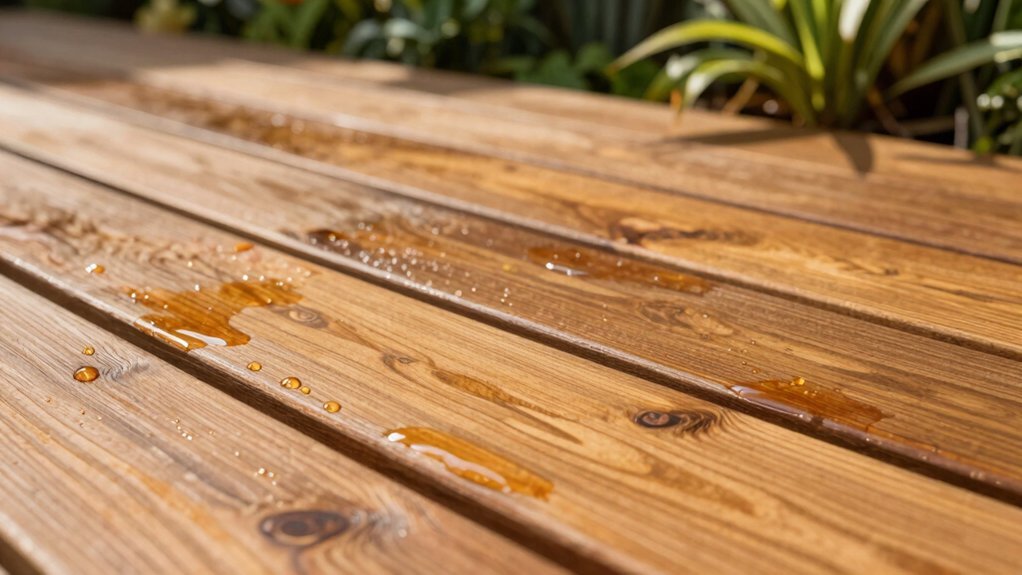
Decking oil is a protective finish you apply to wood to guard against moisture, UV rays, and wear. You use it to seal the surface, slow water absorption, and create a uniform sheen. The finish penetrates lightly, preserving the wood’s natural texture while adding a subtle barrier.
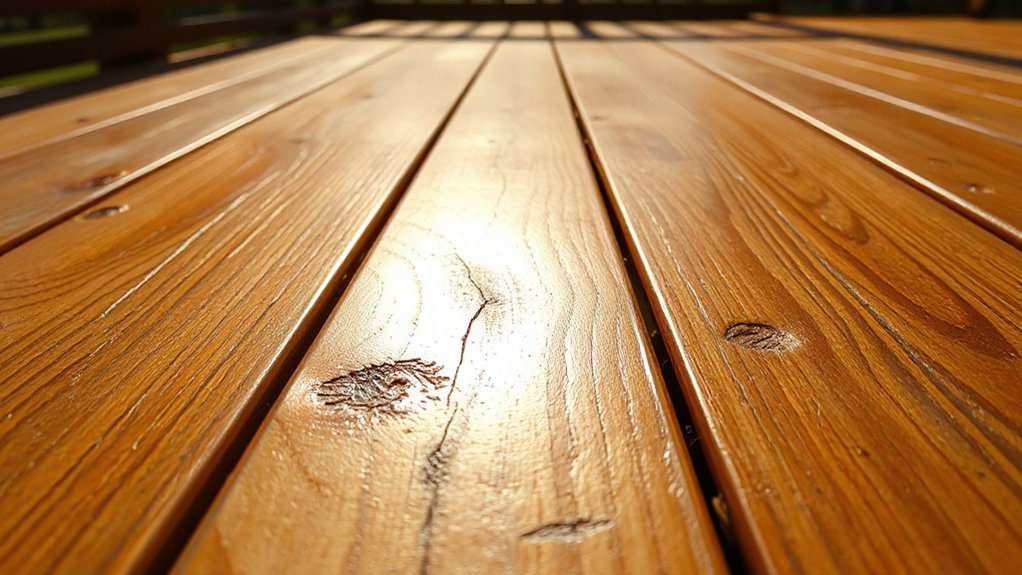
As you apply, you’ll notice even coverage that improves color depth without obscuring grain. It supports wood grain enhancement by bringing out subtle lines and patterns, making boards look richer. With proper product selection, color preservation follows, keeping browns and reds from fading too quickly.
You’ll reapply on a schedule that suits your climate and usage, following manufacturer directions. Maintain smooth, clean boards, and recoat when water no longer beads.
How Decking Oil Protects Against Sun, Rain, and Mildew
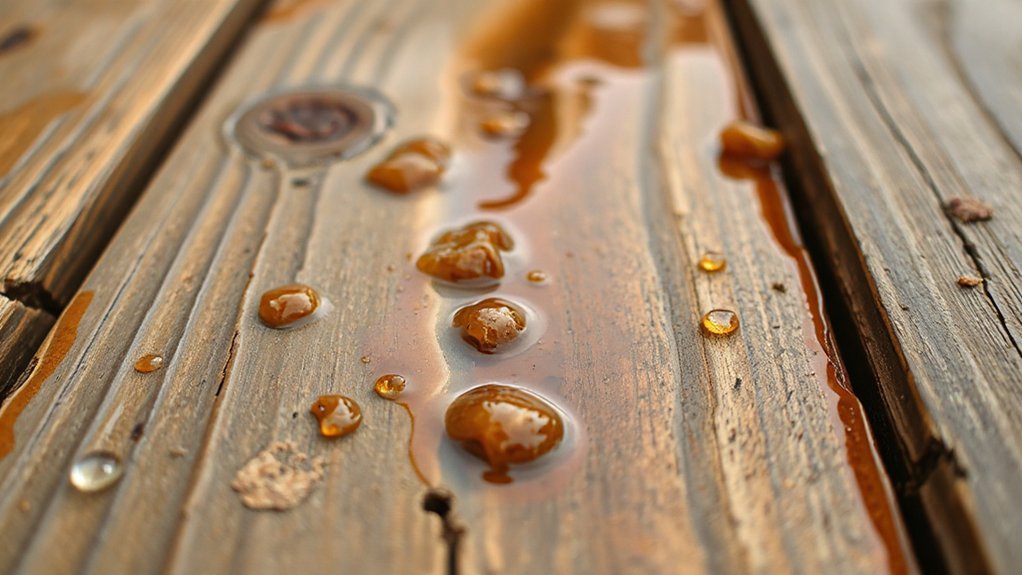
Sun and rain pose the biggest threats to deck boards, but the right decking oil forms a protective shield that minimizes damage. You apply it evenly, letting the oil soak into the wood for a uniform finish. The coating creates a barrier that reduces water absorption, helping prevent rot and warping over time.
In sunny conditions, UV blockers inside the formula slow color fading and surface graying, preserving appearance. Mildew resistance is enhanced when the oil seals tiny pores, limiting moisture buildup on the surface.
Regular maintenance matters: reapply as recommended to sustain protection and extend life. By choosing decking oil benefits, you gain durable wood protection. This approach keeps your deck looking good and structurally sound season after season.
Choosing the Right Decking Oil for Your Wood Type
Choosing the right decking oil starts with your wood type. Different woods absorb oils differently, so pick one suited to your material’s natural behavior.
For softwoods, look for a penetrative oil with moderate viscosity to avoid sticky surfaces and uneven drying.
Hardwoods benefit from slightly more viscous formulas that enhance color and grain clarity without creating buildup.
Consider the wood grain pattern: tight grains often require thinner formulas to prevent pooling, while pronounced grain can benefit from a bit more body to deepen the finish.
Oil consistency matters: too thin wastes protection, too thick slows absorption.
Test a small area first, noting how quickly the oil sinks in and how the finish looks after an hour.
Choose an oil designed for exterior, UV resistance, and your climate.
Step-by-Step Guide: How to Apply Decking Oil for Best Results
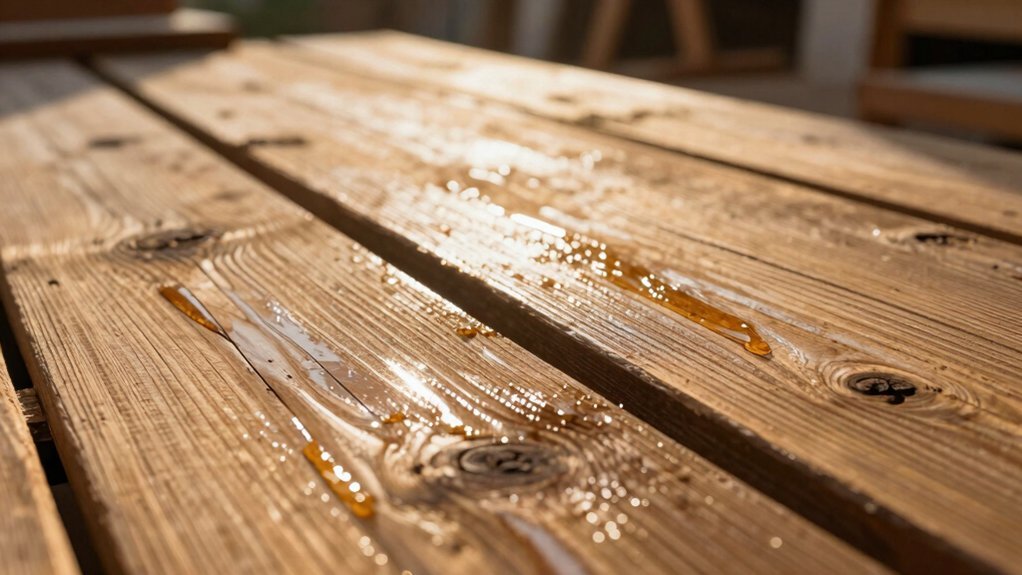
Before applying, prep the deck properly: clean it, remove old finish, and let it dry completely.
Then choose the right decking surface and set up your workspace.
Put on gloves and use clean, lint-free rags for wiping.
Mix or shake your oil per label directions, then pour a small amount into a tray.
Apply the oil thinly with a natural-bristle brush or microfiber applicator, following the wood grain for even coverage.
Work in manageable sections to avoid pooling.
Allow the first coat to penetrate, then wipe any excess with a clean cloth.
Let it dry fully before applying a second coat if needed.
Use clean application tools for touch-ups, and avoid heavy layering that can cause stickiness or uneven drying.
Maintenance and Recoat: Timing, Cues, and Longevity
Maintenance and recoat timing hinges on how your deck holds up under sun, rain, and foot traffic. You’ll assess wear by sheen loss, surface roughness, and water beading. Recoat when water no longer beads or color looks faded, not when you “feel like it.”
Prepare the surface: sweep, wash, and dry thoroughly to expose wood grain and ensure adhesion. Choose a compatible decking oil and apply thin, even coats, following manufacturer guidelines. Don’t over-apply; excess oil soils surfaces and slows drying.
Frequency depends on exposure, climate, and traffic, typically every 1–3 years. Monitor for color enhancement or dullness; color shifts signal replenishment. Maintain protection by inspecting for cracks and sanding lightly between coats to preserve wood grain detail and longevity.
Regular maintenance preserves appearance and performance.
Frequently Asked Questions
How Often Should I Recoat a Stained Deck?
You should recoat every 1–3 years depending on wear and sun exposure. For stained decks, follow your staining schedule and monitor moisture; during high traffic, reapply sooner to maintain deck maintenance and guarantee lasting protection.
Can Decking Oil Change the Color of My Wood?
Yes, decking oil can change color. It deeply enhances wood grain and delivers color enhancement, sometimes dramatically. Apply evenly, wipe excess, and let it dry; you’ll see richer tones without masking natural grain.
Is Decking Oil Safe for Pets and Kids?
Yes, decking oil can be safe for pets and kids if you choose a product with low VOCs and proven pet safety. Look for child friendly ingredients, follow application and cure times, and keep pets away until fully dry.
Do I Need to Pressure-Wash Before Oiling?
You should pressure-wash before oiling to guarantee proper surface preparation. For example, consider a weathered deck; a thorough rinse removes grime, enabling even penetration. Then apply a coat, recheck dry times, and maintain with periodic cleaning.
Can I Apply Oil in Freezing Weather?
Yes, you can’t apply oil in freezing weather; wait for milder temps. For winter application, guarantee surface is dry and above recommended temperatures, and monitor temperature considerations to avoid poor absorption and tackiness.
Conclusion
You now know what decking oil does and why it’s worth it. It shields wood from sun, rain, and mildew, extends life, and keeps color true. Choose a match for your wood type, apply evenly, and follow maintenance cues. Recoat when water stops beading or the finish looks dull. With proper upkeep, your deck will look better than new—like a forest fortress that never ages. Keep it simple, consistent, and proactive for lasting results.