Disclosure: This post contains affiliate links. As an Amazon Associate, we earn from qualifying purchases.
There are solid, cheaper options you can use instead of traditional decking. Consider pavers or concrete slabs for durable, low-maintenance surfaces, or gravel patios which offer great drainage and a softer budget. Timber-look tiles give the feel of wood without the upkeep, and treated timber or composite scraps can curb costs too. For quick changeovers, gravel-to-patio edges and ground-cover paths keep costs down while staying functional. Want more budget tricks to stretch every dollar? You’ll find them ahead.
How to Pick a Low-Cost Patio: Budget, Climate, and Maintenance Basics
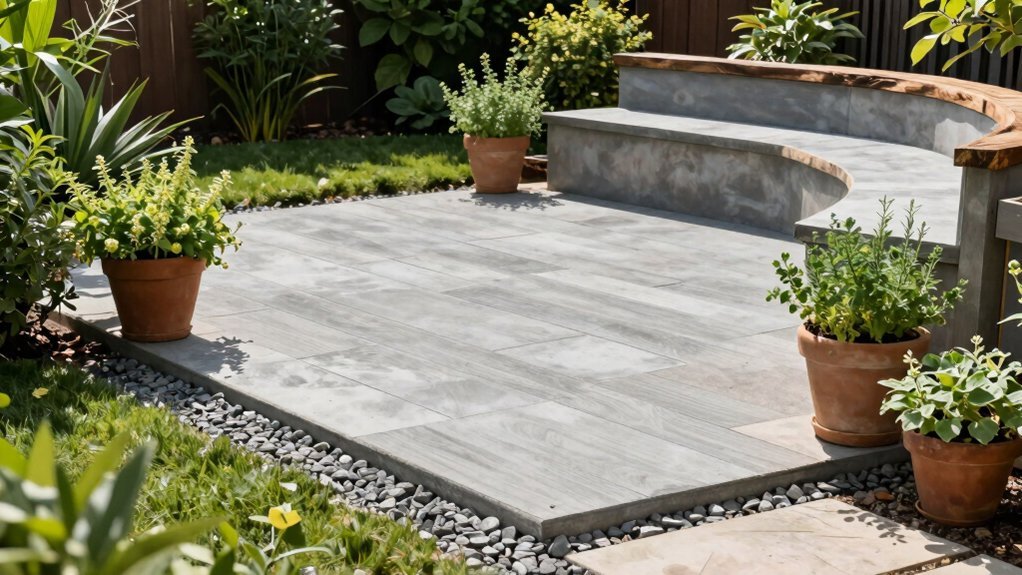
When choosing a low-cost patio, start with your budget, climate, and maintenance expectations to avoid costly surprises later. You’ll map costs by purpose: what you’ll use most, how often, and for how many seasons. Set a hard ceiling and prioritize elements that deliver daily value.
Think about climate affects—wet regions need slip resistance and drainage, sunny areas benefit from shade and durable coatings. Choose materials that stay within budget and require minimal upkeep, like composite or treated wood alternatives, rather than premium hardwood.
Plan for practical layout: compact seating, easy-to-clean surfaces, and space for garden lighting to extend usability at night. Pair with affordable outdoor furniture that fits your style, then layer durable textiles and planters for personality without blowing the budget.
Cheap Decking Alternatives: Costs, Pros, and Performance
If you want deck space without breaking the bank, cheap decking alternatives can deliver solid value with the right trade-offs. You’ll weigh costs, durability, and upkeep to maximize value.
Budget-friendly options like composite-like tiles, treated timber, or durable resin deck tiles offer quick installs and lower long-term maintenance compared to traditional lumber. Expect lower upfront spend, but factor in replacement cycles and wear patterns.
Performance varies with weather resistance, weight limits, and UV tolerance, so read warranties and care instructions carefully.
For ambiance, pair your choice with suitable garden furniture and practical lighting options to extend usability after sunset.
Prioritize water resistance, slip resistance, and easy cleaning to minimize ongoing costs while preserving safety and aesthetics.
Pavers and Concrete Slabs: Durability, Aesthetics, and Typical Prices
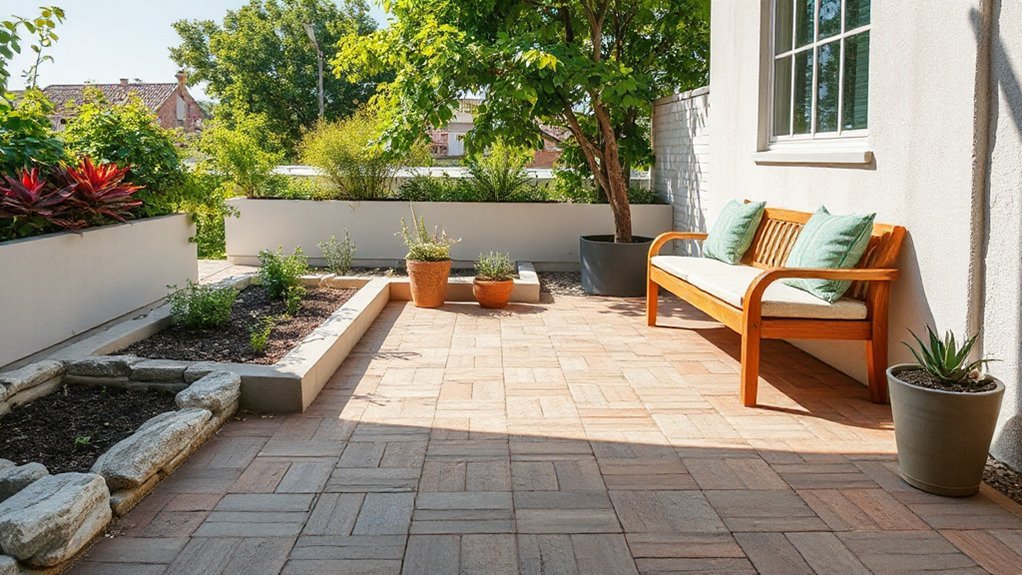
Pavers and concrete slabs offer durable, low-maintenance surface options that suit tight budgets, with a straightforward install and long-lasting performance. You’ll typically find them in a range of prices, from economical concrete to mid-priced brick or stone-look pavers.
Durability is high: resistant to heavy foot traffic and weather, with minimal maintenance beyond occasional cleaning and resealing. Aesthetics vary, so you can tailor color, pattern, and texture to your space without blowing the budget.
Installation tends to be quicker than timber builds, reducing labor costs. Consider how you’ll use the area—garden furniture fits neatly, and you can create defined zones for seasonal planting alongside seating.
Keep drainage in mind; a slight slope prevents standing water and headaches later on. Budget-smart, practical decking alternatives.
Gravel Patios: Permeability, Upkeep, and Style Options
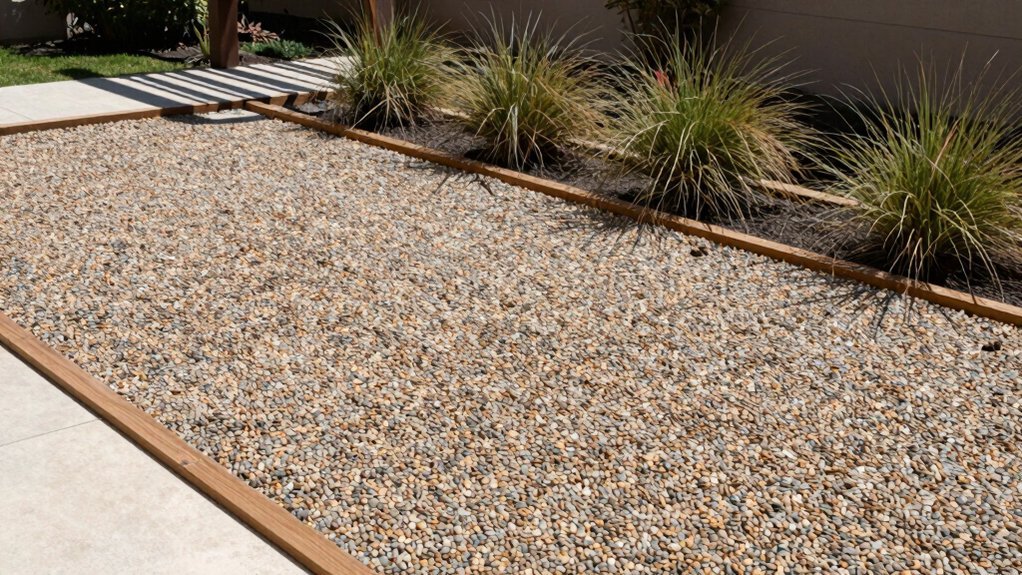
Gravel patios offer solid permeability, so you’ll need to think about drainage and not just looks.
Keep upkeep simple with weed control and occasional topping or compaction to maintain a stable surface.
With a range of textures and colors, you can tailor style options to fit your budget while staying practical.
Permeability Considerations
Permeability is a key consideration when choosing gravel patios, because the right setup lets water drain quickly and helps prevent puddling after rain. You’ll want a design that directs stormwater management away from structures and sidewalks, reducing erosion and soggy patches.
Start with a compacted base, use varying gravel sizes for gaps, and include a thin layer of geotextile fabric to prevent silt from clogging drainage. Consider a slight slope—about 1-2%—so water runs off naturally rather than pooling.
Place larger stones where vehicle or foot traffic is heaviest to minimize displacement. Permeable joints, like crushed stone or pea gravel, support steady water infiltration.
This approach lowers maintenance costs, supports water runoff control, and keeps your area usable after rain without extra pumps or drains.
Maintenance Essentials
To keep your gravel patio looking good and performing well, focus on a simple maintenance routine that protects permeability, reduces erosion, and extends lifespan without breaking the bank.
Regular raking keeps stones even, preventing gaps that trap water and slow drainage. Refresh weed control at season start with a mulch barrier or pre-emergent to minimize upkeep.
Add edging to deter shifting and preserve surface level, which helps all-weather usability. Inspect for erosion after heavy rain and fill low spots promptly using similar aggregate to maintain permeability.
Keep garden furniture and lighting options off the surface to avoid compaction and staining. Schedule a quick annual top-up and sweep to remove debris, preserving tidy appearance and longevity without overspending.
Style Options Available
You’ll find gravel patio style options aren’t one-size-fits-all; you can mix textures, sizes, and colors to match your yard and budget.
For permeability, choose radius or lattice patterns to manage water flow without costly foundations.
Keep upkeep low with crushed stone or chips that resist weeds and wash away easily; simple raking restores look between cleanings.
Style-wise, blend larger slabs with fine gravel for a coastal or modern vibe, or contrast warm tones with cool grays for depth.
Plan layout around garden furniture and pathways, so seating areas stay usable in rain.
Add outdoor lighting to highlight textures and define zones without extra foot traffic.
A few planters or a trellis break can elevate appeal without breaking the budget.
Timber-Look Tiles and Low-Maintenance Substitutes: Looks Without the Upkeep
Timber-look tiles offer the warmth of real wood without the ongoing upkeep, so you can enjoy a natural, cohesive look for less time and money. You’ll get durable, slip-resistant surfaces that resist weather and fading, reducing maintenance compared to traditional decking.
Because they’re tile-based, installation choices range from quick fixes to more permanent layouts, letting you tailor costs to your budget. Look for outdoor-rated options that mimic grain and tone, then pair with low-cost accessories to complete the space.
When planning, include garden furniture that stays stable on tile and outdoor lighting that highlights texture without overdoing it. These substitutes deliver a polished, cohesive vibe without the hefty price tag, keeping your project practical, efficient, and budget-conscious.
Define Spaces With Gravel-To-Patio Transitions
Gravel-to-patio shifts aren’t just functional—they can define how your outdoor space flows. You’ll create clear, welcoming zones by contrasting textures and levels, guiding visitors from gravel paths to a solid patio.
Use compact, uniform gravel for a neat progression, with edging that keeps materials in their lanes and reduces maintenance. Position your garden furniture to frame conversation areas and optimize traffic routes, not block sightlines.
Add a simple step or two where height difference exists to prevent trips and to establish a natural rhythm. Consider practical lighting options—low-voltage outdoor lighting along edges, or subtle solar path lights—to extend usability after dark.
Finish with a durable seating area, and you’ll enjoy cohesive space without overspending on decking.
Ground-Cover Paths: Cost-Saving Shape and Access
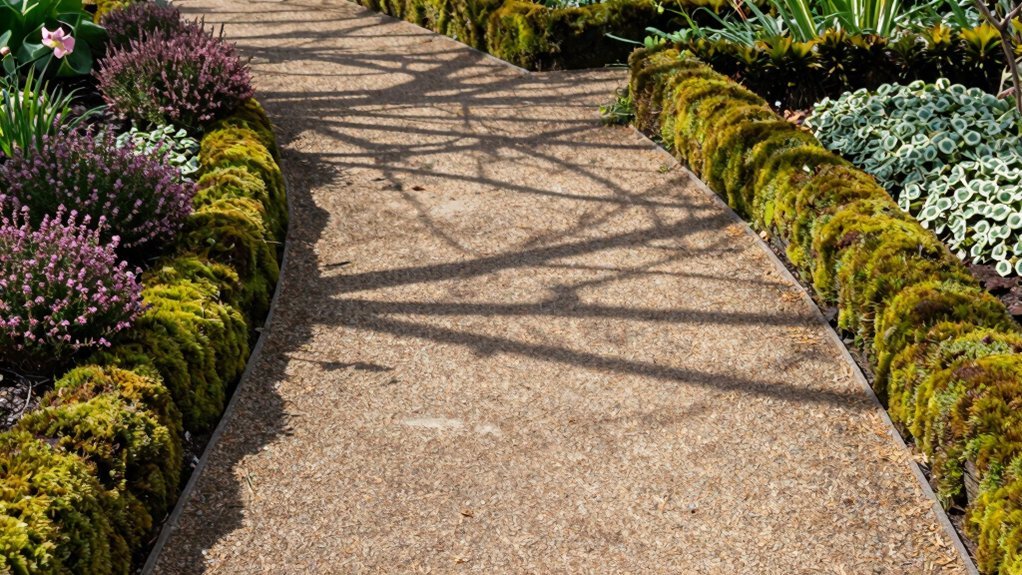
Here’s how ground-cover paths can shape a budget-friendly layout, using low-cost materials while guiding foot traffic efficiently. Consider shape options that trim materials and maintenance, like meandering paths that shorten long runs and maximize usable space.
Think about access-friendly design with step-free routes and clear sightlines to keep daily use simple and affordable.
Ground-Cover Path Shape
A ground-cover path can trim costs and simplify access by following a simple, low-profile shape that fits your yard’s natural terrain. You’ll gain clear routes without sharp turns or elaborate borders, keeping materials modest and adaptable.
A curved, gentle line often delivers better drainage and fewer maintenance headaches than rigid, angular layouts. Choose a width that matches typical foot traffic, avoiding excessive paving that claws at your budget.
Prioritize practical sightlines for safety and ease of mowing nearby turf. Plan for garden lighting along the edges and at key passages to extend usability after dark without heavy fixtures.
Consider privacy screens positioned to shield seating areas and create intimate pockets while preserving openness elsewhere. This shape supports flexibility as your needs evolve.
Cost-Saving Layout Tips
To save money on ground-cover paths, shape and access should emphasize practicality and low maintenance. You’ll want a layout that minimizes steps, edges, and materials while guiding foot traffic efficiently. Prefer simple geometric forms—a straight run or gentle curve—to reduce cuts and waste.
Use wide, forgiving pathways that factor for seasonal growth and mulch replacement, so you don’t need frequent refreshes. Prioritize permeability with compact gravel or mulch that stabilizes underfoot yet drains well, cutting maintenance time.
Place garden lighting along edges and key sightlines to extend usability without bulky setups. Consider compact outdoor furniture clusters near entrances for versatile lounging, keeping the space cohesive.
This approach lowers costs while preserving function and appeal.
Access-Friendly Design Ideas
Cities and specific needs aside, you design ground-cover paths with accessibility in mind by prioritizing wide, smooth routes, gentle curves, and clear sightlines that anyone can follow without extra edging or stepping stones.
For cost efficiency, choose low-maintenance surfaces like compacted gravel or crushed stone, which offer good drainage and safety without expensive paving.
Ground-cover plants can fill gaps, reducing mowing and upkeep while creating soft edges that don’t trap wheels.
Plan transitions between spaces with level thresholds to avoid trips, and use consistent widths to support mobility aids.
Consider eco-friendly materials and recycled aggregates to cut costs further.
Stay aligned with landscaping trends by favoring permeable, breathable options that minimize runoff and maintenance, delivering durable, accessible, budget-conscious paths.
Mulch and Native Plants: Soft, Low-Water Options
Mulch and native plants offer a simple, budget-friendly way to slash water use while keeping a yard low-maintenance. You’ll cut irrigation needs by choosing drought-tolerant species and a thick mulch layer that slows evaporation.
Start with a clear plan: map sun exposure, soil type, and existing plants, then pick native planting options suited to your climate. Mulch gardening reduces weeds and stabilizes soil moisture, meaning less weeding and fewer chemical inputs.
Use shredded wood or composted mulch to build a forgiving bed; replenish as it breaks down. Pair groundcovers with taller natives to minimize soil disturbance and create layers that resist erosion.
This approach prioritizes affordability, plant resilience, and low ongoing maintenance, delivering a practical, cost-conscious landscape that still looks intentional.
DIY Feasibility: Materials, Tools, Time, and Cost Comparisons
If you’re weighing DIY decking options, start by tallying what you already have and what you’ll need, then compare materials, tools, time, and costs side by side.
You’ll likely find cheaper routes by choosing pallets, treated lumber, or composite scraps, but weigh durability and maintenance against upfront price. Budget for fasteners, sealant, and protective coating, plus simple garden furniture and lighting options to extend usable space.
Tools matter: a circular saw, drill, level, and safety gear often beat renting or hiring, but only if you already own them.
Time-wise, plan weekends in chunks to avoid project fatigue.
Compare total costs with contractor quotes, factoring disposal and long-term upkeep. Practical choices keep your yard functional, inviting, and affordable.
Frequently Asked Questions
What Is the Overall Cheapest Patio Option Available?
A concrete slab is typically your cheapest patio option. You’ll cut costs doing basic prep, avoid costly finishes, and still enjoy durability. Do a cost comparison with gravel or pavers, considering material durability and long-term maintenance.
How Long Does Each Alternative Typically Last?
Your alternative lasts years, not days—think long, not flimsy. Some options shrug off weather but others crumble. Material longevity varies; installation difficulty ranges from breezy to challenging, yet you’ll save big with smart, budget-minded choices.
Can I Install These Options Myself?
You can DIY installation, but you’ll need to weigh tool requirements and your skill level first. Budget-conscious planning helps; with the right tools, you’ll save money and finish confidently, avoiding costly pro labor where feasible.
Which Option Performs Best in Heavy Rain?
Rainproof options perform best in heavy rain, but you’ll want rain resistant materials with solid drainage and low maintenance requirements. Choose sealed composite or treated deck tiles; they resist moisture and keep up with cleaning and inspections. Budget-conscious, practical choice.
Do Any Alternatives Require Planning Permits?
Some alternatives may require planning permits depending on your area, so check permitting requirements and local regulations first. You’ll save money by choosing low-impact options, but guarantee safety and compliance before installation. Plan accordingly, budgeting for inspections and fees.
Conclusion
If you’re chasing a cheaper deck alternative, start with gravel or pavers, then layer in timber-look tiles or mulch for color and ease. Concrete slabs cut costs and boost durability, while ground covers sprint low maintenance. Think of your space as a quilt: mix inexpensive basics with smart progressions and scale to fit your budget. With DIY tweaks, you’ll stretch the dollar without surrendering function or style. Your outdoor room is ready to bloom on a budget.