Disclosure: This post contains affiliate links. As an Amazon Associate, we earn from qualifying purchases.
Decking gets slippery when moisture combines with surface texture, debris, and coatings to reduce traction. Rain, dew, and irrigation leave slick films, while shade and poor drainage extend wet conditions. Temperature swings create condensation and ice, and mold, algae, or oils add low-friction layers. Material finish and grooves matter— textured profiles and proper maintenance keep grip. Regular cleaning, anti-slip treatments, and good drainage are essential. More details await if you keep exploring.
What Makes Decking Slippery: and How to Prevent It
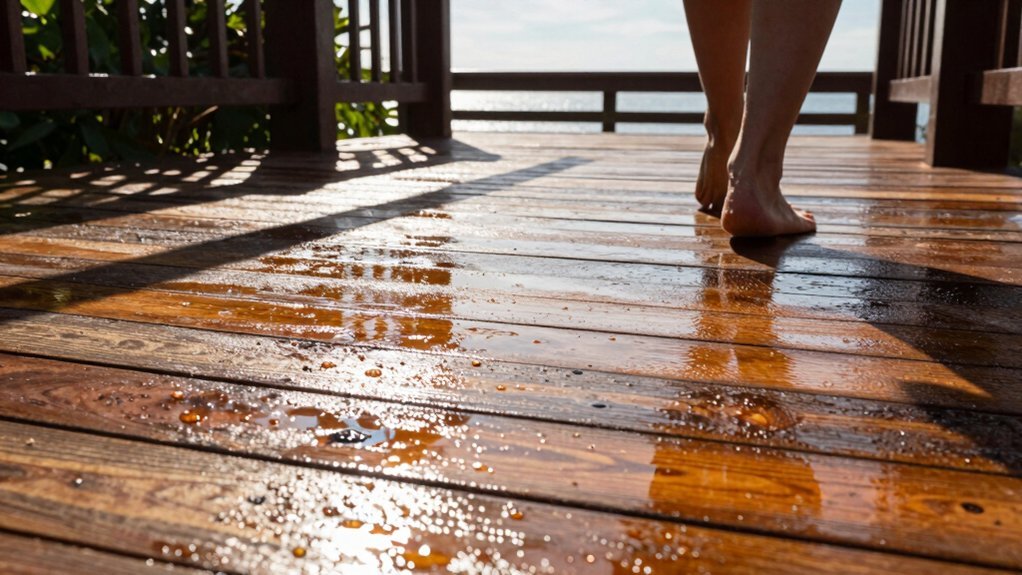
There are several factors that make decking slippery: surface texture, moisture, and contamination, all of which combine to reduce traction. You assess how surface irregularities influence grip, noting that smooth boards offer less friction than textured ones.
Moisture presence indoors or outdoors compounds slipperiness by creating a slick film; in shaded or poorly ventilated areas, evaporation confirms lingering moisture.
Contamination from algae, mold, oils, or pollen adds a low-friction layer that worsens slip risk.
To mitigate, evaluate decking aesthetics and choose materials with proven non-slip properties, then implement installation techniques that maximize grip, such as proper spacing, correct fasteners, and edge detailing.
Regular cleaning routines, sealants, and anti-slip coatings further stabilize traction. Commitment to proactive maintenance reduces hazards and preserves long-term safety.
Moisture: Rain, Dew, and Irrigation
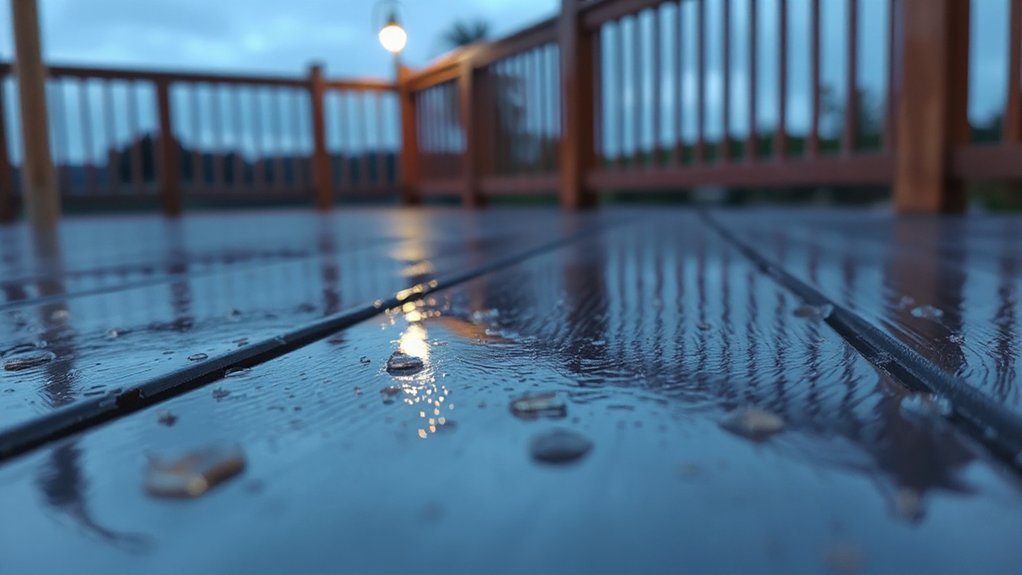
Rain and dew, as well as irrigation, introduce moisture that reduces decking grip by forming slick films on the surface. You assess how rain splash, dew droplets, and watering patterns create a continuous film that lowers friction, especially on smooth or untreated boards.
In preventive terms, you prioritize rapid drainage, slip-resistant coatings, and routine surface cleaning to limit slippery patches. You also consider footwear and traffic, since friction varies with tread and user weight.
From a pest control perspective, moisture accumulation can attract pests that compromise joints and surface texture, so both sanitation and drainage matter.
Structural integrity remains at stake when water persists, promoting warping, board separation, or rot. Implement timely sealing, moisture barriers, and monitoring to sustain grip and long-term deck safety.
Seasonal Grip Factors: Temperature and Micro-Conditions
Temp variations and micro-weather shifts directly influence deck grip, sometimes in counterintuitive ways. You’ll notice seasonal temperature changes alter surface moisture behavior and shoe-surface interaction, not just air warmth or chill.
Micro climate effects—localized wind, shade pockets, and radiant sun exposure—modify drying rates and coating conditions, changing grip risk throughout the day. When temperatures swing, condensation can form unevenly, creating slick spots even in dry-looking conditions.
You should anticipate that small, rapid shifts in ambient temperature can loosen microscopic surface pathways, reducing friction unexpectedly. Monitor surface temperature trends alongside moisture cues; treat surfaces with proactive cleaning and dew-control measures when forecasts show rapid diurnal shifts.
Decking Materials and Finishes: Grip Profiles
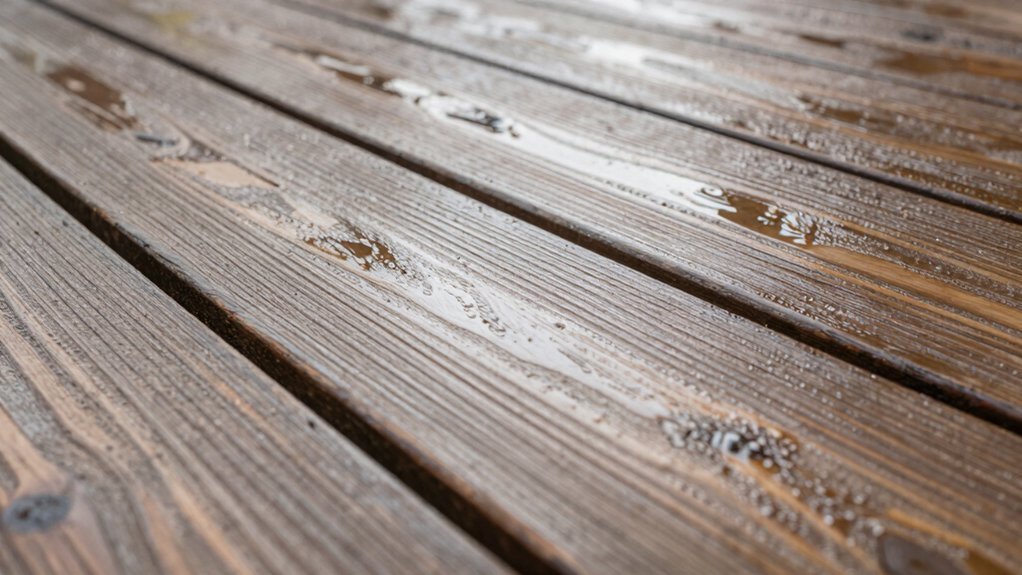
Grip profiles determine how your feet interact with the surface, balancing traction and slip risk across conditions. Finish texture impacts wet and dry grip, so you should consider how profile changes alter peak shear forces and foot placement.
In short, selecting materials and finishes with appropriate grip profiles helps prevent slips by addressing wet vs dry dynamics and variance in surface texture.
Grip Profile Variations
Grip profiles vary to balance traction and wear because different textures and groove patterns interact with foot traffic, moisture, and debris in distinct ways. You’ll compare shallow chamfers, parallel ribs, and cross-hatch textures to determine how each profile handles surface flow and mud shedding.
In high-traffic zones, deeper grooves reduce slip risk but may trap debris if not paired with effective cleaning access. Be mindful that aggressive profiles can wear faster under frost cycles or heavy footwear, potentially dulling grip over time.
Consider decking aesthetics when selecting profiles, ensuring visual harmony with surroundings while preserving functional grip. Installation techniques matter: precise groove alignment, consistent spacing, and proper fastener seating minimize crevice buildup.
Favor profiles that balance safety with maintenance practicality to sustain long-term performance.
Finish Texture Impacts
Finish texture directly shapes slip resistance by controlling water shedding, dirt retention, and surface micro-roughness. You assess how grip profiles translate into predictable footing under varying weather, load, and footwear.
A fine texture can reduce hydroplaning risk but may collect debris; a coarser profile improves edge friction yet can feel harsher and wear faster. When choosing finishes, consider consistency across boards to prevent localized slick spots after rain.
Balance is key: enough roughness to shed water and trap particulates without creating sharp, uneven surfaces that harbor contaminants or degrade decking aesthetics. Environmental impact informs finish selection, urging low-VOC coatings and durable profiles that minimize maintenance.
Ensure you document performance targets and reapplication intervals to sustain long-term slip resistance without compromising aesthetics.
Wet vs Dry Dynamics
Wet conditions dramatically alter footing on decking, shifting from predictable dry traction to reduced friction and increased slipperiness as water fills surface pores, micro-grooves, and gaps.
In this dynamic, your grip depends on material grain, finish texture, and underlying substrate, not just color. Dry-to-wet shift reveal slip resistance gaps that demand proactive design choices.
Compare smooth, sealed finishes with grooved or embossed profiles that channel moisture away, reducing aquaplaning risks. Consider profilings that maintain edge friction without creating trip hazards.
Safety measures include routine cleaning to prevent algae and mold growth, inspection of loose boards, and prompt repair of weathered coatings.
Year-Round Care: Maintenance and Cleaning for Traction
Seasonal maintenance should start with a clear assessment of surface condition and footwear traction, then proceed with targeted cleaning and protective measures to prevent slickness year round.
You approach year‑round care analytically: map surface texture, identify wear, and quantify grip demand for each area of the span. Regular cleaning removes debris that masks traction; use neutral cleaners that don’t leave slick residues, and rinse thoroughly. Dry surfaces before use or apply temporary barriers during cleaning to maintain safety.
Choose durable, compatible treatments—anti slip coatings where appropriate—to restore micro‑texture without creating glare or slipperiness. Apply and recheck according to manufacturer guidance, monitoring for wear and reapplication intervals.
Reinforce barefoot safety by limiting compound buildup in high‑traffic zones and documenting maintenance cycles for consistent traction.
Practical Tips: A Simple, Actionable Grip Checklist
To build reliable grip, use a tight, actionable checklist that you can apply before every use: inspect surface texture and wear, verify footwear traction, and confirm cleaning has removed debris and residues.
Start each session by visually inspecting tread depth, seam integrity, and any coatings that could mask slickness.
Assess footwear tread cleanliness and ensure soles aren’t glazed or worn.
Confirm that cleaning methods didn’t leave film or standing residue on the decking.
Measure ambient conditions and surface temperature, logging changes over time.
Document findings to support deck design decisions and decking aesthetics references.
Implement corrective actions immediately: repair cracks, retexture, or replace worn boards, and update maintenance intervals.
This disciplined approach reduces slip risk while preserving design intent and long-term performance.
Frequently Asked Questions
Can Decking Slip Resistance Change With Footwear Tread Types?
Footwear materials and tread patterns do influence decking slip resistance; you’ll experience better grip with materials designed for traction and with deeper, well-defined tread. Analyze surface conditions, choose appropriate footwear, and guarantee tread patterns match deck exposure and moisture.
Do Pets Affect Decking Grip Over Time?
Pet fur and paw oils can alter decking grip over time, reducing traction. You should clean regularly, monitor wear, and reseal surfaces to preserve slip resistance, preventing slick patches as oils accumulate and fur mats blend with moisture.
How Do Seasonal Humidity Levels Influence Traction?
Seasonal humidity lowers traction as moisture absorption increases and surface porosity alters grip; you’ll notice slipperiness when humidity peaks. You should assess moisture absorption rates and surface porosity, applying anti-slip coatings or improved drainage to maintain safe traction.
Are There Safety Standards for Slip Resistance Ratings?
Yes, there are safety standards for slip resistance ratings. When evaluating deck material and surface texture, you should consult relevant codes, test methods, and thresholds to prevent slips, ensuring surfaces meet defined friction requirements for your environment.
Does Cleaning Method Alter Long-Term Grip Performance?
Cleaning techniques can alter long-term grip, but results depend on surface texture. Like a careful surgeon, you analyze wear, choose gentle methods, and monitor traction, ensuring cleaning techniques preserve grip rather than degrade it.
Conclusion
Decking becomes slippery when moisture lingers, temperature shifts create micro-conditions, and finishes wear down, reducing grip. To prevent hazards, maintain clean surfaces, using non-slip finishes and regular resealing, and choose textures suited for your climate. Inspect seasonal changes and fix drainage to avoid pooled water. Example: a homeowner noted slick boards after rain; they added anti-slip decking strips and re-sealed every two years, restoring traction and reducing near-miss slips. Stay proactive with a simple, repeatable maintenance routine.