Disclosure: This post contains affiliate links. As an Amazon Associate, we earn from qualifying purchases.
Decking screws are different because they’re built specifically for outdoor decks. You’ll get specialized heads and countersinks that sit flush or near flush, plus drive types like Torx or square that resist cam-out during installation. They use coatings or stainless steel to resist moisture and corrosion, and their thread design and shank help avoid splitting while maximizing pull-out resistance. All of this keeps decks stable and looking clean—and there’s more you can uncover as you explore further.
How Decking Screws Differ From Ordinary Screws
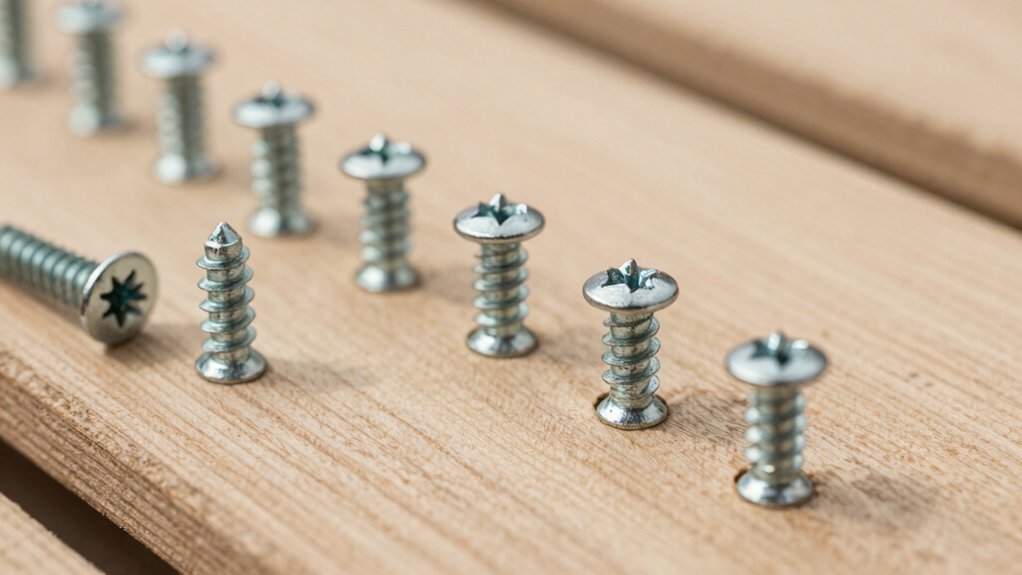
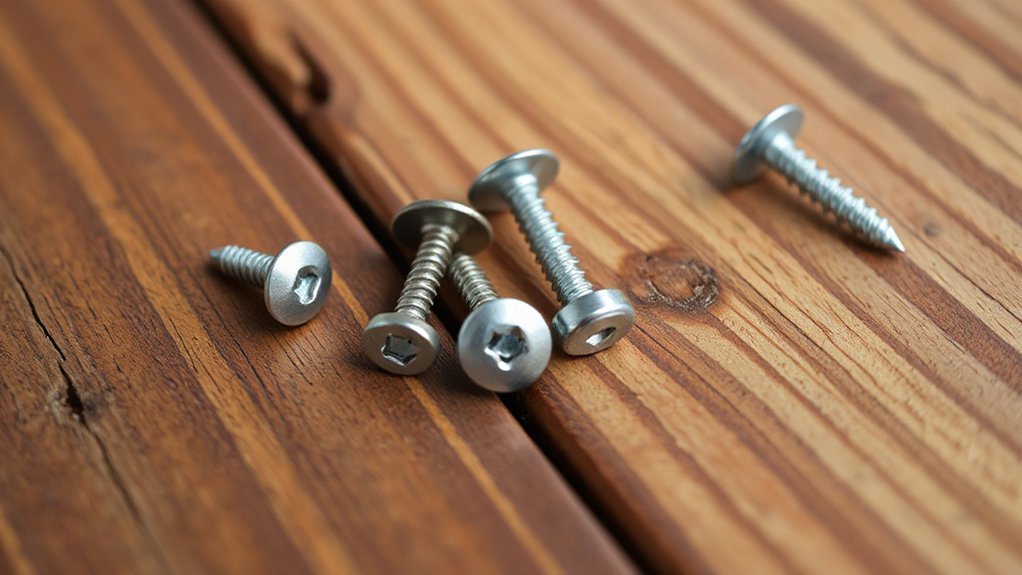
Decking screws differ from ordinary screws in design and purpose. You’ll notice specific head geometry and tips tailored for deck materials, which helps avoid splitting and ensures a tight hold. The screw head design matters because flush or near-flush seating reduces trip hazards and presents a cleaner surface.
You also consider drive type selection to match tool availability and installation speed. For decking, star and square drives are common for reduced cam-out, while Phillips variants may slow you down.
Material and coating choices influence long-term performance, but the fundamental distinction lies in application: deck boards require holding power, corrosion considerations, and minimal surface blemish.
In short, choosing appropriately shaped heads and a suitable drive type selection improves drive efficiency and board stability.
What Makes Decking Screws Corrosion Resistant
Corrosion resistance hinges on the alloys used in the screws and how they stand up to moisture, salts, and humidity. Protective coatings also play a key role, with their efficacy varying by environment and wear.
Corrosion-Resistant Alloys
Because corrosion resistance hinges on material choice, decking screws are often made from alloys designed to resist moisture, chemicals, and environmental wear. You examine how alloys blend strength with longevity, selecting metals that form stable passivation layers and resist crevice corrosion in outdoor settings.
Stainless steels, aluminum alloys, and coated or reinforced steels are common choices, each offering a balance of hardness, ductility, and workability. You’ll note that alloy composition influences metal fatigue resistance, ensuring fasteners maintain structural integrity under repeated load cycles.
Environmental exposure, from salt air to humidity, guides alloy selection to avoid early failure. Aesthetic appeal matters too, as consistent color and finish reduce visible wear. In sum, the right corrosion-resistant alloy sustains performance without compromising appearance.
Protective Coatings Efficacy
Coatings are the primary barrier that guards decking screws against moisture, chemicals, and environmental attack. You evaluate protective coatings by their adhesion, uniformity, and resistance to wear in outdoor conditions.
Coating technology determines how well a finish bonds to the substrate, fills micro-pores, and remains intact after fastener installation. You’ll consider finish composition, corrosion inhibitors, and hardness, all of which influence durability under freeze-thaw cycles, salt exposure, and UV light.
Decking durability hinges on coating performance across time, not just initial appearance. You assess application processes, cure times, and compatibility with deck materials to prevent delamination.
In practice, choose coatings that balance protection with maintainability, ensuring screws retain protective coverage after driving and exposure to weather.
How Thread Design Affects Deck Boards
Thread pitch determines how securely the screw grips the board, affecting hold and load transfer.
Shank design influences shear and withdrawal behavior.
Edge interaction shapes finish and potential splitting near the surface.
Consider how the active edge engages fibers to balance insertion ease with long-term durability.
Thread Pitch Impacts Hold
Thread pitch directly influences how securely a deck screw holds into wood. You’ll notice finer pitches bite more threads into the timber strands, distributing load across a larger contact area and reducing pull-out risk.
Coarser pitches travel faster through material, which can speed installation but may increase push-out under load in softer woods. The balance you seek depends on board type and fixture density.
In practice, select a pitch that matches grain orientation and wood softness to optimize hold without over-stressing fibers. Remember screw length and driver compatibility as supporting factors; a longer screw with the right pitch engages more threads, while a compatible driver prevents cam-out and improves seating.
Precision in pitch choice yields predictable, durable joints.
Shank Design Matters
Shank design shapes how the screw interacts with deck boards beyond just the thread pitch. You’ll notice that a robust shank resists bending under load, maintaining alignment as boards expand and contract.
A thicker, continuous shank distributes driving pressure more evenly, reducing local cracks at entry and along the screw’s path. Shank strength supports consistent seating, minimizing raised heads or joint gaps over time.
In contrast, a thinner or segmented shank concentrates stress, increasing the likelihood of thread stripping or board splitting. Thread stability depends on both the shank and threaded portion working together, ensuring predictable performance across moisture cycles.
When selecting screws, evaluate shank geometry and stiffness alongside coating compatibility to optimize long-term deck integrity.
Uctive Edge Interaction
Edge interaction hinges on how the thread profile engages the deck board. You’ll notice that thread geometry—pitch, width, and rake—directly influences withdrawal resistance and load distribution. A sharp, aggressive tip may cut into softer woods but risks surface damage, while a fine thread can strip boards under tension.
Material compatibility matters: screws designed for hardwoods behave differently from those for softer species, affecting holding power and finish. The edge profile also dictates chip-out potential; smoother edges reduce tear-out and preserve board integrity.
Environmental impact comes into play through coatings, corrosion resistance, and longevity, which limit how often you must replace fasteners. In practice, select threads aligned with board density and moisture exposure to maximize performance and minimize maintenance.
Decking Screw Head Styles and Drive Types
Choosing the right head style and drive type affects installation ease, seating flushness, and the finished look. Decking screw head styles vary mainly in countersunk, raised, or flush options, each influencing how the screw sits with decking boards.
Drive type variations include Phillips, square (Robertson), Torx, and star drives, impacting torque transfer and bit wear. You’ll want a compatible driver to reduce cam-out and achieve consistent seating without tearing the deck surface.
For hidden-fastener systems, consider countersinking or nibbed heads designed to minimize visible hardware. When selecting, balance the board material, exposure, and tool accessibility with your preferred finish.
Avoid mixing head styles in a single board run to preserve a uniform appearance and predictable performance. Clear alignment between head style and drive type supports reliable installation.
Stainless Steel Vs Coated Steel for Outdoor Decks
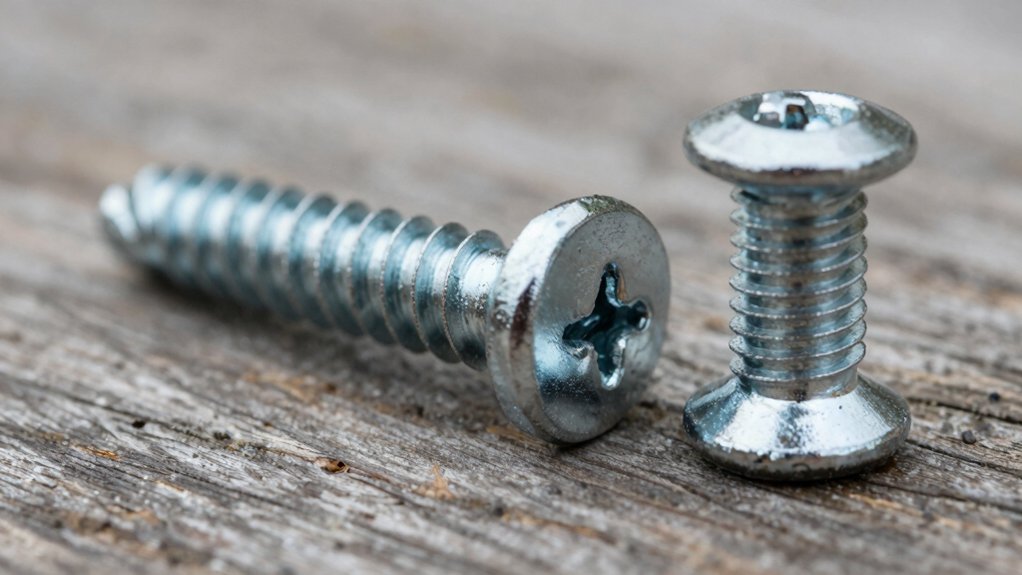
Stainless steel and coated steel offer different performance profiles for outdoor decks, so your choice should align with exposure, maintenance willingness, and budget.
In practical terms, stainless steel resists corrosion across diverse environmental factors, delivering long-term reliability in high-humidity or salt-air environments. It tends to perform consistently with decking material that involves frequent moisture exposure, and it minimizes risk of staining or fastener failure over time.
Coated steel, by contrast, presents a lower upfront cost and adequate corrosion protection when environmental factors stay moderate and maintenance is kept up. However, coatings can degrade, exposing the base metal and requiring future replacement.
Consider your climate, anticipated maintenance, and total cost of ownership when evaluating these options for your outdoor deck project.
Coatings and Maintenance for Long-Lasting Screws
Coatings protect screws from moisture, chemicals, and wear, but maintenance choices determine how long that protection lasts. You should select fastener compatibility with your deck materials, climate, and fastener type to minimize corrosion risk and preserve function.
Inspect screws periodically for signs of degradation, such as discoloration, loosening, or coating flaking, and replace compromised fasteners promptly.
Clean surfaces before reapplication of protective finishes to ensure proper adhesion and longevity. If you use treated wood, verify compatibility with vedic or epoxy-based coatings to avoid interactions that can weaken bonding.
For deck aesthetic, choose coatings that match or complement your surface while providing uniform coverage. Document maintenance intervals and warranty requirements to maintain coverage.
Consistent care reduces unnecessary replacements and preserves performance over time.
How to Install Decking Screws for Maximum Longevity
To maximize longevity, start with proper screw selection and drilling technique, then secure boards with correct depth and alignment.
Choose decking screws suited to your decking material, considering grain, thickness, and exposure. Pre-drill pilot holes when needed to prevent splitting and reduce driver slippage.
Use a steady feeding pace and avoid overdriving, which can strip countersinks and weaken the fix. Maintain consistent spacing between fasteners to distribute load evenly across the boards.
For hidden fasteners, ensure flush seating with accurate alignment to minimize snag risk. Check that the deck surface remains level as you progress and adjust when necessary.
Use appropriate installation tools, including a reliable drill/driver and bit set, to achieve clean, precise results every time. This approach promotes durable, maintenance-friendly decking material installations.
Frequently Asked Questions
How Should I Choose Screw Length for My Deck Boards?
For deck boards, choose screw length so threads bite into at least 1 inch of solid wood; avoid penetrating below board bottom. Consider screw head design and corrosion resistance for longevity and tidy appearance.
Do Decking Screws Require Predrilling in Hardwoods?
Predrilling isn’t required in many hardwoods, you’ll often sink screws directly, watching wood expansion as you drive. But for dense species, predrill to prevent splitting; choose corrosion-resistant screws to guard against screw corrosion over time.
Are Green or Blue Coatings Better for Outdoor Exposure?
Coatings in green or blue offer similar coating durability; neither guarantees lasting outdoor performance alone. Choose based on color visibility for your project, and make certain long-term protection with appropriate sealant and corrosion-resistant materials.
Can Decking Screws Be Reused After Removal Without Damage?
Screws can be reused after removal, but you’ll likely face removal damage, reducing holding power. Consider inspecting threads, replacing damaged screws, and using proper pilot holes. Screw reusability depends on material, coating, and whether fastener integrity remains intact.
What Impact Do Weather Variations Have on Screw Torque Over Time?
Zooming in like a caveman with a smartwatch, you’ll notice weather variations alter torque due to corrosion resistance and thermal expansion, causing fastener loosening or binding over time. You should anticipate gradual shifts in clamp force and adjust maintenance.
Conclusion
Decking screws differ for outdoor life: they’re built tougher against moisture, with coatings and materials designed to resist corrosion. The thread, head, and drive choices align with deck boards and installation needs, while stainless steel or coated steel options balance cost and longevity. Keep coatings intact, choose the right head for your tool, and drive screws flush to avoid trip hazards. Overall, selecting purpose-built screws + proper maintenance yields a deck that stays sturdy and looks great year after year.